
17.11.2021
Zeitschriftenartikel

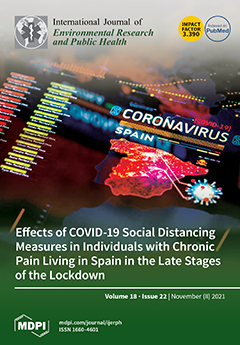
Identity Leadership, Employee Burnout and the Mediating Role of Team Identification: Evidence from the Global Identity Leadership Development Project

Do leaders who build a sense of shared social identity in their teams thereby protect them from the adverse effects of workplace stress? This is a question that the present paper explores by testing the hypothesis that identity leadership contributes to stronger team identification among employees and, through this, is associated with reduced burnout. We tested this model with unique datasets from the Global Identity Leadership Development (GILD) project with participants from all inhabited continents. We compared two datasets from 2016/2017 (n = 5290; 20 countries) and 2020/2021 (n = 7294; 28 countries) and found very similar levels of identity leadership, team identification and burnout across the five years. An inspection of the 2020/2021 data at the onset of and later in the COVID-19 pandemic showed stable identity leadership levels and slightly higher levels of both burnout and team identification. Supporting our hypotheses, we found almost identical indirect effects (2016/2017, b = −0.132; 2020/2021, b = −0.133) across the five-year span in both datasets. Using a subset of n = 111 German participants surveyed over two waves, we found the indirect effect confirmed over time with identity leadership (at T1) predicting team identification and, in turn, burnout, three months later. Finally, we explored whether there could be a “too-much-of-a-good-thing” effect for identity leadership. Speaking against this, we found a u-shaped quadratic effect whereby ratings of identity leadership at the upper end of the distribution were related to even stronger team identification and a stronger indirect effect on reduced burnout.
Aktuelles aus dem Forschungszentrum

Veranstaltung
10.02.2027 | Frankfurt am Main

Shifting Visions of Peace and Security

Podiumsdiskussion, Ringvorlesungen

Podiumsdiskussion im Rahmen der Ringvorlesung “Peace and Security in Post-Liberal Times” mit Lisbeth Zimmermann (Goethe University/Normative Orders), Antonia Witt (PRIF), Siddarth Tripathi (University of Erfurt). Moderation: Jonas Wolff (Goethe University/PRIF/Normative Orders).

weitere Infos ›
Veranstaltung
03.02.2027 | Frankfurt am Main

AI, War, and Big Tech

Ringvorlesungen, Vortrag

Vortrag von Ingvild Bode (University of Southern Denmark)im Rahmen der Ringvorlesung “Peace and Security in Post-Liberal Times”.

weitere Infos ›
Veranstaltung
16.12.2026 | Frankfurt am Main

International arms control in a world of uncertainties

Ringvorlesungen, Vortrag

Vortrag von Malte Göttsche (TU Darmstadt/PRIF) im Rahmen der Ringvorlesung “Peace and Security in Post-Liberal Times”.

weitere Infos ›
Veranstaltung
02.12.2026 | Frankfurt am Main

Enabling Authoritarianism: UN Peacekeeping and the Politics of Authoritarianism

Ringvorlesungen, Vortrag

Vortrag von Sarah von Billerbeck (University of Reading) im Rahmen der Ringvorlesung “Peace and Security in Post-Liberal Times”.

weitere Infos ›
Veranstaltung
25.11.2026 | Frankfurt

Deterrence in “Post-Liberal Times“

Ringvorlesungen, Vortrag

Vortrag von Maria Mälksoo (Copenhagen University) (Goethe-Universität/PRIF/Normative Orders) im Rahmen der Ringvorlesung “Peace and Security in Post-Liberal Times”.

weitere Infos ›
Veranstaltung
18.11.2026 | Frankfurt am Main

The Case for (Neo)colonialism: Neotrusteeship in International Relations as the ‘Imperial Mind’ of the ‘Colonial Present’

Ringvorlesungen, Vortrag

Vortrag von Nick Lemay-Hébert (Manchester University) im Rahmen der Ringvorlesung “Peace and Security in Post-Liberal Times”.

weitere Infos ›