

17.11.2021
Journal article

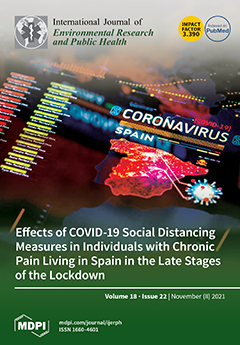
Identity Leadership, Employee Burnout and the Mediating Role of Team Identification: Evidence from the Global Identity Leadership Development Project

Do leaders who build a sense of shared social identity in their teams thereby protect them from the adverse effects of workplace stress? This is a question that the present paper explores by testing the hypothesis that identity leadership contributes to stronger team identification among employees and, through this, is associated with reduced burnout. We tested this model with unique datasets from the Global Identity Leadership Development (GILD) project with participants from all inhabited continents. We compared two datasets from 2016/2017 (n = 5290; 20 countries) and 2020/2021 (n = 7294; 28 countries) and found very similar levels of identity leadership, team identification and burnout across the five years. An inspection of the 2020/2021 data at the onset of and later in the COVID-19 pandemic showed stable identity leadership levels and slightly higher levels of both burnout and team identification. Supporting our hypotheses, we found almost identical indirect effects (2016/2017, b = −0.132; 2020/2021, b = −0.133) across the five-year span in both datasets. Using a subset of n = 111 German participants surveyed over two waves, we found the indirect effect confirmed over time with identity leadership (at T1) predicting team identification and, in turn, burnout, three months later. Finally, we explored whether there could be a “too-much-of-a-good-thing” effect for identity leadership. Speaking against this, we found a u-shaped quadratic effect whereby ratings of identity leadership at the upper end of the distribution were related to even stronger team identification and a stronger indirect effect on reduced burnout.
News from the research center

Publication
19.08.2026 | Anthology

Sokrates revised and revisited

Bohl, Judith K.; Brandis, Veronika; Pfeifer, Guido (Hrsg.) (2026): „Sokrates revised and revisited. Überlieferung, Diskurs, Inszenierung“. Heidelberg: Propylaeum. 

more information ›
Publication
14.08.2026 | Chapter

Vom rechtshistorischen Erkenntniswert antiker Tragödiendichtung: Überlegungen anhand Euripides’ Medeia

Pfeifer, Guido (2026): "Vom rechtshistorischen Erkenntniswert antiker Tragödiendichtung: Überlegungen anhand Euripides’ Medeia". In: Gsell, Beate; Rüfner, Thomas; Babusiaux, Ulrike (Hrsg.): Die unverzichtbare Wissenschaft – The Indispensable Science, Mohr Siebeck, S. 663-671.

more information ›
Publication
01.08.2026 | Chapter

"Das Andere in uns selbst" (Marcel Gauchet). Das Ideal gesellschaftlicher Autonomie und die Denkfigur der Alterität

Langner-Pitschmann, Annette (2026): „Das Andere in uns selbst“ (Marcel Gauchet). Das Ideal gesellschaftlicher Autonomie und die Denkfigur der Alterität. In: Schlette, Magnus et. al. (Hrsg.): Ordnung im Übergang Zur Funktion von Transzendenzbezügen in der Konstitution und Transformation politischer Gemeinschaft, Tübingen: Mohr Siebeck, S. 185-205.

more information ›
Event
24.09.2026 | Frankfurt am Main

Die neuen Warlords. Gewaltdynamiken einhegen / Friedensgutachten 2026

Book Presentation

Die imperialistische Großmachtpolitik ändert die Vorzeichen von Krieg, Frieden und Sicherheit. Staaten agieren zunehmend wie Warlords und setzen Krieg als Mittel der Politik ein. Übergänge von Gewaltkonflikten zu Frieden werden als „Deals“ behandelt, Mittelmächte treten mit neuem Selbstbewusstsein, aber ambivalentem Kurs auf, und technologische Innovation verändert Kriege und erschwert die Regulierung. Zugleich befindet sich die internationale Kooperation in der Friedenssicherung in ihrer schwersten Krise. Das Friedensgutachten 2026 analysiert Optionen, dennoch Frieden zu fördern.

more information ›
Publication
23.07.2026 | Journal article

Governing the Subject of Populism

Biebricher, Thomas: "Governing the Subject of Populism". In: European Journal of Social Theory, OnlineFirst.

more information ›
Publication
15.07.2026 | Monograph

Das Recht der Gewalt. Warum Waffen allein keinen Frieden schaffen

Simon, Hendrik (2026): Das Recht der Gewalt. Warum Waffen allein keinen Frieden schaffen. Ditzingen: Reclam.

more information ›
Publication
10.07.2026 | Anthology

Schnittstellen im Gesundheitsrecht

Kießling, Andrea (Hrsg.) (2026): „Schnittstellen im Gesundheitsrecht“. Nomos.

more information ›
News
19.06.2026

International symposium honours the lifework of Jürgen Habermas

On Friday 19 June 2026, the Research Centre Normative Orders, in collaboration with Suhrkamp Verlag, paid tribute to the late Jürgen Habermas with an international symposium at Goethe University Frankfurt.

more information ›
Publication
13.06.2026 | Monograph

Identitätsbasierte Führung: Vom ICH zum WIR. Als Führungskraft gesunde und leistungsstarke Gruppen, Teams und Organisationen fördern

van Dick, Rolf; Kratzer, Benedik E., Steffens, Niklas K., Kerschreiter, Rudolf (2026): „Identitätsbasierte Führung: Vom ICH zum WIR. Als Führungskraft gesunde und leistungsstarke Gruppen, Teams und Organisationen fördern“. Springer Berlin.

more information ›