
01.04.2025
Zeitschriftenartikel

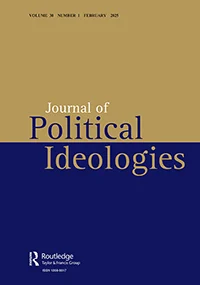
Steve Bannon on ‘productive capitalism’: investigating the economic ideology of the American populist right

Abstract:

In this article we explore the economic thinking of the American populist right and the reservoir of ideological tropes that it draws on. We start with Steve Bannon and show how he narrates a binary distinction between a healthy, productive capitalism and a perverted, speculative capitalism. While speculative capitalism is attributed to globalist elites and parasitic minorities in the US, productive capitalism is defined as the home-grown American variety that once benefitted workers and entrepreneurs alike. In a comparative ideological analysis, we document that Bannon’s move of ‘othering’ has a long history in writings of the extreme right in the US. In the 1920s and 30s, Henry Ford and Charles Coughlin grounded their antisemitism in a dichotomy of productive and speculative capitalism. Lawrence Dennis developed an Americanized version of fascism using a similar distinction. More recent thinkers of the American Alt-Right revived the critique of capitalism along such lines, as we show with reference to the writings of Samuel Francis. This article contributes to the study of populist ideology by showing how economic theorizing is grafted upon its core distinction of the sane people and corrupt elites.
Aktuelles aus dem Forschungszentrum

Veranstaltung
13.11.2026 | Frankfurt am Main

When Design Gets Political

Ausstellungen, Konferenz, Podiumsdiskussion, Vortrag, Workshop

Der dritte Tag der Design Policy Days an der Goethe-Universität Frankfurt richtet sich an alle, die Design als politische Kraft denken. Gemeinsam mit dem Deutschen Designtag und der World Design Capital 2026 widmet er sich in Roundtables, Projektpräsentationen, Workshops und Ausstellungen der institutionellen Politik: Wie lässt sich Design methodisch, strukturell und normativ in politische Entscheidungsprozesse integrieren – und wie kann Politik selbst als Gestaltungsfeld verstanden werden?

weitere Infos ›
Veranstaltung
20.10.2026 | Frankfurt

Dr. h.c. Gerhard Wiese – Wirken als Ankläger im Auschwitz Prozess

Film, Podiumsdiskussion

Der Frankfurter Auschwitz-Prozess von 1963 bis 1965 gilt als ein zentraler Wendepunkt in der juristischen und öffentlichen Auseinandersetzung mit den nationalsozialistischen Verbrechen in der Bundesrepublik Deutschland. Dr. h.c. Gerhard Wiese, der als junger Staatsanwalt zum Anklägerteam des Prozesses gehörte, berichtet aus seiner Perspektive auf die damaligen Ermittlungen und die Hauptverhandlung. Im Gespräch mit der Historikerin Dr. Katharina Rauschenberger (Fritz Bauer Institut) wird die Bedeutung des Prozesses für die strafrechtliche Aufarbeitung der NS-Verbrechen in den Blick genommen.

weitere Infos ›
Publikation
21.09.2026 | Working Paper

Dimensionen wehrhafter Demokratie in unsicheren Zeiten

Abich, Leon; Adams, Cosima; Biebricher, Thomas; Britz, Gabriele; Daase, Christopher; Deitelhoff, Nicole; Dönges, Jan; Krause, Leon; Nitzschner, Patrick; Siebert, Hannes; Siefert, Julian; Stephanblome, Isabelle (2026): "Dimensionen wehrhafter Demokratie in unsicheren Zeiten". DemoReg Working Paper 3.1.

weitere Infos ›
Veranstaltung
10.02.2027 | Frankfurt am Main

Shifting Visions of Peace and Security

Podiumsdiskussion, Ringvorlesungen

Podiumsdiskussion im Rahmen der Ringvorlesung “Peace and Security in Post-Liberal Times” mit Lisbeth Zimmermann (Goethe University/Normative Orders), Antonia Witt (PRIF), Siddarth Tripathi (University of Erfurt). Moderation: Jonas Wolff (Goethe University/PRIF/Normative Orders).

weitere Infos ›
Veranstaltung
03.02.2027 | Frankfurt am Main

AI, War, and Big Tech

Ringvorlesungen, Vortrag

Vortrag von Ingvild Bode (University of Southern Denmark)im Rahmen der Ringvorlesung “Peace and Security in Post-Liberal Times”.

weitere Infos ›
Veranstaltung
16.12.2026 | Frankfurt am Main

International arms control in a world of uncertainties

Ringvorlesungen, Vortrag

Vortrag von Malte Göttsche (TU Darmstadt/PRIF) im Rahmen der Ringvorlesung “Peace and Security in Post-Liberal Times”.

weitere Infos ›