

10.09.2020
Sammelband

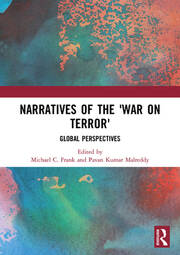
Narratives of the War on Terror. Global Perspectives

Challenging the predominantly Euro-American approaches to the field, this volume brings together essays on a wide array of literary, filmic and journalistic responses to the decade-long wars in Afghanistan and Iraq.

Shifting the focus from so-called 9/11 literature to narratives of the war on terror, and from the transatlantic world to Iraq, Syria, Afghanistan, the Afghan-Pak border region, South Waziristan, Al-Andalus and Kenya, the book captures the multiple transnational reverberations of the discourses on terrorism, counter-terrorism and insurgency. These include, but are not restricted to, the realignment of geopolitical power relations; the formation of new terrorist networks (ISIS) and regional alliances (Iraq/Syria); the growing number of terrorist incidents in the West; the changing discourses on security and technologies of warfare; and the leveraging of fundamental constitutional principles. The essays featured in this volume draw upon, and critically engage with, the conceptual trajectories within American literary debates, postcolonial discourse and transatlantic literary criticism. Collectively, they move away from the trauma-centrism and residual US-centrism of early literary responses to 9/11 and the criticism thereon, while responding to postcolonial theory’s call for a historical foregrounding of terrorism, insurgency and armed violence in the colonial-imperial power nexus.
Aktuelles aus dem Forschungszentrum

Publikation
20.08.2026 | Buchkapitel

Abschied vom Neoliberalismus im Zeichen des Postliberalismus?

Biebricher, Thomas (2026): Abschied vom Neoliberalismus im Zeichen des Postliberalismus? In: Selk, Veith; Hofmann, Julian Nicolai (Hrsg.): Postliberalismus? Eine transatlantische Debatte. Berlin: Suhrkamp, S. 222-246.

weitere Infos ›
Publikation
20.08.2026 | Buchkapitel

Krise oder Verfall der Weltordnung? Liberale und postliberale Erklärungen internationalen Wandels

Daase, Christopher (2026): Krise oder Verfall der Weltordnung? Liberale und postliberale Erklärungen internationalen Wandels. In: Selk, Veith; Hofmann, Julian Nicolai (Hrsg.): Postliberalismus? Eine transatlantische Debatte. Berlin: Suhrkamp, S. 205-221.

weitere Infos ›
Publikation
19.08.2026 | Sammelband

Sokrates revised and revisited

Bohl, Judith K.; Brandis, Veronika; Pfeifer, Guido (Hrsg.) (2026): „Sokrates revised and revisited. Überlieferung, Diskurs, Inszenierung“. Heidelberg: Propylaeum. 

weitere Infos ›
Publikation
14.08.2026 | Buchkapitel

Vom rechtshistorischen Erkenntniswert antiker Tragödiendichtung: Überlegungen anhand Euripides’ Medeia

Pfeifer, Guido (2026): "Vom rechtshistorischen Erkenntniswert antiker Tragödiendichtung: Überlegungen anhand Euripides’ Medeia". In: Gsell, Beate; Rüfner, Thomas; Babusiaux, Ulrike (Hrsg.): Die unverzichtbare Wissenschaft – The Indispensable Science, Mohr Siebeck, S. 663-671.

weitere Infos ›
Publikation
01.08.2026 | Buchkapitel

"Das Andere in uns selbst" (Marcel Gauchet). Das Ideal gesellschaftlicher Autonomie und die Denkfigur der Alterität

Langner-Pitschmann, Annette (2026): „Das Andere in uns selbst“ (Marcel Gauchet). Das Ideal gesellschaftlicher Autonomie und die Denkfigur der Alterität. In: Schlette, Magnus et. al. (Hrsg.): Ordnung im Übergang Zur Funktion von Transzendenzbezügen in der Konstitution und Transformation politischer Gemeinschaft, Tübingen: Mohr Siebeck, S. 185-205.

weitere Infos ›
Veranstaltung
24.09.2026 | Frankfurt am Main

Die neuen Warlords. Gewaltdynamiken einhegen / Friedensgutachten 2026

Buchvorstellung

Die imperialistische Großmachtpolitik ändert die Vorzeichen von Krieg, Frieden und Sicherheit. Staaten agieren zunehmend wie Warlords und setzen Krieg als Mittel der Politik ein. Übergänge von Gewaltkonflikten zu Frieden werden als „Deals“ behandelt, Mittelmächte treten mit neuem Selbstbewusstsein, aber ambivalentem Kurs auf, und technologische Innovation verändert Kriege und erschwert die Regulierung. Zugleich befindet sich die internationale Kooperation in der Friedenssicherung in ihrer schwersten Krise. Das Friedensgutachten 2026 analysiert Optionen, dennoch Frieden zu fördern.

weitere Infos ›