

12.07.2020
Zeitschriftenartikel

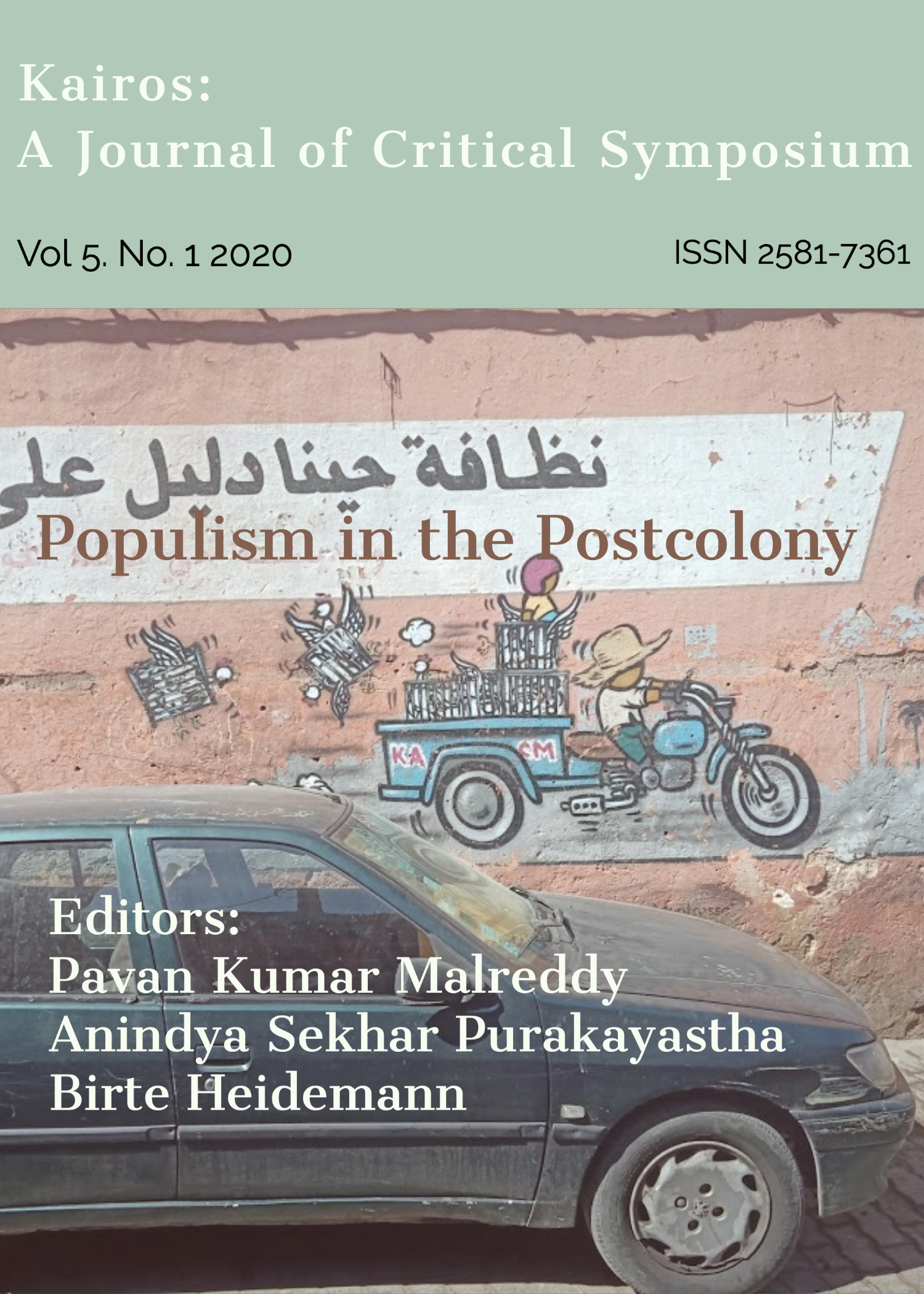
Discoursing Populism: Types, Typologies and Contexts

Although the idea of populism is as old as Phaleas of Chalcedon, it has gained a new currency in the aftermath of the 2008 global economic meltdown. For Phaleas, if the right to private property and democracy were the pillars of vox populi, the current wave of populist politics areplagued by what Yochai Benkler et al. call an “epistemic crisis in media and politics that threatens the integrity of democratic processes, erodes trust in public institutions, and exacerbates social divisions” (2018, n.p.). Even if the very term ‘populism’“carries associations of crowd-pleasing and cheap emotionalism” (2011, 100), as the South African anthropologist Jean Comaroff argues, “a certain populist radicalism –an opposition to the dictatorship and doxa of elites […] is a necessary, if not sufficient condition of mass transformative movements in all times and places” (104; emphasis original). Reaffirming this view, Chantal Mouffe (2018) has called for a radical reframing of populist politics that would not only counteract the politics of exclusion or polarization, but also preserve the existing social collectivesand institutions (e.g. Podemos of Spain, the Zapatistas of Mexico). It is the very paradox of populism’s dystopic disruptions and utopic desiresthat form the basis for the essays featured in this special issue. […]
Aktuelles aus dem Forschungszentrum

Publikation
20.08.2026 | Buchkapitel

Abschied vom Neoliberalismus im Zeichen des Postliberalismus?

Biebricher, Thomas (2026): Abschied vom Neoliberalismus im Zeichen des Postliberalismus? In: Selk, Veith; Hofmann, Julian Nicolai (Hrsg.): Postliberalismus? Eine transatlantische Debatte. Berlin: Suhrkamp, S. 222-246.

weitere Infos ›
Publikation
20.08.2026 | Buchkapitel

Krise oder Verfall der Weltordnung? Liberale und postliberale Erklärungen internationalen Wandels

Daase, Christopher (2026): Krise oder Verfall der Weltordnung? Liberale und postliberale Erklärungen internationalen Wandels. In: Selk, Veith; Hofmann, Julian Nicolai (Hrsg.): Postliberalismus? Eine transatlantische Debatte. Berlin: Suhrkamp, S. 205-221.

weitere Infos ›
Publikation
19.08.2026 | Sammelband

Sokrates revised and revisited

Bohl, Judith K.; Brandis, Veronika; Pfeifer, Guido (Hrsg.) (2026): „Sokrates revised and revisited. Überlieferung, Diskurs, Inszenierung“. Heidelberg: Propylaeum. 

weitere Infos ›
Publikation
14.08.2026 | Buchkapitel

Vom rechtshistorischen Erkenntniswert antiker Tragödiendichtung: Überlegungen anhand Euripides’ Medeia

Pfeifer, Guido (2026): "Vom rechtshistorischen Erkenntniswert antiker Tragödiendichtung: Überlegungen anhand Euripides’ Medeia". In: Gsell, Beate; Rüfner, Thomas; Babusiaux, Ulrike (Hrsg.): Die unverzichtbare Wissenschaft – The Indispensable Science, Mohr Siebeck, S. 663-671.

weitere Infos ›
Publikation
01.08.2026 | Buchkapitel

"Das Andere in uns selbst" (Marcel Gauchet). Das Ideal gesellschaftlicher Autonomie und die Denkfigur der Alterität

Langner-Pitschmann, Annette (2026): „Das Andere in uns selbst“ (Marcel Gauchet). Das Ideal gesellschaftlicher Autonomie und die Denkfigur der Alterität. In: Schlette, Magnus et. al. (Hrsg.): Ordnung im Übergang Zur Funktion von Transzendenzbezügen in der Konstitution und Transformation politischer Gemeinschaft, Tübingen: Mohr Siebeck, S. 185-205.

weitere Infos ›
Veranstaltung
24.09.2026 | Frankfurt am Main

Die neuen Warlords. Gewaltdynamiken einhegen / Friedensgutachten 2026

Buchvorstellung

Die imperialistische Großmachtpolitik ändert die Vorzeichen von Krieg, Frieden und Sicherheit. Staaten agieren zunehmend wie Warlords und setzen Krieg als Mittel der Politik ein. Übergänge von Gewaltkonflikten zu Frieden werden als „Deals“ behandelt, Mittelmächte treten mit neuem Selbstbewusstsein, aber ambivalentem Kurs auf, und technologische Innovation verändert Kriege und erschwert die Regulierung. Zugleich befindet sich die internationale Kooperation in der Friedenssicherung in ihrer schwersten Krise. Das Friedensgutachten 2026 analysiert Optionen, dennoch Frieden zu fördern.

weitere Infos ›