

30.06.2020
Sammelband

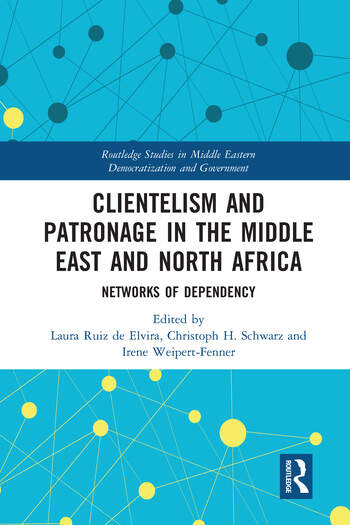
Clientelism and Patronage in the Middle East and North Africa: Networks of Dependency

One common demand in the 2011 uprisings in the MENA region was the call for ‘freedom, dignity, and social justice.’ Citizens rallied against corruption and clientelism, which for many protesters were deeply linked to political tyranny.

This book takes the phenomenon of the 2011 uprisings as a point of departure for reassessing clientelism and patronage across the entire MENA region. Using case studies covering Morocco, Tunisia, Egypt, Jordan, Lebanon, Turkey and the Gulf monarchies, it looks at how the relationships within and between clientelist and patronage networkschanged before 2011. The book assesses how these changes contributed to the destabilization of the established political and social order, and how they affected less visible political processes. It then turns to look at how the political transformations since 2011 have in turn reconfigured these networks in terms of strategies and dynamics, and concomitantly, what implications this has had for the inclusion or exclusion of new actors. Are specific networks expanding or shrinking in the post-2011 contexts? Do these networks reproduce established forms of patron-client relations or do they translate into new modes and mechanisms?

As the first book to systematically discuss clientelism, patronage and corruption against the background of the 2011 uprisings, it will be a valuable resource for students and scholars of Middle Eastern Studies. The book also addresses major debates in comparative politics and political sociology by offering ‘networks of dependency’ as an interdisciplinary conceptual approach that can ‘travel’ across place and time.
Aktuelles aus dem Forschungszentrum

Publikation
20.08.2026 | Buchkapitel

Abschied vom Neoliberalismus im Zeichen des Postliberalismus?

Biebricher, Thomas (2026): Abschied vom Neoliberalismus im Zeichen des Postliberalismus? In: Selk, Veith; Hofmann, Julian Nicolai (Hrsg.): Postliberalismus? Eine transatlantische Debatte. Berlin: Suhrkamp, S. 222-246.

weitere Infos ›
Publikation
20.08.2026 | Buchkapitel

Krise oder Verfall der Weltordnung? Liberale und postliberale Erklärungen internationalen Wandels

Daase, Christopher (2026): Krise oder Verfall der Weltordnung? Liberale und postliberale Erklärungen internationalen Wandels. In: Selk, Veith; Hofmann, Julian Nicolai (Hrsg.): Postliberalismus? Eine transatlantische Debatte. Berlin: Suhrkamp, S. 205-221.

weitere Infos ›
Publikation
19.08.2026 | Sammelband

Sokrates revised and revisited

Bohl, Judith K.; Brandis, Veronika; Pfeifer, Guido (Hrsg.) (2026): „Sokrates revised and revisited. Überlieferung, Diskurs, Inszenierung“. Heidelberg: Propylaeum. 

weitere Infos ›
Publikation
14.08.2026 | Buchkapitel

Vom rechtshistorischen Erkenntniswert antiker Tragödiendichtung: Überlegungen anhand Euripides’ Medeia

Pfeifer, Guido (2026): "Vom rechtshistorischen Erkenntniswert antiker Tragödiendichtung: Überlegungen anhand Euripides’ Medeia". In: Gsell, Beate; Rüfner, Thomas; Babusiaux, Ulrike (Hrsg.): Die unverzichtbare Wissenschaft – The Indispensable Science, Mohr Siebeck, S. 663-671.

weitere Infos ›
Publikation
01.08.2026 | Buchkapitel

"Das Andere in uns selbst" (Marcel Gauchet). Das Ideal gesellschaftlicher Autonomie und die Denkfigur der Alterität

Langner-Pitschmann, Annette (2026): „Das Andere in uns selbst“ (Marcel Gauchet). Das Ideal gesellschaftlicher Autonomie und die Denkfigur der Alterität. In: Schlette, Magnus et. al. (Hrsg.): Ordnung im Übergang Zur Funktion von Transzendenzbezügen in der Konstitution und Transformation politischer Gemeinschaft, Tübingen: Mohr Siebeck, S. 185-205.

weitere Infos ›
Veranstaltung
24.09.2026 | Frankfurt am Main

Die neuen Warlords. Gewaltdynamiken einhegen / Friedensgutachten 2026

Buchvorstellung

Die imperialistische Großmachtpolitik ändert die Vorzeichen von Krieg, Frieden und Sicherheit. Staaten agieren zunehmend wie Warlords und setzen Krieg als Mittel der Politik ein. Übergänge von Gewaltkonflikten zu Frieden werden als „Deals“ behandelt, Mittelmächte treten mit neuem Selbstbewusstsein, aber ambivalentem Kurs auf, und technologische Innovation verändert Kriege und erschwert die Regulierung. Zugleich befindet sich die internationale Kooperation in der Friedenssicherung in ihrer schwersten Krise. Das Friedensgutachten 2026 analysiert Optionen, dennoch Frieden zu fördern.

weitere Infos ›