

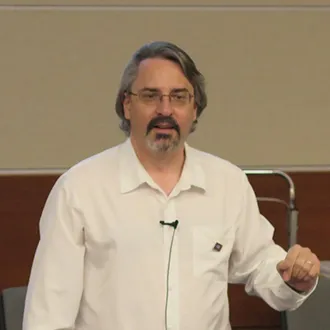
Full Professor and Head of Department, Department of Political Science, Memorial University of Newfoundland (MUN)
Research project title:
Missing voices in the history of international thought. A critical re-evaluation of global thinking since 1880
Abstract
International thought of the last century and a half is not exhausted by what is remembered by the academic field of International Relations (IR). Indeed, IR itself even tends to forget large parts of its own past theorising.
This project looks at how several of these lost narratives have been recovered in IR, with particular emphasis on lost approaches dealing with political economy, political geography, feminism, race and imperialism. This includes approaches outside of the English speaking world. I am particularly interested in how the recovery of past approaches affects our interpretations of both the origins and the nature of IR and international thought.
Events:
6 July 2018
Workshop „The Hundred Years‘ Crisis: Global Order in Historical Perspective“
-
Biografische Angaben
Lucian M. Ashworth is a professor in political science at the Memorial University of Newfoundland, St. John’s Canada. He is an International Relations (IR) scholar, and his main area of interest is the history of international thought. He has published widely on the topics of international thought and the disciplinary history of IR. His latest book is A History of International Thought (Routledge, 2014), and he is currently working on a new book for Routledge provisionally titled International Relations in the Stream of Time, which is will be published in 2019.
-
Publikationen
Lucian M. Ashworth, A History of International Thought. From the Origins of the Modern State to Academic International Relations (London: Routledge, 2014).
International Relations Theory and the Labour Party: Intellectuals and Policy Making 1918-1945 (London: IBTauris, 2007).
Creating International Studies. Angell, Mitrany and the Liberal Tradition (Aldershot: Ashgate, 1999).
(Edited with David Long) New Perspectives on International Functionalism (Basingstoke: Macmillan, 1999).
Lucian M. Ashworth, Mapping a New World: Geography and the Interwar Study of International Relations. International Studies Quarterly, March 2013, 57(1), 138–149.
Lucian M. Ashworth, “The Poverty of Paradigms: Subcultures, Trading Zones and the Case of Liberal Socialism in Interwar International Relations”, International Relations, March 2012, vol. 26 no. 1, 35-59.
“Realism and the Spirit of 1919: Halford Mackinder, Geopolitics, and the Reality of the League of Nations”, European Journal of International Relations, June 2011, 17(2), 279-301.