
Fellow (ehemalig)

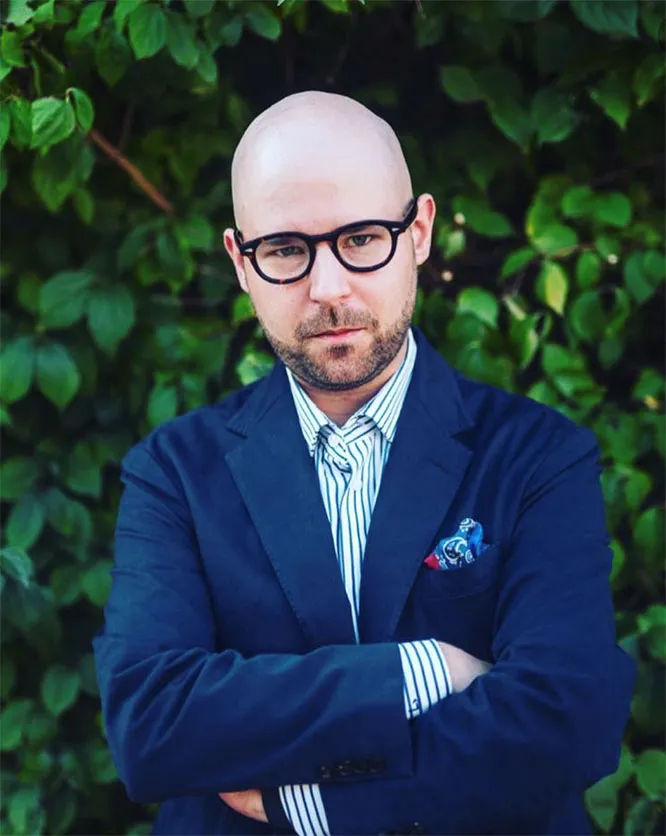
Wojciech Engelking, Ph.D.

Department of Law and Administration, University of Warsaw

Research Abstract
„Few questions – Herbert Hart famously stated on the question what is norm – concerning human society have been asked with such persistence and answered by serious thinkers in so many diverse, strange, and even paradoxical ways”. More than half a century after his The Concept of Law, we are not any closer to the answer, but much further advanced in discovering the spaces, that can be normative, and therefore – in revealing the new contributions to this question. In the paper I am working on, I want to show, how normative an art narrative can be. Drawing on, firstly, Karl Popper’s idea of World Three as a space in which the human creations that aspire to contain objectivity live, and, secondly, Rainer Forst’s concept of noumenal power (the one which is a tool to „in different degrees – influence, use, determine, occupy, or even seal off the space of reasons for others”, as Forst writes), I analyses different art narratives to show, how, while living in World Three, each of them bases its noumenal power on different justifications and claims to legitimacy. The main aim of my research is therefore to show how narrativity encloses in itself the noumenal power in the story about the fictional world and becomes normative in a sense, that it covers the factual world with the World Three as the world of norms, equating the map with the territory.

  • Biografische Angaben

    Wojciech Engelking (1992) is a research assistant at the University of Warsaw, conducting a project Awaiting a Messiah. Normative narratives in European thinking after the Great War. His research interest include history of ideas, legal philosophy and political theory (Schmitt, Strauss, Durkheim, Thucydides, Shakespeare).

  • Publikationen

    Engelking, Wojciech (2024): Caliban as legal subject: The Tempest and Renaissance juridical thought. Law and Humanities. 10.1080/17521483.2023.2298001
    Engelking, Wojciech (2023): French Antecedents of Carl Schmitt’s Concrete-Order Thinking: From Georges Sorel’s Myth to Maurice Hauriou’s Institution. Interpretation. 50. 31-54.
    Engelking, Wojciech (2019). Shakespeare as a method. Carl Schmitt’s reading of Othello and Hamlet. History of European Ideas. 45. 1-14. 10.1080/01916599.2019.1637359.

Aktuelles aus dem Forschungszentrum

News
04.12.2025

Die Krise der Demokratietheorie aus soziologischer Perspektive

Die Soziologin Jenny Brichzin hat mit ihrem Vortrag „Krise der Demokratietheorie? Eine soziologische Intervention“ unsere Ringvorlesung „Am Scheidepunkt? Zur Zukunft der Demokratietheorie“ eröffnet. Die Soziologin kritisiert, gesellschaftliches Zusammenleben werde in der Demokratietheorie bisher unzureichend thematisiert. Ein Nachbericht

weitere Infos ›
News
21.11.2025

Freiwillig oder verpflichtend? Wehrdienst, Frieden und demokratische Verantwortung

Nachbericht zu den 58. Römerberggesprächen. Das Thema Wehrpflicht und die Frage, was ein demokratischer Staat von seinen Bürgerinnen und Bürgern verlangen darf, standen im Zentrum der 58. Römerberggespräche "Bedingt einsatzbereit? Wehrdienst und die Pflicht zum Dienst am Staat", die am 15. November in Kooperation mit dem Forschungszentrum Normative Ordnungen im Chagallsaal des Schauspiel Frankfurt stattfanden.

weitere Infos ›
Publikation
21.11.2025 | Sammelband

Handbook of Leadership. Applied Business Psychology for Managers

Felfe, Jörg; Dick, Rolf van (eds.) (2025): Handbook of Leadership. Applied Business Psychology for Managers. Springer.

weitere Infos ›
News
13.11.2025

Goethe Lecture Offenbach zu ableistischer Diskriminierung

Regina Schidel hat im Rahmen der Goethe Lectures Offenbach eine Kritik ableistischer Diskriminierung präsentiert. In ihrem Vortrag „Ich kann, also bin ich?“ diskutierte sie praktische Ausprägungen und philosophische Herkünfte von Ableismus.

weitere Infos ›
Veranstaltung
10.02.2026 | Frankfurt am Main

Satanic Politics. Democracy after Liberalism

Ringvorlesungen, Vortrag

Vortrag von Michael Rosen (Harvard University) im Rahmen der Ringvorlesung "Am Scheidepunkt? Zur Krise der Demokratie" im Wintersemester 2025/2026

weitere Infos ›
Veranstaltung
04.02.2026 | Frankfurt am Main

Demokratien verteidigen. Zur Aktualität des Gewaltbegriffs bei Camus und Derrida

Ringvorlesungen, Vortrag

Vortrag von Christine Abbt (Universität St. Gallen) im Rahmen der Ringvorlesung "Am Scheidepunkt? Zur Krise der Demokratie" im Wintersemester 2025/2026

weitere Infos ›
Veranstaltung
29.01.2026 | Frankfurt

Civil Geopolitics and the Dilemmas of the Democratic State

Ringvorlesungen, Vortrag

Vortrag von David Owen (Universtiy of Southampton) im Rahmen der Ringvorlesung "Am Scheidepunkt? Zur Krise der Demokratie" im Wintersemester 2025/2026

weitere Infos ›
Veranstaltung
14.01.2026 | Frankfurt am Main

Vom Retten der Welt zum Vorbereiten auf den Kollaps: Neuorientierungen in katastrophischen Zeiten

Ringvorlesungen, Vortrag

Vortrag von Christine Hentschel (Universität Hamburg) im Rahmen der Ringvorlesung "Am Scheidepunkt? Zur Krise der Demokratie" im Wintersemester 2025/2026

weitere Infos ›
Veranstaltung
10.12.2025 | Frankfurt am Main

How Democracy Relies on the Future

Ringvorlesungen, Vortrag

Vortrag von Jonathan White (LSE) im Rahmen der Ringvorlesung "Am Scheidepunkt? Zur Krise der Demokratie" im Wintersemester 2025/2026

weitere Infos ›