

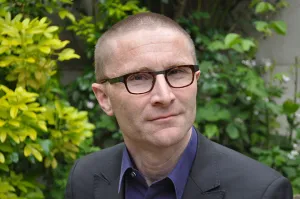
Fellow (ehemalig)

Prof. Stefan Rummens

Prof. Stefan Rummens is Full Professor of Political Philosophy at the Institute of Philosophy of KU Leuven (Belgium)

Research project title:
Populism and technocracy: opposite threats to our democratic society?

Research abstract:
The hypothesis that populism and technocracy are opposite and mutually reinforcing threats to our democratic society is investigated through three more specific resesarch questions:
1/ What is technocracy? The starting point here is Jürgen Habermas’s analysis of technocracy in the context of the Keynesian welfare state. The goal is to make an update of this analysis by investigating how the rise of the neoliberal regime and the transition from government to governance have changed the nature of technocracy.
2/ Are populism and technocracy opposite threats to democracy? In previous work I have argued that populism should be seen as an attempted closure of the empty place of power (Lefort). Now, the aim is to investigate to what extent technocracy should be analysed as an attempted dissolution of the empty place of power.
3/ Is there a mutually reinforcing dynamic between populism and technocracy? The idea under investigation here is that the rise of (neoliberal) technocracy has created the social and political preconditions for the rise of populism and that, the other way around, the threat of populism only reinforces the depoliticizing tendencies of the current technocratic regime.

Events:
9 November 2021
Lecture at the Colloquium Political Theory

  • Biografische Angaben

    Prof. Stefan Rummens obtained his PhD in philosophy at KU Leuven (Belgium) in 2004 with a dissertation on Jürgen Habermas‘ deliberative model of democracy. He was a visiting scholar at the New School for Social Research in New York (2006) and at the Goethe Universität in Frankfurt am Main (2008). He was an assistant professor of political theory at Radboud University (Nijmegen, The Netherlands) before returning to KU Leuven in 2011.  Apart from a side interest in the problem of free will, his work mainly concerns democratic theory with a specific focus on deliberative democracy, representation, populism and militant democracy.

  • Publikationen

    Stefan Rummens (2021), ‘The counterfactual structure of the consequence argument’, Erkenntnis 86 (3), 523-542.
    Stefan Rummens (2019), ‘Resolving the paradox of tolerance’, in Anthoula Malkopoulou and Alexander S. Kirshner (eds.), Militant Democracy and Its Critics. Populism, Parties, Extremism, Edinburgh, Edinburgh University Press, pp. 112-132.
    Stefan Rummens (2018), ‘Deliberation and justice’, in Andrea Bächtiger, John Dryzek, Jane Mansbridge and Mark Warren (eds.), The Oxford Handbook of Deliberative Democracy, Oxford, Oxford University Press, pp. 132-143.
    Stefan Rummens (2017), ‘Populism as a threat to liberal democracy’, in Cristóbal Rovira Kaltwasser, Paul Taggart, Paulina Ochoa Espejo and Pierre Ostiguy (eds.), The Oxford Handbook of Populism, Oxford, Oxford University Press, pp. 554-570.

Aktuelles aus dem Forschungszentrum

News
04.12.2025

Die Krise der Demokratietheorie aus soziologischer Perspektive

Die Soziologin Jenny Brichzin hat mit ihrem Vortrag „Krise der Demokratietheorie? Eine soziologische Intervention“ unsere Ringvorlesung „Am Scheidepunkt? Zur Zukunft der Demokratietheorie“ eröffnet. Die Soziologin kritisiert, gesellschaftliches Zusammenleben werde in der Demokratietheorie bisher unzureichend thematisiert. Ein Nachbericht

weitere Infos ›
News
21.11.2025

Freiwillig oder verpflichtend? Wehrdienst, Frieden und demokratische Verantwortung

Nachbericht zu den 58. Römerberggesprächen. Das Thema Wehrpflicht und die Frage, was ein demokratischer Staat von seinen Bürgerinnen und Bürgern verlangen darf, standen im Zentrum der 58. Römerberggespräche "Bedingt einsatzbereit? Wehrdienst und die Pflicht zum Dienst am Staat", die am 15. November in Kooperation mit dem Forschungszentrum Normative Ordnungen im Chagallsaal des Schauspiel Frankfurt stattfanden.

weitere Infos ›
Publikation
21.11.2025 | Sammelband

Handbook of Leadership. Applied Business Psychology for Managers

Felfe, Jörg; Dick, Rolf van (eds.) (2025): Handbook of Leadership. Applied Business Psychology for Managers. Springer.

weitere Infos ›
News
13.11.2025

Goethe Lecture Offenbach zu ableistischer Diskriminierung

Regina Schidel hat im Rahmen der Goethe Lectures Offenbach eine Kritik ableistischer Diskriminierung präsentiert. In ihrem Vortrag „Ich kann, also bin ich?“ diskutierte sie praktische Ausprägungen und philosophische Herkünfte von Ableismus.

weitere Infos ›
Veranstaltung
10.02.2026 | Frankfurt am Main

Satanic Politics. Democracy after Liberalism

Ringvorlesungen, Vortrag

Vortrag von Michael Rosen (Harvard University) im Rahmen der Ringvorlesung "Am Scheidepunkt? Zur Krise der Demokratie" im Wintersemester 2025/2026

weitere Infos ›
Veranstaltung
04.02.2026 | Frankfurt am Main

Demokratien verteidigen. Zur Aktualität des Gewaltbegriffs bei Camus und Derrida

Ringvorlesungen, Vortrag

Vortrag von Christine Abbt (Universität St. Gallen) im Rahmen der Ringvorlesung "Am Scheidepunkt? Zur Krise der Demokratie" im Wintersemester 2025/2026

weitere Infos ›
Veranstaltung
29.01.2026 | Frankfurt

Civil Geopolitics and the Dilemmas of the Democratic State

Ringvorlesungen, Vortrag

Vortrag von David Owen (Universtiy of Southampton) im Rahmen der Ringvorlesung "Am Scheidepunkt? Zur Krise der Demokratie" im Wintersemester 2025/2026

weitere Infos ›
Veranstaltung
14.01.2026 | Frankfurt am Main

Vom Retten der Welt zum Vorbereiten auf den Kollaps: Neuorientierungen in katastrophischen Zeiten

Ringvorlesungen, Vortrag

Vortrag von Christine Hentschel (Universität Hamburg) im Rahmen der Ringvorlesung "Am Scheidepunkt? Zur Krise der Demokratie" im Wintersemester 2025/2026

weitere Infos ›
Veranstaltung
10.12.2025 | Frankfurt am Main

How Democracy Relies on the Future

Ringvorlesungen, Vortrag

Vortrag von Jonathan White (LSE) im Rahmen der Ringvorlesung "Am Scheidepunkt? Zur Krise der Demokratie" im Wintersemester 2025/2026

weitere Infos ›