
Fellow (ehemalig)

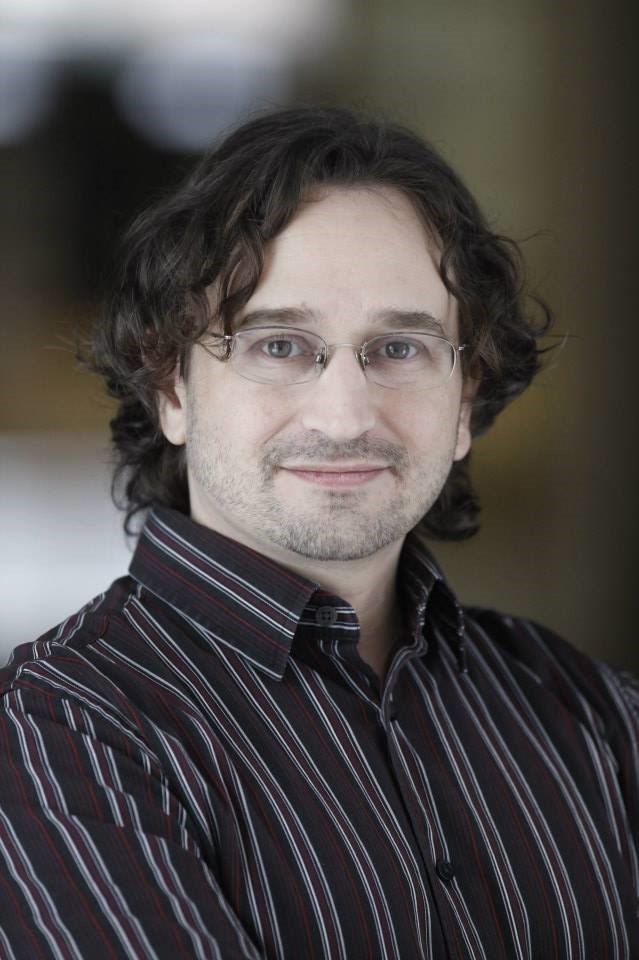
Dr. Brian Milstein

Research Project Title:
Crisis Consciousness, Political Community, and Transnational Justice

Abstract:
I will be investigating how our consciousness of crisis in a globalizing world plays out in relation to the changing nature of political community, and I will be exploring the connections between crisis consciousness, justice, and injustice within and across boundaries. Since at least the time of Hobbes, ideas about political and social crisis have greatly informed the development of the modern worldview. But pervasive as the concept of crisis is in discussions about politics, it remains woefully undertheorized in normative political theory. Most of our key concepts—justice, democracy, citizenship, freedom, equality—assume the background of an already stable society, with predictable rules of economic, social, and institutional performance; the society of ideal theory is typically a “crisis-free” society. Such a way of thinking lends credence to the long-standing assumption that, in times of crisis, normative ideals like justice and democracy must give way to “more essential” issues like necessity or stability. This is a false assumption, and as world society finds itself engulfed in ever-more frequent crises of various kinds, it is a potentially dangerous one. We need to rethink the role of the concept of crisis in modern political thought, beginning with such fundamental questions as: How do our conceptions of crisis inform our conceptions of society? How does the increasingly transnational scope of crises alter the way we think about the scope of political community? What political dynamics are at work in facing crisis, and do they admit of content relevant to questions of justice? Is there a difference between an “effective” response to a crisis and a “just” response? How does the grammar of crisis translate into the possibility of political action and social change?

8. Juli 2016, 11.30 Uhr
Paper Presentation
„Emergency powers and democratic equality“

  • Biografische Angaben

    Brian Milstein conducts research in contemporary critical social theory, democratic theory, world politics, the European nation-state, and, most recently, theories of crisis and crisis-consciousness. He completed his Ph.D. in 2011 at the New School for Social Research, where he received the Hannah Arendt Award in Politics for his dissertation work. He previously held fellowships at the Freie Universität Berlin and the Collège d’études mondiales (FMSH) in Paris and has published articles in the European Journal of Philosophy and the European Journal of Political Theory. His first book, Commercium: Critical Theory from a Cosmopolitan Point of View, was published by Rowman & Littlefield International in Fall 2015.

  • Publikationen

    Commercium: Critical Theory from a Cosmopolitan Point of View (Rowman & Littlefield International, 2015) (https://rowman.com/ISBN/9781783482832/Commercium-Critical-Theory-From-a-Cosmopolitan-Point-of-View)
    “Thinking Politically about Crisis: A Pragmatist Perspective,“ European Journal of Political Theory 14(2): 141-60 (http://ept.sagepub.com/content/14/2/141)
    “Kantian Cosmopolitanism beyond ‘Perpetual Peace’: Commercium, Critique, and the Cosmopolitan Problematic,” European Journal of Philosophy 21(1): 118-43 (http://onlinelibrary.wiley.com/doi/10.1111/j.1468-0378.2010.00437.x/abstract )

Aktuelles aus dem Forschungszentrum

Veranstaltung
20.03.2026 | Frankfurt am Main

40 Jahre Schengen-Raum

Kolloqium

Der 1984 geschlossene Schengen-Vertrag schuf einen heute 29 Staaten umfassenden Raum ohne Binnengrenzen, doch Migration über die Außengrenzen führte zuletzt zur Wiedereinführung von Kontrollen, auch durch die Bundesregierung ab 8. Mai 2025. Das Walter Hallstein-Kolloquium diskutiert die rechtliche Zulässigkeit, wirtschaftliche Folgen insbesondere für Arbeitsmigration und Arbeitsmarkt sowie die Zukunft des Schengen-Raums.

weitere Infos ›
News
12.02.2026

Satanistische Politik und der Niedergang der Vernunft in liberalen Demokratien

Ein letztes Mal im Wintersemester 2025/26 lud das Forschungszentrum zur Ringvorlesung „Am Scheidepunkt. Zur Krise der Demokratie“. Zum Abschluss hat der Philosoph Michael Rosen von der Harvard University sein Konzept der „satanic politics“ als eine Variante der politischen Deutung der Welt vorgestellt.

weitere Infos ›
News
09.02.2026

Zur Aktualität des Gewaltbegriffs anhand von Camus und Derrida

Prof. Dr. Christine Abbt von der Universität St. Gallen hat im Rahmen der Ringvorlesung „Am Scheidepunkt? Zur Krise der Demokratie“ einen Vortrag über Demokratien und den Gewaltbegriff gehalten. Unter dem Titel „Demokratien verteidigen. Zur Aktualität des Gewaltbegriffs bei Camus und Derrida“ besprach die Philosophin Formen von Gewalt und Revolte und ordnete diese im Hinblick auf ein demokratisches Setting ein.

weitere Infos ›
Publikation
04.02.2026 | Zeitschriftenartikel

New Perspectives on Trust in International Conflicts

Wille, Tobias; Simon, Hendrik; Daase, Christopher; Deitelhoff, Nicole; Wheeler, Nicholas J.; Holmes, Marcus; Rathbun, Brian C.; Acharya, Amitav; Mitzen, Jennifer (2026): „New Perspectives on Trust in International Conflicts“. In: International Studies Review 28 (1), viaf027. 

weitere Infos ›
News
02.02.2026

Staatlicher Wettbewerb um Menschen – David Owen über civil geopolitics

Im Rahmen der Ringvorlesung „Am Scheidepunkt – Zur Zukunft der Demokratie“ präsentierte David Owen von der Universität Southampton sein Konzept der civil geopolitics.

weitere Infos ›
News
20.01.2026

Christine Hentschel über Neuorientierungen in katastrophischen Zeiten

Im Rahmen der Ringvorlesung „Am Scheidepunkt? Zur Krise der Demokratie“ sprach die Soziologin über das Leben in und den Umgang mit katastrophischen Zeiten. Vor dem Hintergrund der Zerstörung der Lebensbedingungen, Kriegen, dauerhafter Krisenhaftigkeit sowie der Bedrohungen der Demokratie widmete sich Hentschel dem Einsickern des Katastrophischen in den gesellschaftlichen Alltag und einem sich verändernden aktivistischen und literarischen Umgang mit der Zukunft.

weitere Infos ›
News
05.01.2026

Wir trauern um Thomas M. Schmidt

Mit Thomas M. Schmidt, der am letzten Tag des Jahres 2025 verstorben ist, in dem wir erst wenige Monate zuvor seinen 65. Geburtstag mit einem Symposium begingen, verlieren wir einen der großen Religionsphilosophen unserer Zeit. Sein jäher Tod reißt eine Lücke in die Gemeinschaft der Forschenden, die wie er zu verstehen suchen, was die Rolle der Religion in den säkularen Gesellschaften unserer Zeit ist und sein kann. Zugleich wird er als der wunderbare Mensch fehlen, der er war.

weitere Infos ›
Publikation
19.12.2025 | Sammelband

Faszination und Freiheit 

Günther, Klaus; Zabel, Benno (Hrsg.) (2025): Faszination und Freiheit - Gegenwartsdiagnosen im Anschluss an Christoph Menkes Theorie der Befreiung, Weilerswist (Velbrück Wissenschaft).

weitere Infos ›
Publikation
12.12.2025 | Sammelband

Zwischen Transformation und Abolitionismus. Das Strafrecht und die Vielfalt der Alternativen

Tobias Singelnstein, Christoph Burchard (2025)

weitere Infos ›