

Department of Law and Administration, University of Warsaw
Research Abstract
„Few questions – Herbert Hart famously stated on the question what is norm – concerning human society have been asked with such persistence and answered by serious thinkers in so many diverse, strange, and even paradoxical ways”. More than half a century after his The Concept of Law, we are not any closer to the answer, but much further advanced in discovering the spaces, that can be normative, and therefore – in revealing the new contributions to this question. In the paper I am working on, I want to show, how normative an art narrative can be. Drawing on, firstly, Karl Popper’s idea of World Three as a space in which the human creations that aspire to contain objectivity live, and, secondly, Rainer Forst’s concept of noumenal power (the one which is a tool to „in different degrees – influence, use, determine, occupy, or even seal off the space of reasons for others”, as Forst writes), I analyses different art narratives to show, how, while living in World Three, each of them bases its noumenal power on different justifications and claims to legitimacy. The main aim of my research is therefore to show how narrativity encloses in itself the noumenal power in the story about the fictional world and becomes normative in a sense, that it covers the factual world with the World Three as the world of norms, equating the map with the territory.
-
Biografische Angaben
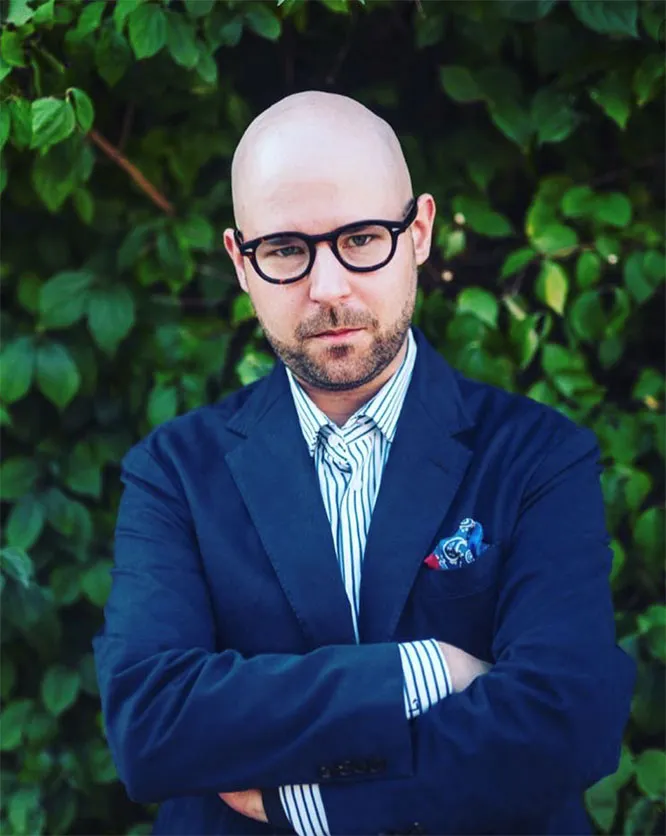
Wojciech Engelking (1992) is a research assistant at the University of Warsaw, conducting a project Awaiting a Messiah. Normative narratives in European thinking after the Great War. His research interest include history of ideas, legal philosophy and political theory (Schmitt, Strauss, Durkheim, Thucydides, Shakespeare).
-
Publikationen
Engelking, Wojciech (2024): Caliban as legal subject: The Tempest and Renaissance juridical thought. Law and Humanities. 10.1080/17521483.2023.2298001
Engelking, Wojciech (2023): French Antecedents of Carl Schmitt’s Concrete-Order Thinking: From Georges Sorel’s Myth to Maurice Hauriou’s Institution. Interpretation. 50. 31-54.
Engelking, Wojciech (2019). Shakespeare as a method. Carl Schmitt’s reading of Othello and Hamlet. History of European Ideas. 45. 1-14. 10.1080/01916599.2019.1637359.