

10.02.2026
Zeitschriftenartikel

The politics of international diplomatic training

Representation and socialisation in programmes for diplomats from the Balkans

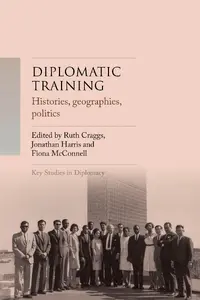
This chapter explores a central tension in international diplomatic training. Experienced diplomats who teach diplomats from other – usually less powerful – states engage in two modes of representation at once. On the one hand, they represent their state, its people, and its interests. In this sense, diplomatic training is a particular form of diplomacy and as such mediates difference without attempting to overcome or transcend it. In spaces of international diplomatic training, representatives of different polities come together, learn about each other’s views, and explore possibilities for coexisting in difference. On the other hand, diplomatic trainers also represent diplomacy as a profession and practice to their ‘young colleagues’, as they are often called irrespective of their age in these settings. While diplomatic relationships are horizontal, at least in a formal sense, these teaching and mentoring relationships are hierarchical. The relationship between master and apprentice here is distinctly undiplomatic, with the aim to assimilate the other into the world of diplomacy. Drawing on participant observation of training programs for diplomats from Kosovo and in-depth interviews, this chapter shows how this tension reproduces a particular imaginary of international politics and forms individual and collective subjects of a particular kind. Theoretically, the chapter engages with recent literatures on diplomacy as a profession and shows that diplomacy grants agency to those invited to participate in it, but always on terms that are not fully their own.
Aktuelles aus dem Forschungszentrum

Veranstaltung
16./18.11.2026 | Frankfurt am Main

The Actuality of Critique in Times of Computational Ideology

Workshop

International Workshop. Convenors: Jean Lassègue (EHESS, CRNS), Katrin Becker (University of Luxembourg/Collège International de Philosophie) and Sabine Müller-Mall (Goethe University, Normative Orders)

weitere Infos ›
Veranstaltung
13.11.2026 | Frankfurt am Main

When Design Gets Political

Ausstellungen, Konferenz, Podiumsdiskussion, Vortrag, Workshop

Der dritte Tag der Design Policy Days an der Goethe-Universität Frankfurt richtet sich an alle, die Design als politische Kraft denken. Gemeinsam mit dem Deutschen Designtag und der World Design Capital 2026 widmet er sich in Roundtables, Projektpräsentationen, Workshops und Ausstellungen der institutionellen Politik: Wie lässt sich Design methodisch, strukturell und normativ in politische Entscheidungsprozesse integrieren – und wie kann Politik selbst als Gestaltungsfeld verstanden werden?

weitere Infos ›
Veranstaltung
18.11.2026 | Frankfurt am Main

The Case for (Neo)colonialism: Neotrusteeship in International Relations as the ‘Imperial Mind’ of the ‘Colonial Present’

Ringvorlesungen, Vortrag

Vortrag von Nick Lemay-Hébert (Manchester University) im Rahmen der Ringvorlesung “Peace and Security in Post-Liberal Times”.

weitere Infos ›
Veranstaltung
25.11.2026 | Frankfurt

Deterrence in “Post-Liberal Times“

Ringvorlesungen, Vortrag

Vortrag von Maria Mälksoo (Copenhagen University) (Goethe-Universität/PRIF/Normative Orders) im Rahmen der Ringvorlesung “Peace and Security in Post-Liberal Times”.

weitere Infos ›
News
02.11.2026

Machtübergabe? Römerberggespräche über die Zukunft der liberalen Demokratie

Stirbt die Demokratie? Wie geht es dem Liberalismus? Die 60. Römerberggespräche im Chagallsaal des Schauspiel Frankfurt widmeten sich am 24. Oktober den gegenwärtigen Abgesängen auf und den Herausforderungen an liberale Demokratien.

weitere Infos ›
Publikation
30.10.2026 | Zeitschriftenartikel

Forum: The Killing of Public Figures: Towards an Integrated Research Agenda

Albarracín, Juan; Wolff, Jonas; Krain, Matthew et. al (2026): „Forum: The Killing of Public Figures: Towards an Integrated Research Agenda“. In: International Studies Perspectives, 2026, ekag015.

weitere Infos ›