
29.12.2025
Zeitschriftenartikel

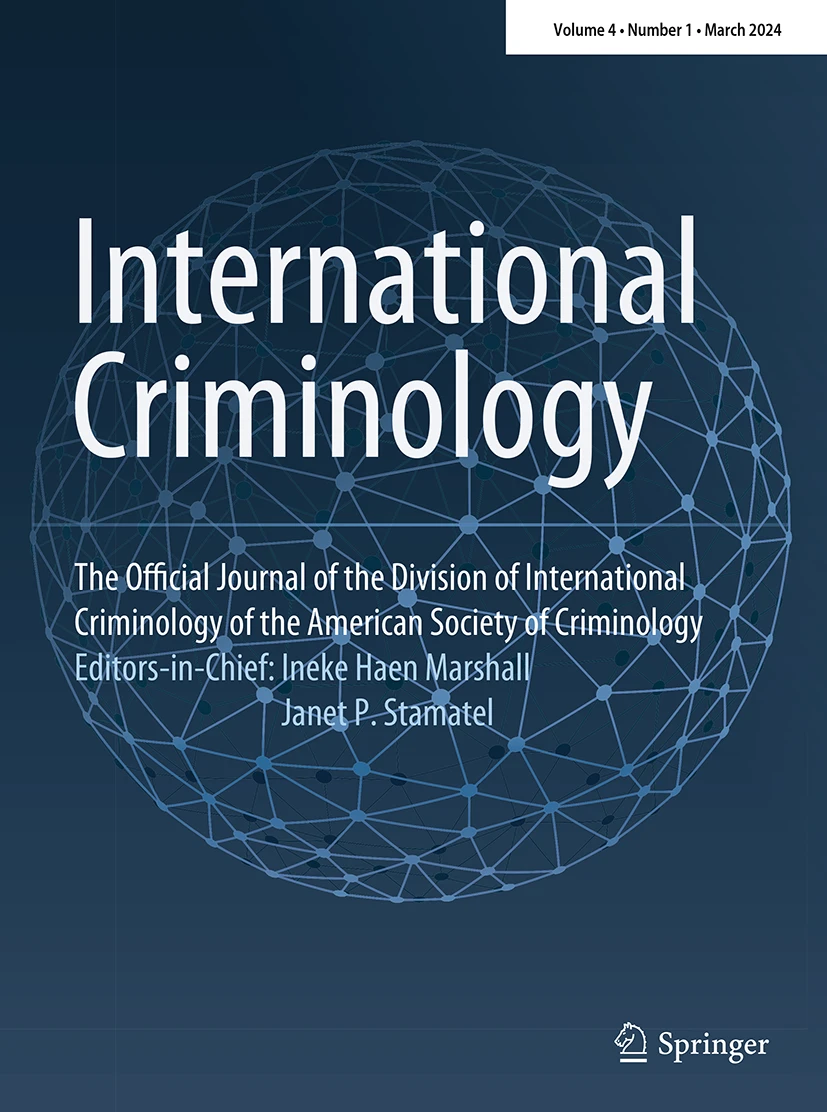
Social Control Through Data Science Systems: A Conceptual Essay

Recent advances in data science, in particular, the analysis of big data through machine learning, have made it technically possible to realize concepts of total social control. However, social control must operate selectively to fulfill its functions of symbolization, integration, and reproduction which are crucial for the cohesion of a modern society. It is argued that selective social control is functional as it symbolically reinforces compliance with norms, prevents widespread stigmatization, and preserves resources and individual autonomy. Current trends toward the implementation of total control systems are illustrated regarding predictive policing, automated CCTV, and the Chinese social credit system. The technical potential and limitations of data science systems are discussed, as are the potential of the legal system to maintain resilience in the face of political and practical demands to expand control capacities. The authors highlight a creeping erosion of legislation and the possible normalization of comprehensive surveillance measures in the name of public safety. They conclude that only a selective and legally constrained use of data science can preserve the function of social control in open societies.
Aktuelles aus dem Forschungszentrum

Veranstaltung
20.10.2026 | Frankfurt

Dr. h.c. Gerhard Wiese – Wirken als Ankläger im Auschwitz Prozess

Film, Podiumsdiskussion

Der Frankfurter Auschwitz-Prozess von 1963 bis 1965 gilt als ein zentraler Wendepunkt in der juristischen und öffentlichen Auseinandersetzung mit den nationalsozialistischen Verbrechen in der Bundesrepublik Deutschland. Dr. h.c. Gerhard Wiese, der als junger Staatsanwalt zum Anklägerteam des Prozesses gehörte, berichtet aus seiner Perspektive auf die damaligen Ermittlungen und die Hauptverhandlung. Im Gespräch mit der Historikerin Dr. Katharina Rauschenberger (Fritz Bauer Institut) wird die Bedeutung des Prozesses für die strafrechtliche Aufarbeitung der NS-Verbrechen in den Blick genommen.

weitere Infos ›
Publikation
21.09.2026 | Working Paper

Dimensionen wehrhafter Demokratie in unsicheren Zeiten

Abich, Leon; Adams, Cosima; Biebricher, Thomas; Britz, Gabriele; Daase, Christopher; Deitelhoff, Nicole; Dönges, Jan; Krause, Leon; Nitzschner, Patrick; Siebert, Hannes; Siefert, Julian; Stephanblome, Isabelle (2026): "Dimensionen wehrhafter Demokratie in unsicheren Zeiten". DemoReg Working Paper 3.1.

weitere Infos ›
Veranstaltung
10.02.2027 | Frankfurt am Main

Shifting Visions of Peace and Security

Podiumsdiskussion, Ringvorlesungen

Podiumsdiskussion im Rahmen der Ringvorlesung “Peace and Security in Post-Liberal Times” mit Lisbeth Zimmermann (Goethe University/Normative Orders), Antonia Witt (PRIF), Siddarth Tripathi (University of Erfurt). Moderation: Jonas Wolff (Goethe University/PRIF/Normative Orders).

weitere Infos ›
Veranstaltung
03.02.2027 | Frankfurt am Main

AI, War, and Big Tech

Ringvorlesungen, Vortrag

Vortrag von Ingvild Bode (University of Southern Denmark)im Rahmen der Ringvorlesung “Peace and Security in Post-Liberal Times”.

weitere Infos ›
Veranstaltung
16.12.2026 | Frankfurt am Main

International arms control in a world of uncertainties

Ringvorlesungen, Vortrag

Vortrag von Malte Göttsche (TU Darmstadt/PRIF) im Rahmen der Ringvorlesung “Peace and Security in Post-Liberal Times”.

weitere Infos ›
Veranstaltung
02.12.2026 | Frankfurt am Main

Enabling Authoritarianism: UN Peacekeeping and the Politics of Authoritarianism

Ringvorlesungen, Vortrag

Vortrag von Sarah von Billerbeck (University of Reading) im Rahmen der Ringvorlesung “Peace and Security in Post-Liberal Times”.

weitere Infos ›