

16.09.2025
Monographie

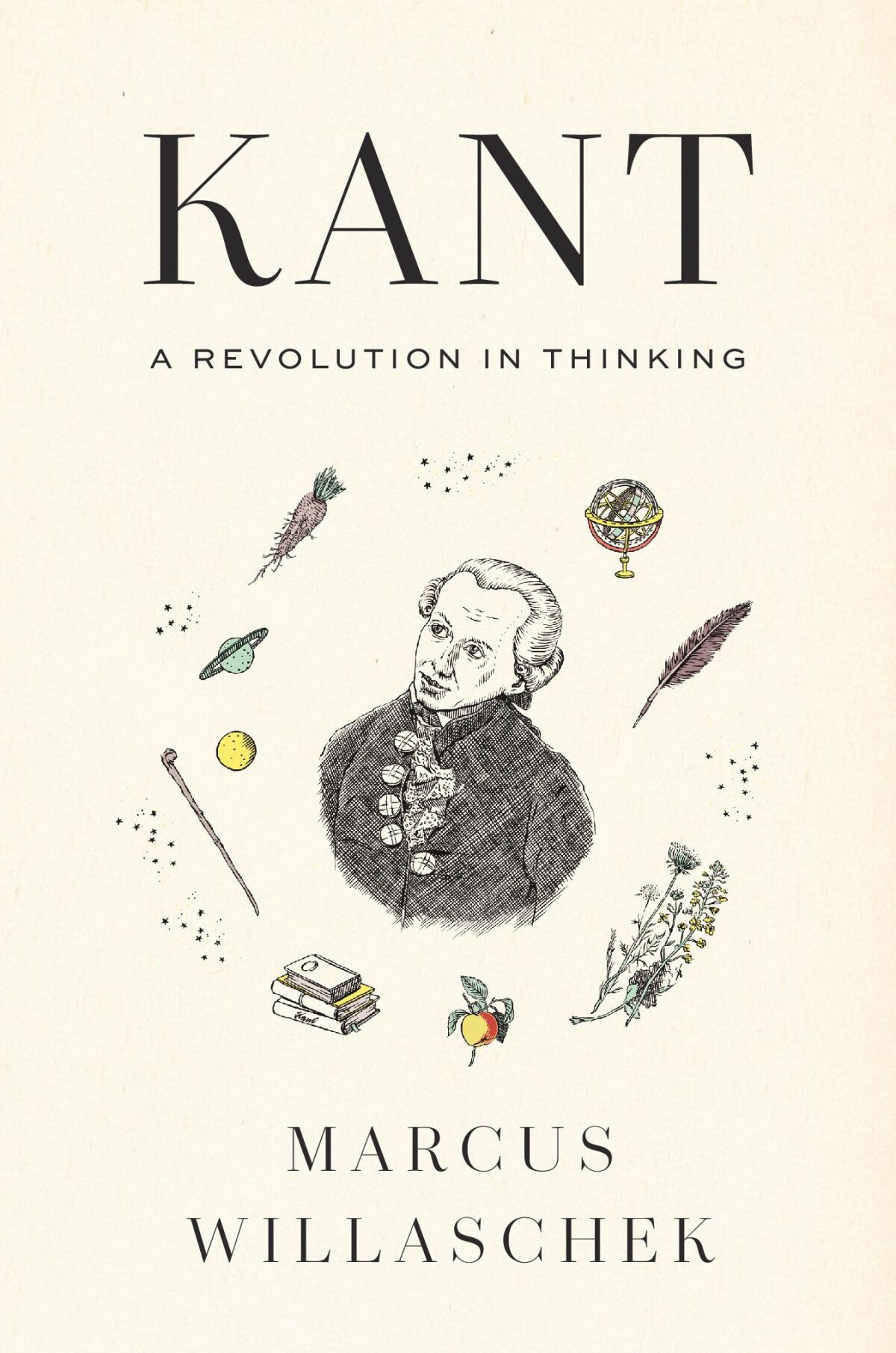
Kant. A Revolution in Thinking

About the book

Immanuel Kant is undoubtedly the most important philosopher of the modern era. His Critique of Pure Reason, “categorical imperative,” and conception of perpetual peace in the global order decisively influenced both intellectual history and twentieth-century politics, shaping everything from the German Constitution to the United Nations Charter.

Renowned philosopher Marcus Willaschek explains why, three centuries after Kant’s birth, his reflections on democracy, beauty, nature, morality, and the limits of human knowledge remain so profoundly relevant. Weaving biographical and historical context together with exposition of key ideas, Willaschek emphasizes three central features of Kant’s theory and method. First, Kant combines seemingly incompatible positions to show how their insights can be reconciled. Second, he demonstrates that it is not only human thinking that must adjust to the realities of the world; the world must also be fitted to the structures of our thinking. Finally, he overcomes the traditional opposition between thought and action by putting theory at the service of practice.

In Kant: A Revolution in Thinking, even readers having no prior acquaintance with Kant’s ideas or with philosophy generally will find an adroit introduction to the Prussian polymath’s oeuvre, beginning with his political arguments, expanding to his moral theory, and finally moving to his more abstract considerations of natural science, epistemology, and metaphysics. Along the way, Kant himself emerges from beneath his famed works, revealing a magnetic personality, a clever ironist, and a man deeply engaged with his contemporary world.
Aktuelles aus dem Forschungszentrum

Veranstaltung
02.02.2027 | Frankfurt

Klassenjustiz, race und abolitionistische Demokratie

Ringvorlesungen, Vortrag

Vortrag von Prof. Dr. Daniel Loick (Amsterdam) im Rahmen der Ringvorlesung "Ist das Recht am Ende?" im Wintersemester 2026/2027. Organisiert von Klaus Günther und Benno Zabel.

weitere Infos ›
Veranstaltung
19.01.2027 | Frankfurt

Nach der Normativität. Zum Verhältnis von Politik und Recht unter komputationalen Bedingungen

Ringvorlesungen, Vortrag

Vortrag von Prof. Dr. Sabine Müller-Mall (Frankfurt am Main) im Rahmen der Ringvorlesung "Ist das Recht am Ende?" im Wintersemester 2026/2027. Organisiert von Klaus Günther und Benno Zabel.

weitere Infos ›
Veranstaltung
08.12.2026 | Frankfurt am Main

Transformationen des Rechts im Anthropozän?

Ringvorlesungen, Vortrag

Vortrag von Prof. Dr. Doris Schweitzer (Frankfurt am Main) im Rahmen der Ringvorlesung "Ist das Recht am Ende?" im Wintersemester 2026/2027. Organisiert von Klaus Günther und Benno Zabel.

weitere Infos ›
Veranstaltung
26.11.2026 | Frankfurt am Main

Rechtskritik oder Rechtsnihilismus?

Ringvorlesungen, Vortrag

Vortrag von Prof. em. Dr. Günter Frankenberg (Frankfurt am Main) im Rahmen der Ringvorlesung "Ist das Recht am Ende?" im Wintersemester 2026/2027. Organisiert von Klaus Günther und Benno Zabel.

weitere Infos ›
Veranstaltung
24.10.2026 | Frankfurt am Main

Machtübergabe? Wie geht es weiter, wenn der demokratische Liberalismus abgewählt wird

Podiumsdiskussion, Vortrag

Gegen den Aufstieg autoritärer und populistischer Parteien hat national wie international bisher kein Mittel geholfen: Weder Brandmauern noch Anbiederung haben Wirkung gezeigt. Was geschieht, wenn sie in Regierungsverantwortung kommen und politische Macht übernehmen? Wie liefe ein solcher Prozess der Machtübergabe ab, welche Folgen hätte er für die Bundesrepublik – und wie kann die Gesellschaft darauf noch reagieren? Die Römerberggespräche als Ort demokratischer Gesprächskultur und gesellschaftlicher Kontroverse wollen sich dieses Themas annehmen und ihm statt Fatalismus Anschauung und Diskussion entgegensetzen.

weitere Infos ›
Publikation
08.09.2026 | Monographie

Bedingungen unserer Existenz. Zur Aktualität Michel Foucaults

Saar, Martin; Vogelmann, Frieder (2026): Bedingungen unserer Existenz. Zur Aktualität Michel Foucaults. Berlin: Suhrkamp. 

weitere Infos ›