

23.06.2023
Buchkapitel

Virtual Patent Networks and Their Network Effects

Über das Buchkapitel:

On the basis of the economic theory of network effects, this article provides a novel explanation of the so-called patent paradox, i.e. the question why the propensity to patent is so strong when the expected average value of most patents is low. It demonstrates that the patent system of a country resembles a telephone network or a social media platform. Patents are perceived as nodes in a virtual network that, as a whole, exhibits network effects. It is explained why patents are not independent of other patents but that they complement each other in several ways both within and beyond markets and fields of technology, and that patents thus create synchronization value over and above individual interests of patent holders in exclusivity. As a consequence, the more patents there are, the more valuable it is to also seek patents, and vice versa. Since patents thus display increasing returns to adoption, the willingness to pay for the next patent slopes upwards. This explains why, after a phase of early instability and a certain tipping point, many countries’ patent systems expanded quickly and eventually became a rigid standard (“lock-in”). The concluding section raises the question what regulatory measures are suitable to effectively address the ensuing anticommons effects.

Über den Sammelband:

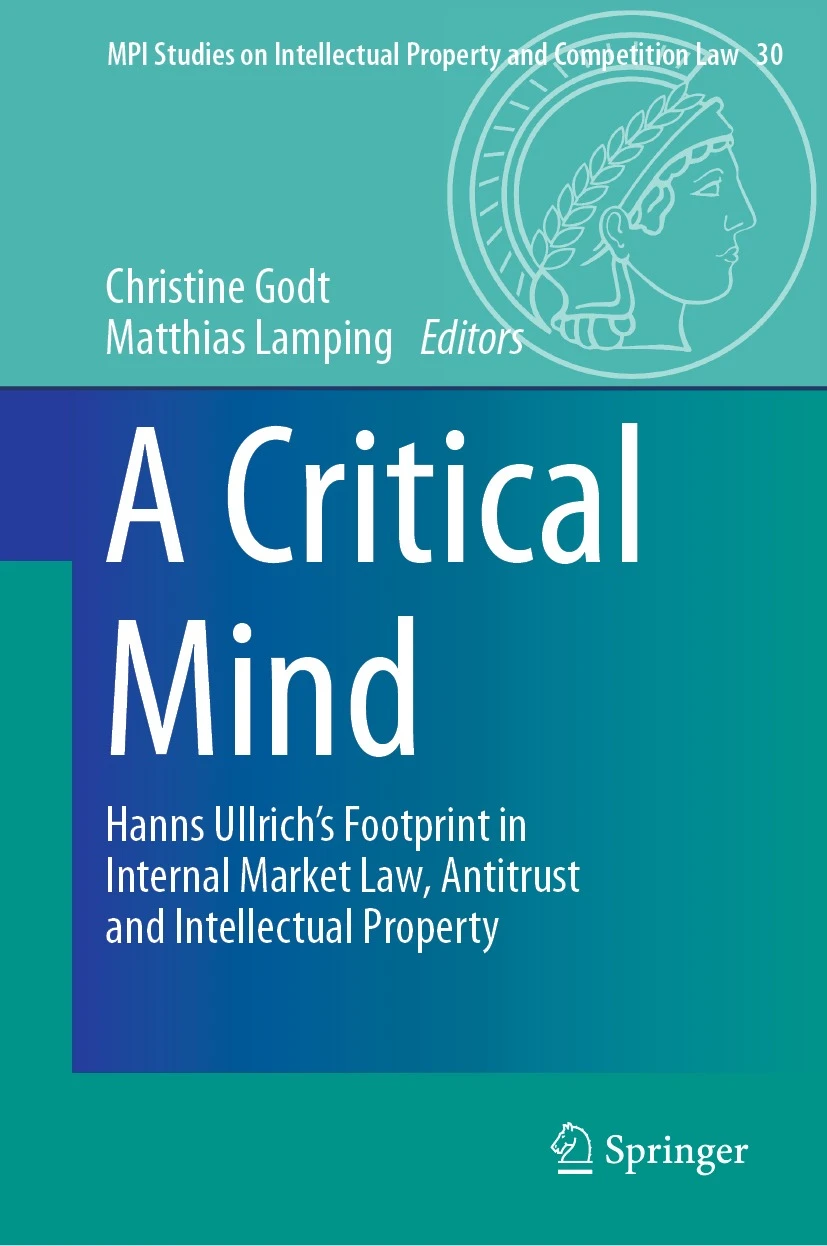
This book traces the academic footprint of Hanns Ullrich. Thirty contributions revolve around five central topics of his oeuvre: the European legal order, competition law, intellectual property, the regulation of new technologies, and the global market order. Acknowledging him as a trailblazer, the book aims to capture how deeply Hanns Ullrich has influenced contemporaries and subsequent generations of scholars. The contributors re-iterate the path-breaking patterns of his teachings, such as his contemplation of intellectual property as embedded in competition, the necessity of balancing private and public interests in intellectual property law, the policies of market integration, and the peculiar relationship of technological advancement and protectionism.
Aktuelles aus dem Forschungszentrum

Veranstaltung
24.09.2026 | Frankfurt am Main

Die neuen Warlords. Gewaltdynamiken einhegen / Friedensgutachten 2026

Buchvorstellung

Die imperialistische Großmachtpolitik ändert die Vorzeichen von Krieg, Frieden und Sicherheit. Staaten agieren zunehmend wie Warlords und setzen Krieg als Mittel der Politik ein. Übergänge von Gewaltkonflikten zu Frieden werden als „Deals“ behandelt, Mittelmächte treten mit neuem Selbstbewusstsein, aber ambivalentem Kurs auf, und technologische Innovation verändert Kriege und erschwert die Regulierung. Zugleich befindet sich die internationale Kooperation in der Friedenssicherung in ihrer schwersten Krise. Das Friedensgutachten 2026 analysiert Optionen, dennoch Frieden zu fördern.

weitere Infos ›
News
23.07.2026

Dr. Jonas Heller mit Maria-Weber-Grant ausgezeichnet

Dr. Jonas Heller, assoziiertes Mitglied von Normative Orders, erforscht, wie sich geschichtlicher Wandel als Überwindung geschichtlicher Blockaden verstehen lässt. Hierfür wurde er nun mit einem Preis der Hans-Böckler-Stiftung ausgezeichnet.

weitere Infos ›
Publikation
23.07.2026 | Zeitschriftenartikel

Governing the Subject of Populism

Biebricher, Thomas: "Governing the Subject of Populism". In: European Journal of Social Theory, OnlineFirst.

weitere Infos ›
News
16.07.2026

Was verteidigen wir, wenn wir Demokratie verteidigen?

Die Krise der Demokratie stand im Mittelpunkt der diesjährigen Jahreskonferenz. Angesichts des weltweiten Erstarkens autoritärer und populistischer Bewegungen diskutierten internationale Wissenschaftlerinnen und Wissenschaftler aktuelle Gefährdungen demokratischer Ordnungen und die grundlegende normative Frage: Was genau verteidigen wir eigentlich, wenn wir Demokratie verteidigen?

weitere Infos ›
News
15.07.2026

Von der normativen Kraft des Rechts in Zeitenwenden

Erleben wir gegenwärtig den Übergang von einer regelbasierten internationalen Ordnung zu einer Machtordnung? Dieser weitverbreiteten Diagnose widerspricht Hendrik Simon in seinem neuen Buch „Das Recht der Gewalt. Warum Waffen allein keinen Frieden schaffen“, das am 15. Juli im Reclam-Verlag erschienen ist.

weitere Infos ›
Publikation
15.07.2026 | Monographie

Das Recht der Gewalt. Warum Waffen allein keinen Frieden schaffen

Simon, Hendrik (2026): Das Recht der Gewalt. Warum Waffen allein keinen Frieden schaffen. Ditzingen: Reclam.

weitere Infos ›