

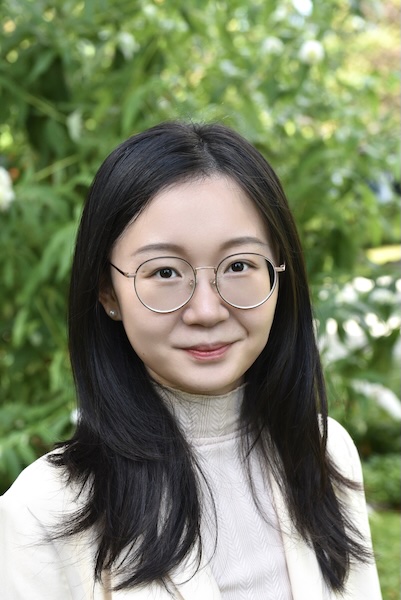
Fellow (ehemalig)

Yijie Wang

{"ARInfo":{"IsUseAR":false},"Version":"1.0.0","MakeupInfo":{"IsUseMakeup":false},"FaceliftInfo":{"IsChangeEyeLift":false,"IsChangeFacelift":false,"IsChangePostureLift":false,"IsChangeNose":false,"IsChangeFaceChin":false,"IsChangeMouth":false,"IsChangeThinFace":false},"BeautyInfo":{"IsAIBeauty":false,"OldBeautyCount":1,"IsSharpen":false,"SwitchMedicatedAcne":false,"IsBrightEyes":false,"IsOldBeauty":false,"IsReduceBlackEyes":false},"HandlerInfo":{"AppName":2},"FilterInfo":{"IsUseFilter":false}}

Yijie Wang recently submitted her dissertation titled “Ethical framework for Global COVID-19 Vaccine Distribution” at Goethe University Frankfurt. Her current research project focuses on the topic of “Solidarity and Global Health in the Times of COVID-19”. In the age of COVID-19 characterized by extreme scarcity of medical resources, amplified social inequalities and injustices, and heightened protectionism of self-interest and partiality, it becomes imperative to reevaluate the very essence of solidarity. What is solidarity? Does it extend globally? What role does solidarity play in the realm of global health? What are the foundations of solidarity during a pandemic? Why does the call for solidarity often fall short? In light of COVID-19, how can we have new perspectives for reimagining global solidarity in the context of global health emergencies? Answering these questions delves into the multifaceted dimensions of solidarity during the age of COVID-19, exploring its global scope, significance in global health, underlying sources, challenges, and the transformative potential that the pandemic might bring to the concept of global solidarity. Through a critical examination of these questions, Wangs research aims to contribute valuable insights to the ongoing discourse on conceptualizing solidarity in the realm of global health.

  • Publikationen

    2017. “Is Mill’s harm principle an abstract principle?” Chinese and Foreign Humanism Research (10): 48-66.

Aktuelles aus dem Forschungszentrum

Veranstaltung
13.11.2026 | Frankfurt am Main

When Design Gets Political

Ausstellungen, Konferenz, Podiumsdiskussion, Vortrag, Workshop

Der dritte Tag der Design Policy Days an der Goethe-Universität Frankfurt richtet sich an alle, die Design als politische Kraft denken. Gemeinsam mit dem Deutschen Designtag und der World Design Capital 2026 widmet er sich in Roundtables, Projektpräsentationen, Workshops und Ausstellungen der institutionellen Politik: Wie lässt sich Design methodisch, strukturell und normativ in politische Entscheidungsprozesse integrieren – und wie kann Politik selbst als Gestaltungsfeld verstanden werden?

weitere Infos ›
Veranstaltung
18.11.2026 | Frankfurt am Main

The Case for (Neo)colonialism: Neotrusteeship in International Relations as the ‘Imperial Mind’ of the ‘Colonial Present’

Ringvorlesungen, Vortrag

Vortrag von Nick Lemay-Hébert (Manchester University) im Rahmen der Ringvorlesung “Peace and Security in Post-Liberal Times”.

weitere Infos ›
Veranstaltung
25.11.2026 | Frankfurt

Deterrence in “Post-Liberal Times“

Ringvorlesungen, Vortrag

Vortrag von Maria Mälksoo (Copenhagen University) (Goethe-Universität/PRIF/Normative Orders) im Rahmen der Ringvorlesung “Peace and Security in Post-Liberal Times”.

weitere Infos ›
News
02.11.2026

Machtübergabe? Römerberggespräche über die Zukunft der liberalen Demokratie

Stirbt die Demokratie? Wie geht es dem Liberalismus? Die 60. Römerberggespräche im Chagallsaal des Schauspiel Frankfurt widmeten sich am 24. Oktober den gegenwärtigen Abgesängen auf und den Herausforderungen an liberale Demokratien.

weitere Infos ›
Publikation
30.10.2026 | Zeitschriftenartikel

Forum: The Killing of Public Figures: Towards an Integrated Research Agenda

Albarracín, Juan; Wolff, Jonas; Krain, Matthew et. al (2026): „Forum: The Killing of Public Figures: Towards an Integrated Research Agenda“. In: International Studies Perspectives, 2026, ekag015.

weitere Infos ›
News
27.10.2026

Erinnerung als Auftrag: Ehemaliger Staatsanwalt Gerhard Wiese berichtet über den Frankfurter Auschwitz-Prozess

Wie konnte es in der Bundesrepublik der 1960er-Jahre gelingen, die Verbrechen von Auschwitz vor Gericht zu verhandeln? Dr. h. c. Gerhard Wiese, der als junger Staatsanwalt zum Anklägerteam des Frankfurter Auschwitz-Prozesses gehörte, berichtete aus eigener Erfahrung über das Verfahren.

weitere Infos ›