

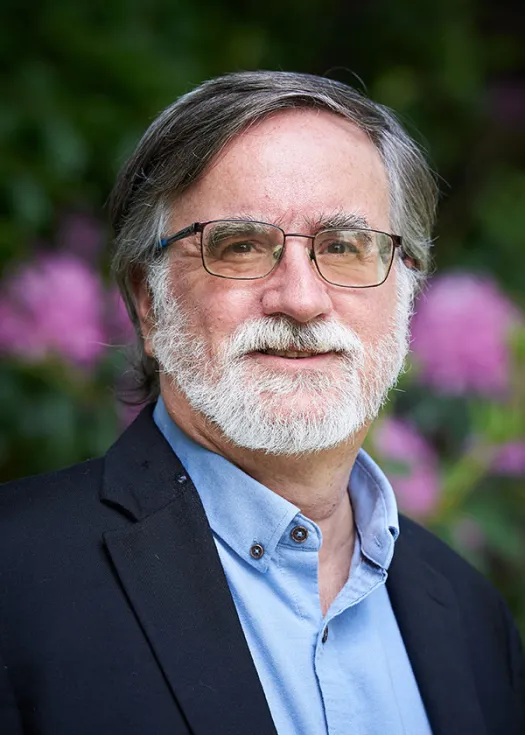
Professor of Political Science, University of Valparaiso (Chile)
Research project: Towards a Social Theory of Populism (Left and Right)
The study of populism in universities of the global North has been dominated by political scientists trained in comparative politics. At the same time, the efforts by the most illustrious of them to define populism as a set of ideas (akin to an ideology) seem to have failed by standards of political philosophers and theorists (Freeden 2017). More puzzling, the phenomenon we call populism seems to appear both on the left (particularly in Latin America and in early American history) and on the right (particularly in Europe and in the US in recent decades), calling into question the unity of the phenomenon. While now a global phenomenon, its epicenters still appear to remain in Latin America, the US, and more recently Europe i.e., the “global West”. Margaret Canovan has even called populism “the shadow of democracy” (1999:3). While the electoral sociology of populism has been thoroughly studied, we still remain speculatively in the dark as to both the causal mechanisms of the successful workings of populist appeals and, more interestingly, the inner sociopsychological mechanisms (including of course emotions) at play amongst its core supporters. For this purpose, our research is inspired by the work of German sociologist Norbert Elias (particularly “A Theoretical Essay on Established and Outsiders Relations” and “Civilisation and informalisation: changes in European standards of behaviour in the twentieth century” in Studies on the Germans) and to a lesser extent the work of Bourdieu on tastes and social hierarchies in Distinction. With modernity, social mobility –including of groups as a whole—has been a fact of social life. The loss of a privileged status position or, conversely, a subordinated one, is not without effects on the self. Informalization has affected perceived senses of equality, entitlement, and relative status –with behavioral entailments. While (especially for the right) populism may be a reaction to or (often on the left) a cause of changes in relations of power within a given society, phenomenologically it is best studied drawing on the kind of evidence commonly found in cultural studies.
Our interpretation, close to Elias, is that rightwing populism is a reaction to a relative loss of status of “established” demographic groups (as part of informalization and the advance of notions of equality and human rights), leading to what Elias then calls a “fantasy shield”, which protects the self-esteem of those declining, ex-established groups – a fantasy shield at odds with (an “unpleasant”) reality. The notion of “Make America Great Again” is just one of many examples. Fantasy shields tend to be past-oriented, involving a “re-claiming”. Leftwing populism is the (noisy) assertion of previously subordinated and stigmatized groups (Elias’ “outsiders”), flaunting to a certain degree their stigma in an act of pride part itself of a process of change in relative status. Peron´s shirtless, “greasy ones”, Gaitan’s chusma (rabble), or Erdogan’s Anatolian followers are examples of this. Both forms of populism, nonetheless, occur in a context of (wished for, or “suffered”) change of relative social status. Both involve a flaunting transgressive of what has been considered socio-politically acceptable in their society’s recent history, directed in an unfriendly way at a social other. Public display or performance thus figures integrally in populism. The centrality of the (forceful) leader is what allows, or permits, this display. Emotions are key because populism is to a large extent the “politics of ‘hurt´” whether due to decline and loss of centrality (on the right), or to historical inferiorizing and internalized stigma (on the populist left). Whether about “loss” and group pride, or the pride of stigmatized “inferiors”, populism finds its fuel in the emotional politics of macro-level “disregard” and associated reinforcement of groups’ identity.
Events
Thursday June 20, 2024, 11.00
Lecture: “Towards a Social Theory of Populism (Left and Right)”
Forschungskolleg Humanwissenschaften, Am Wingertsberg 4, 61348 Bad Homburg
For further information: Click here…
-
Biografische Angaben
Pierre Ostiguy is a social scientist and social theorist, professor at the University of Valparaíso (Chile), and a Ph.D. from UC Berkeley. He is co-editor of The Oxford Handbook of Populism (2017, reedited 2019); main editor of Populism in Global Perspective: A Performative and Discursive Approach (Routledge 2020); and author of numerous articles and book chapters on populism, both phenomenologically and theoretically. Globally, he is best known for his sociocultural approach to populism (as “the flaunting of ‘the low’”) and in the Americas for his earlier work on Peronism (and anti-Peronism) in Argentina. His social theoretical work has engaged that of Ernesto Laclau and built upon the sociology of Pierre Bourdieu and Norbert Elias. His interests have ranged from mainstream political science (party systems, political spaces, political behavior), through political sociology and social theory, to cultural studies. He has taught as a regular faculty member in Canada, the United States, Argentina, and Chile and published in Spanish, English, and French. He has also been a visiting Fellow at the Scuola Normale Superiore (Florence), the Kellogg Institute, and now the FKH.
-
Publikationen
„Die Stimme des Hugo Chavez: Eine rhetorische Analyse,“ in: WestEnd: Neue Zeitschrift für Sozialforschung (forthcoming 2024).
(ed. with Francisco Panizza and Ben Moffitt), Populism in Global Perspective: A Performative and Discursive Approach, Routledge 2020.
(ed. with Cristobal Rovira, Paul Taggart and Paulina Ochoa), The Oxford Handbook of Populism, Oxford University Press 2017. (Second edition, paperback, 2019).
“Populism: A Socio-Cultural Approach”, in: Rovira et al. (eds.): The Oxford Handbook of Populism, Oxford University Press 2017. (with Ken Roberts): “Putting Trump in Comparative Perspective: Populism and the Politicization of the Sociocultural Low”, in: TheBrown Journal of World Affairs 23: 1 (2016), p. 25-50.