

Research Project Title:
Crisis Consciousness, Political Community, and Transnational Justice
Abstract:
I will be investigating how our consciousness of crisis in a globalizing world plays out in relation to the changing nature of political community, and I will be exploring the connections between crisis consciousness, justice, and injustice within and across boundaries. Since at least the time of Hobbes, ideas about political and social crisis have greatly informed the development of the modern worldview. But pervasive as the concept of crisis is in discussions about politics, it remains woefully undertheorized in normative political theory. Most of our key concepts—justice, democracy, citizenship, freedom, equality—assume the background of an already stable society, with predictable rules of economic, social, and institutional performance; the society of ideal theory is typically a “crisis-free” society. Such a way of thinking lends credence to the long-standing assumption that, in times of crisis, normative ideals like justice and democracy must give way to “more essential” issues like necessity or stability. This is a false assumption, and as world society finds itself engulfed in ever-more frequent crises of various kinds, it is a potentially dangerous one. We need to rethink the role of the concept of crisis in modern political thought, beginning with such fundamental questions as: How do our conceptions of crisis inform our conceptions of society? How does the increasingly transnational scope of crises alter the way we think about the scope of political community? What political dynamics are at work in facing crisis, and do they admit of content relevant to questions of justice? Is there a difference between an “effective” response to a crisis and a “just” response? How does the grammar of crisis translate into the possibility of political action and social change?
8. Juli 2016, 11.30 Uhr
Paper Presentation
„Emergency powers and democratic equality“
-
Biografische Angaben
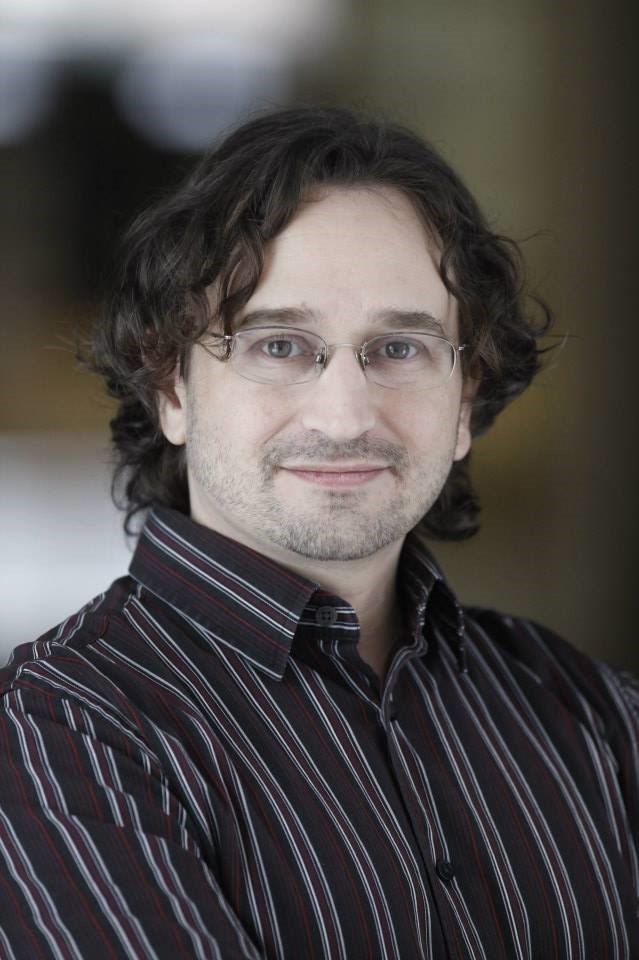
Brian Milstein conducts research in contemporary critical social theory, democratic theory, world politics, the European nation-state, and, most recently, theories of crisis and crisis-consciousness. He completed his Ph.D. in 2011 at the New School for Social Research, where he received the Hannah Arendt Award in Politics for his dissertation work. He previously held fellowships at the Freie Universität Berlin and the Collège d’études mondiales (FMSH) in Paris and has published articles in the European Journal of Philosophy and the European Journal of Political Theory. His first book, Commercium: Critical Theory from a Cosmopolitan Point of View, was published by Rowman & Littlefield International in Fall 2015.
-
Publikationen
Commercium: Critical Theory from a Cosmopolitan Point of View (Rowman & Littlefield International, 2015) (https://rowman.com/ISBN/9781783482832/Commercium-Critical-Theory-From-a-Cosmopolitan-Point-of-View)
“Thinking Politically about Crisis: A Pragmatist Perspective,“ European Journal of Political Theory 14(2): 141-60 (http://ept.sagepub.com/content/14/2/141)
“Kantian Cosmopolitanism beyond ‘Perpetual Peace’: Commercium, Critique, and the Cosmopolitan Problematic,” European Journal of Philosophy 21(1): 118-43 (http://onlinelibrary.wiley.com/doi/10.1111/j.1468-0378.2010.00437.x/abstract )