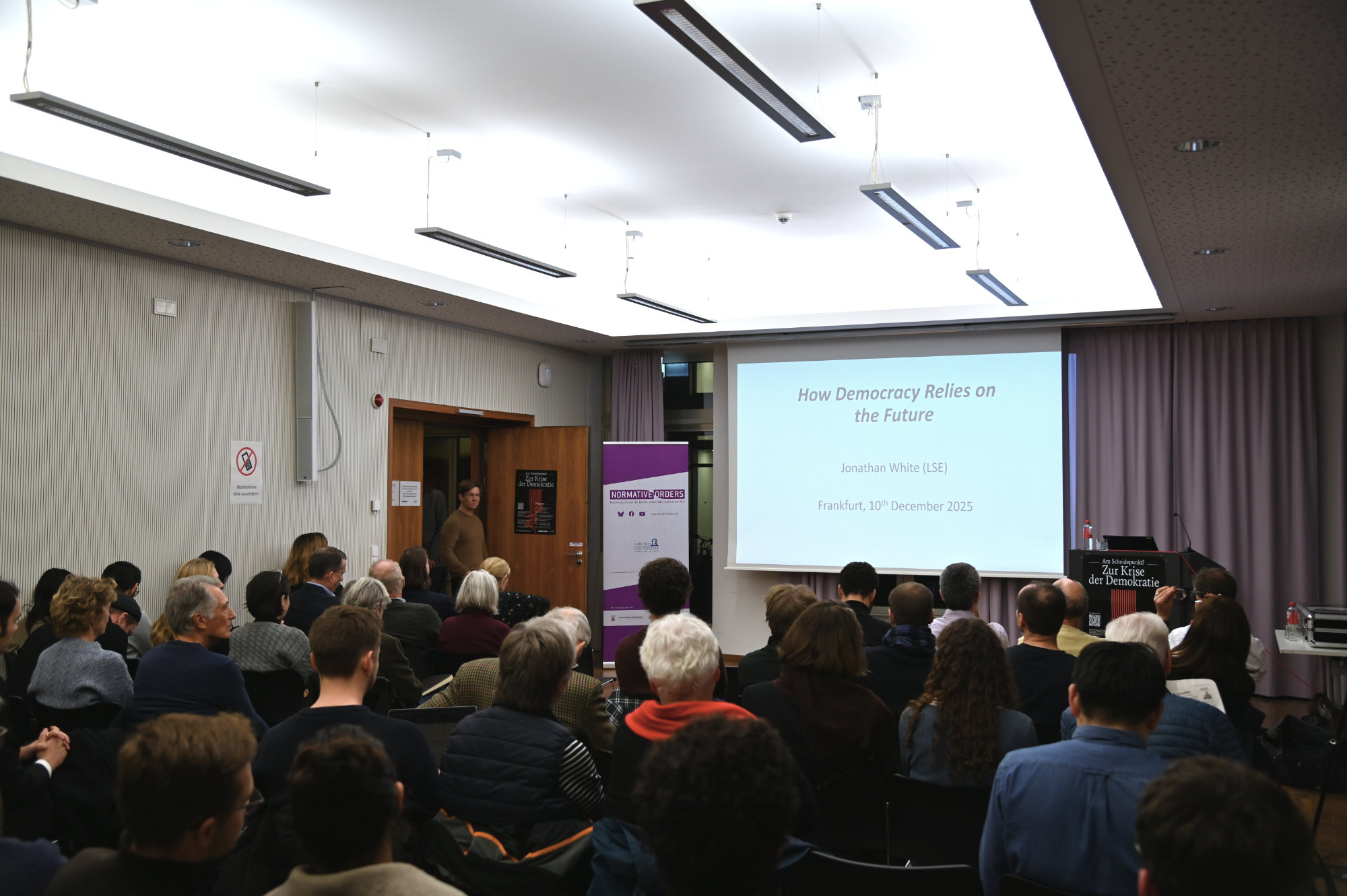
Jonathan White on future thinking in democracies
On the second date of the lecture series “At the Crossroads? On the crisis of democracy”, political scientist Jonathan White discussed perspectives on the future within democracies and the need for a future-oriented approach in democracies. White began by citing various public discourses in which the future influences current politics. Contrary to what is sometimes described, the future has not been lost since the end of the juxtaposition of different political and economic systems in the 20th century. But there has been a qualitative change in which the future – although still very present – is understood as something to be reacted to rather than something that can be actively shaped in the present.
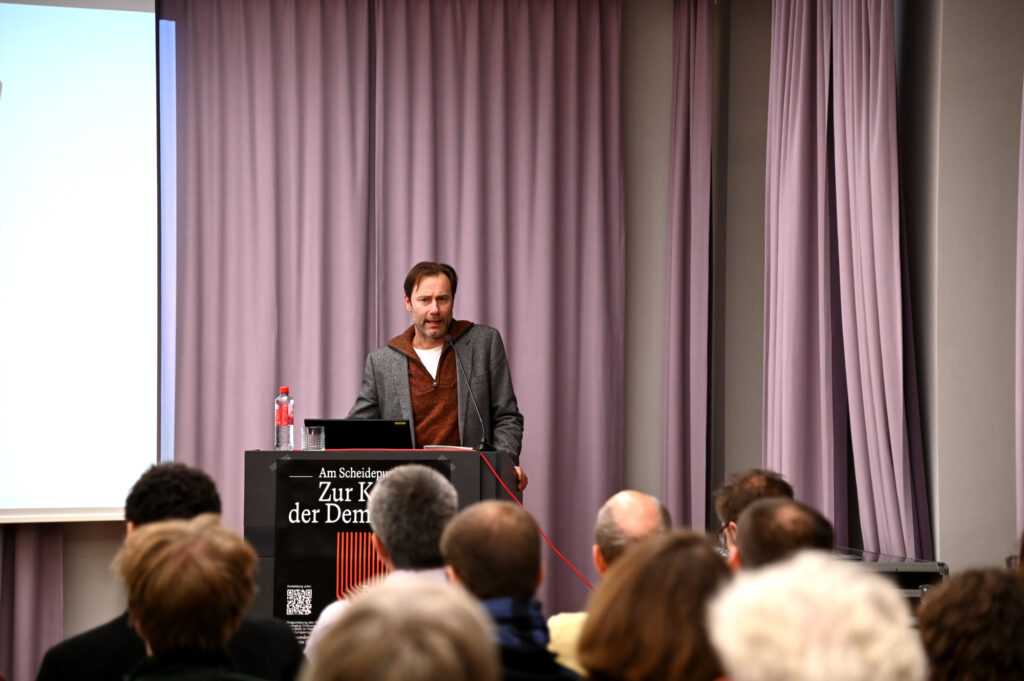
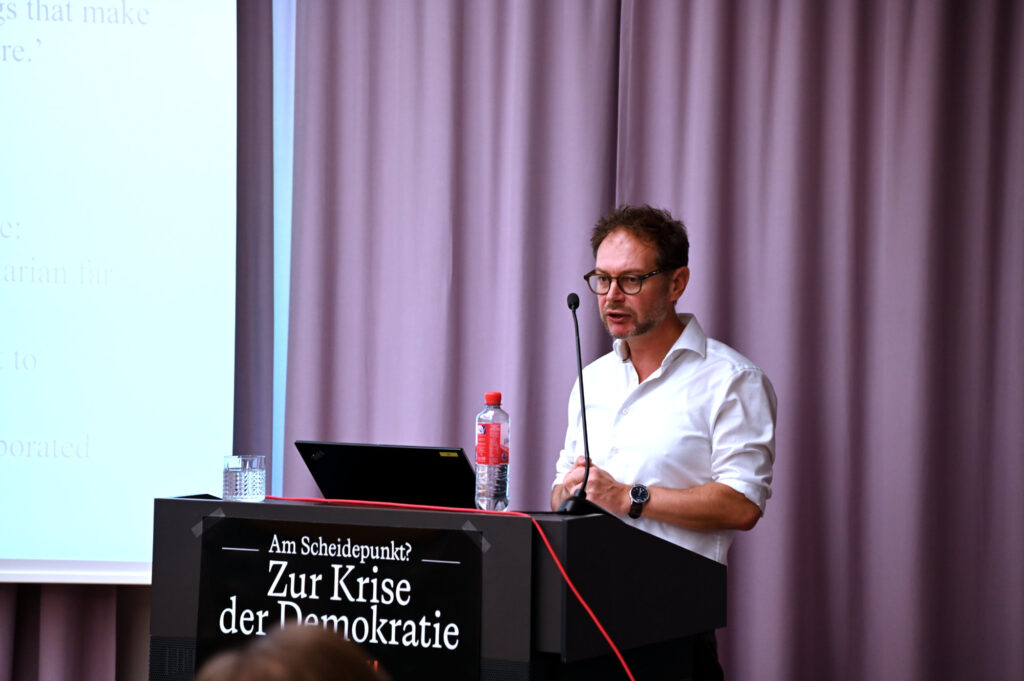
In democracies, the future is an important source of different emancipatory currents: In the form of utopias, for example, it enables a critical perspective on the present and can shape collective identities as a shared idea of what is to be achieved. However, with limitations. White also points out the dangers of absolutizing ideas of the future: If a version of the future is understood as a final, conclusive slogan, the potential for undemocratic means of achieving the future is opened up and obvious. However, a democratic future must always include the possibility of correction, for example of a different choice in the future.
At present, White sees a growing opportunism as a prominent development. For him, opportunism is characterized by the regular adaptation of different positions and a closely related indifference to political principles. This has become a kind of substitute for real future-oriented politics.
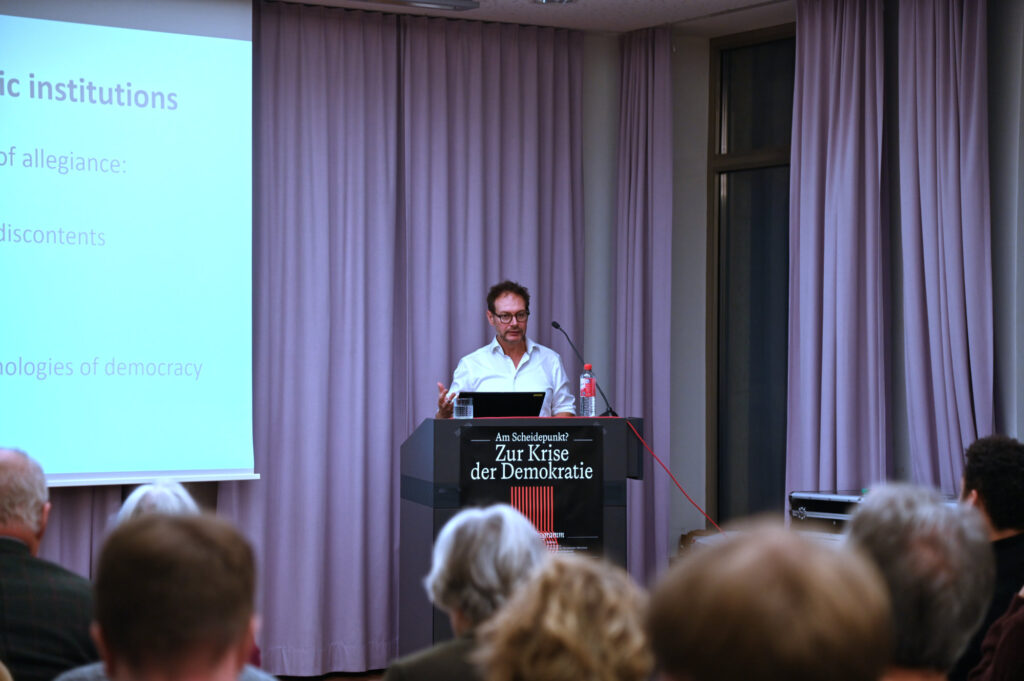
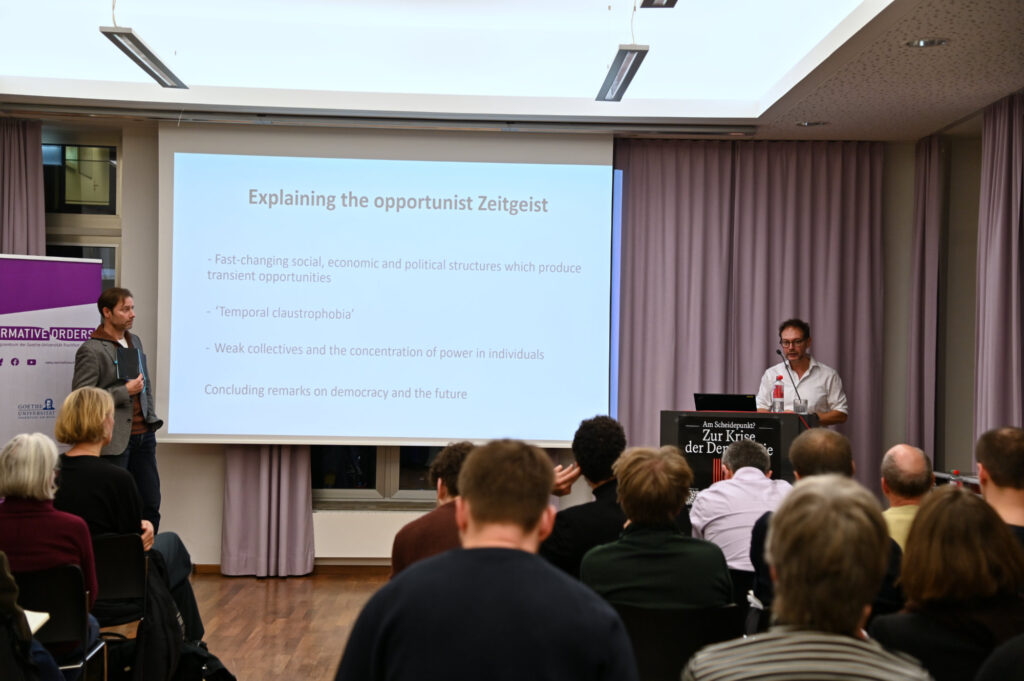
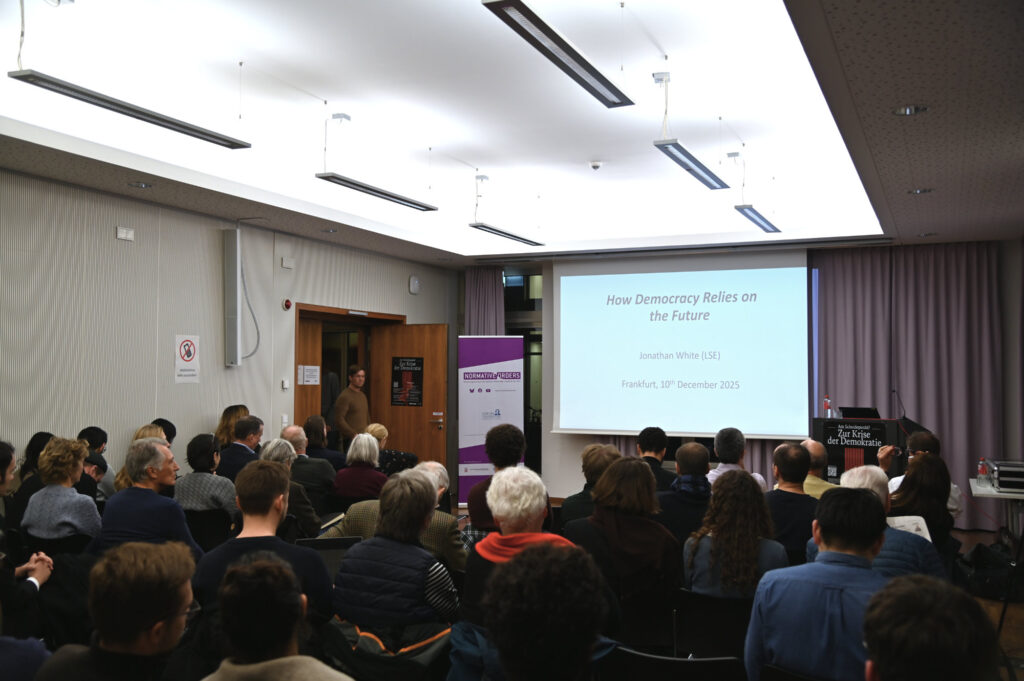
Such opportunism is particularly easy in a rapidly changing world that is confronted with catastrophes and catastrophizing thinking. There is therefore no end to the future, but the ideas of a future to which we are powerless must be countered. Because democracy needs a future.
Jonathan White is Deputy Director of the European Institute and has been Professor of Politics at the London School of Economics since 2008. He has worked at Harvard, Stanford, the Wissenschaftskolleg zu Berlin and Sciences Po, among others. His most recent book is ” In the Long Run. The Future as a Political Idea ”