02.02.2026

States competing for people – David Owen on civil geopolitics

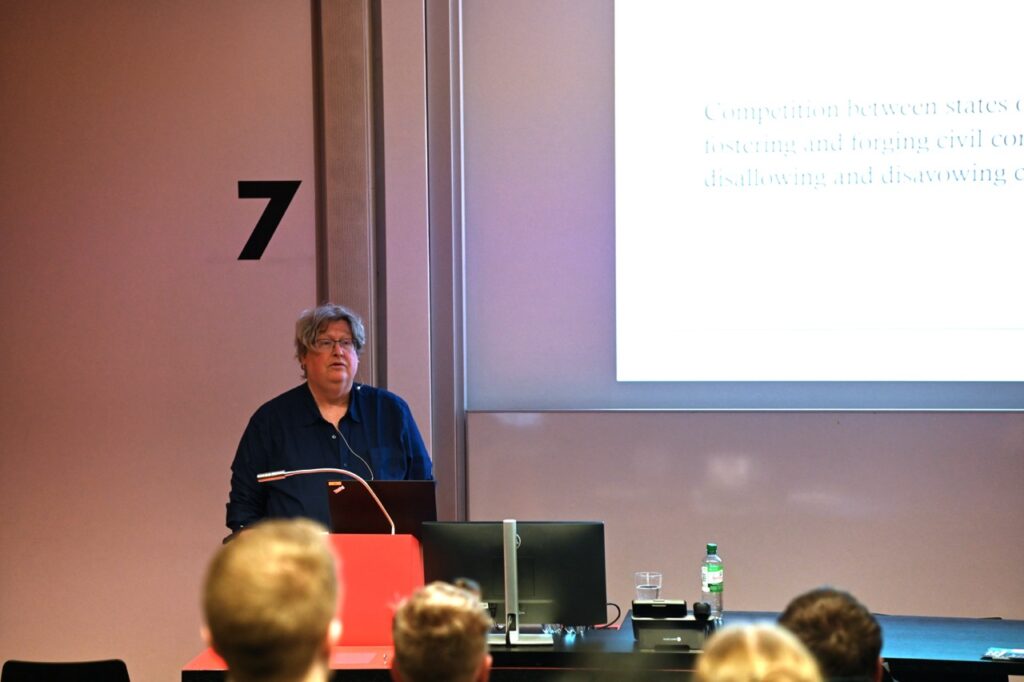
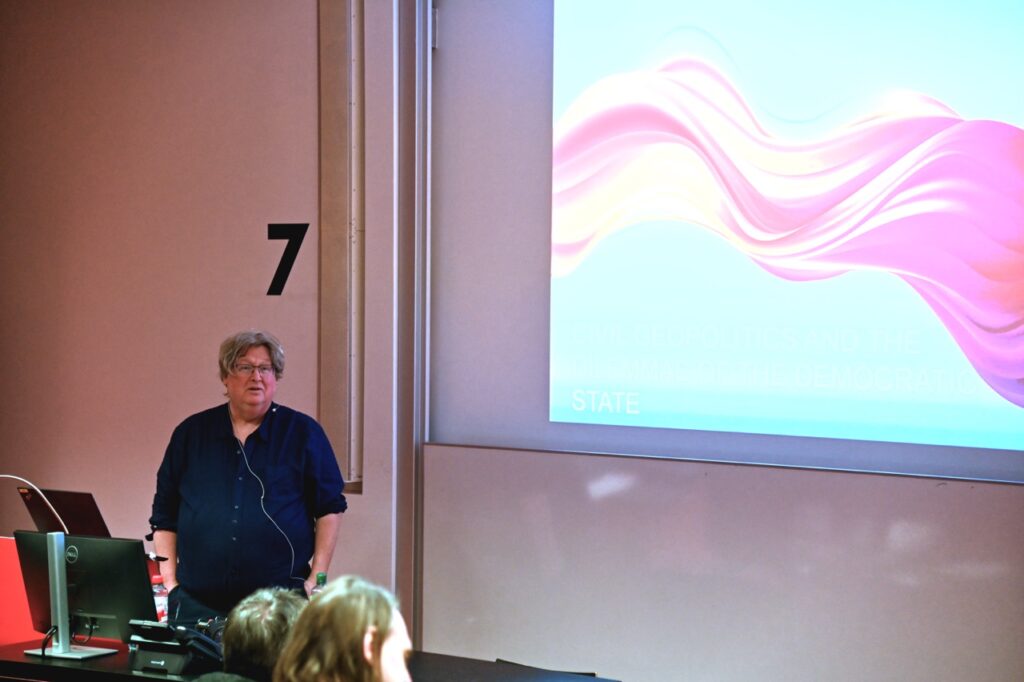
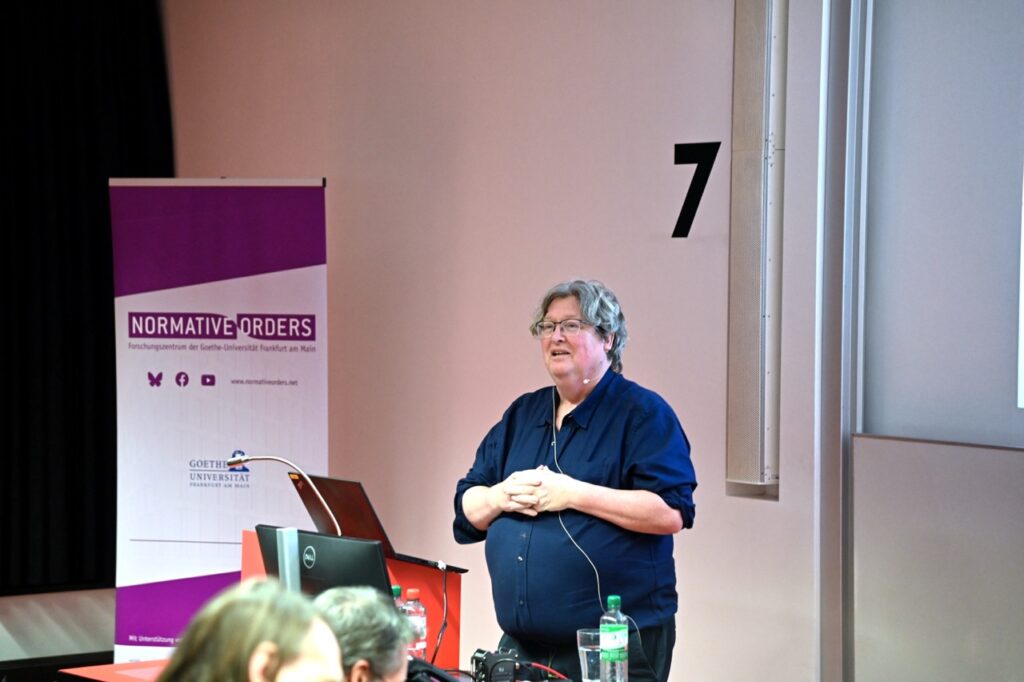
On the fourth date of the lecture series “At the Crossroads – The Crisis of Democracy”, David Owen from the University of Southampton presented and explained his concept of civil geopolitics. According to him, “civil geopolitics” is the competition between states for people, which works by creating, advertising and promoting connections within the citizenry as well as rejecting and refusing other connections.
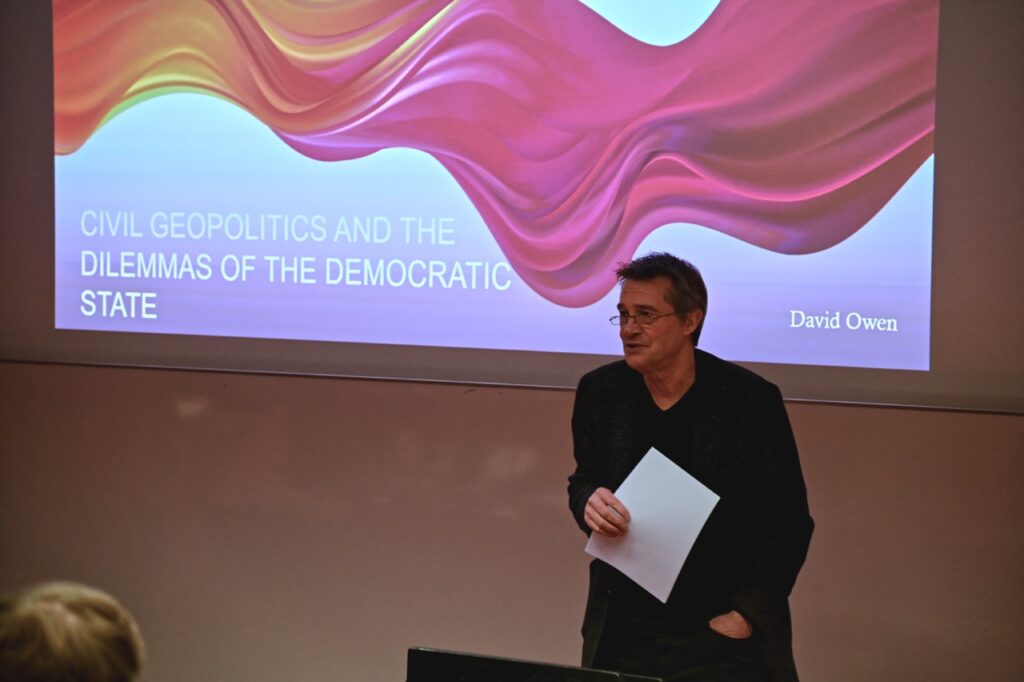
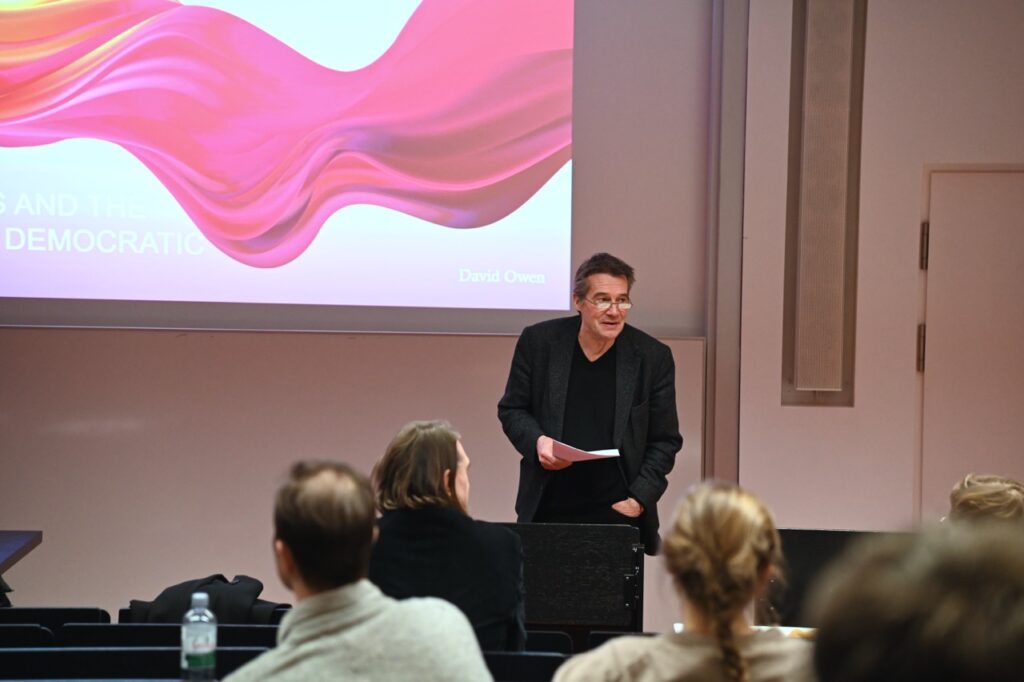
Civil geopolitics is the conceptualization of a well-known phenomenon of global geopolitics. This was evident in the 17th and 18th centuries, when the immigration of workers was promoted or restricted by states. However, it was not until the second half of the 20th century that this type of policy became an important branch of state geopolitics, whereas previously the competition for territory had played a more dominant role. Meanwhile, the governance of citizenship and civic belonging has become an integral part of state policy. Individuals and groups have thus become a geopolitical project, according to Owen.

He explained various transformations that have made these developments possible: the rise of state institutions in contact with diaspora communities, the increasing tolerance of dual citizenship and the expansion of extraterritorial voting rights. Added to this are new communication technologies and travel opportunities, which give states new possibilities in their relations with those who leave their territory.

These transformations result in new state geopolitical strategies. For example, denationalization, i.e. the withdrawal of citizenship, is increasingly being discussed, even though this is rarely applied in reality. Increased opportunities to acquire citizenship with so-called “golden passports”, the politically influenced granting of citizenship and extraterritorial voting rights as well as the granting of citizenship as reparation to compensate for historical injustices can also be observed.

At the end of the lecture, the politics professor presented four ideal types of citizenship that arise from the previous considerations: classical citizenship based on national affiliation, affiliation on a territorial basis (for example in New Zealand), as well as cosmopolitan forms of transactional and transnational citizenship. Today, there is a mixture of several of these ideal types. According to Owen, the question of what citizenship means today can no longer be answered unambiguously.

News from the research center

Event
25./26.06.2026 | Frankfurt

Shifting Regimes, Changing Orders

Conference

Conference as part of WDC2026 in collaboration with Deutsche Gesellschaft für Designtheorie und -forschung (DGTF), Kunstgewerbemuseum/Design Campus SKD and Design and Democracy

more information ›
Event
06./07.05.2026 | Frankfurt am Main

Liberalism and the Masses: Revisiting José Ortega y Gasset’s Political Thought

Conference

Two-day Conference with Keynotes by Alan Kahan (University of Versailles/St. Quentin) and Javier Zamora Bonilla (Complutense University of Madrid)

more information ›
Event
04.05.2026 | Frankfurt

Meinungsfreiheit, Meinungsvielfalt und Verantwortung für die Demokratie: Wie gestalten Medien neue Räume für Debatten und Teilhabe?

Panel Discussion

Im Rahmen der Woche der Meinungsfreiheit 2026 laden die World Design Capital Frankfurt RheinMain 2026 in Kooperation mit dem Börsenverein des Deutschen Buchhandels, dem Hessischen Rundfunk, der Stiftung Polytechnische Gesellschaft und dem Forschungszentrum Normative Ordnungen der Goethe-Universität herzlich zu einer Diskussionsveranstaltung am 4. Mai 2026 in den WDC-Hub im Museum Angewandte Kunst Frankfurt ein.

more information ›
Event
29.04.2026 | Frankfurt am Main

Kulturindustrie heute?

Panel Discussion

Das Gespräch „Kulturindustrie heute?“ widmet sich der Aktualität und Tragfähigkeit eines zentralen Begriffs der Kritischen Theorie. Die Filmwissenschaftlerin Gertrud Koch diskutiert im Rahmen der Gesprächsreihe "Frankfurter Schule" mit dem Filmkritiker Bert Rebhandl die gegenwärtigen Formen kultureller Produktion und Verbreitung vor dem Hintergrund von Digitalisierung, Plattformen und globalen Medienmärkten.

more information ›
Event
12.05.2026 | Frankfurt am Main

Zwischen Transformation und Abolitionismus

Book Presentation

Buchvorstellung mit Christine Graebsch, Katrin Höffler, Jochen Bung & Ronen Steinke

more information ›
Event
28./29.05.2026 | Frankfurt am Main

Global Health Justice: Principles and Practice

Conference

Following the research focus of the Global Health Justice Postdoctoral Programme, funded by Höppsche Stiftung, the "Global Health Justice: Principles and Practice" conference places a particular emphasis on themes such as the human right to health, political activism and health justice issues, and problems of structural injustice and vulnerable populations in health care. Keynote lectures by Jonathan Wolff and Kanchana Mahadevan. The Global Health Justice Programme and this conference are supported by the Höppsche Stiftung in Villmar.

more information ›
Event
14.07.2026 | Frankfurt am Main

Democracy Over Time and the Climate Crisis

Lecture Series

Vortrag von Anja Karnein (Binghamton). Die Vortragsreihe untersucht Fragen der Klimakrise als Herausforderungen für demokratische Gesellschaften und konzentriert sich auf Themen wie politische Legitimität, Widerstand gegen fossile Brennstoffe und die Interessen künftiger Generationen. Sie wird organisiert von Prof. Dr. Darrel Moellendorf und Dr. Lukas Sparenborg.

more information ›
Event
10.06.2026 | Frankfurt am Main

Capital Investment, Inequality, and State Power in a Time of Climate Emergency

Lecture, Lecture Series

The lecture series examines questions of the climate crisis as challenges for democratic
societies and focuses on issues of political legitimacy, fossil fuel resistance, and the interests
of future generations.

more information ›
Event
13.05.2026 | Frankfurt am Main

Failed States and Cloudy skies: Tipping Points, Overshoot and Permanent Emergency, after America

Lecture Series

The lecture series examines questions of the climate crisis as challenges for democratic
societies and focuses on issues of political legitimacy, fossil fuel resistance, and the interests
of future generations.

more information ›