12.02.2026

Satanist politics and the decline of reason in liberal democracies

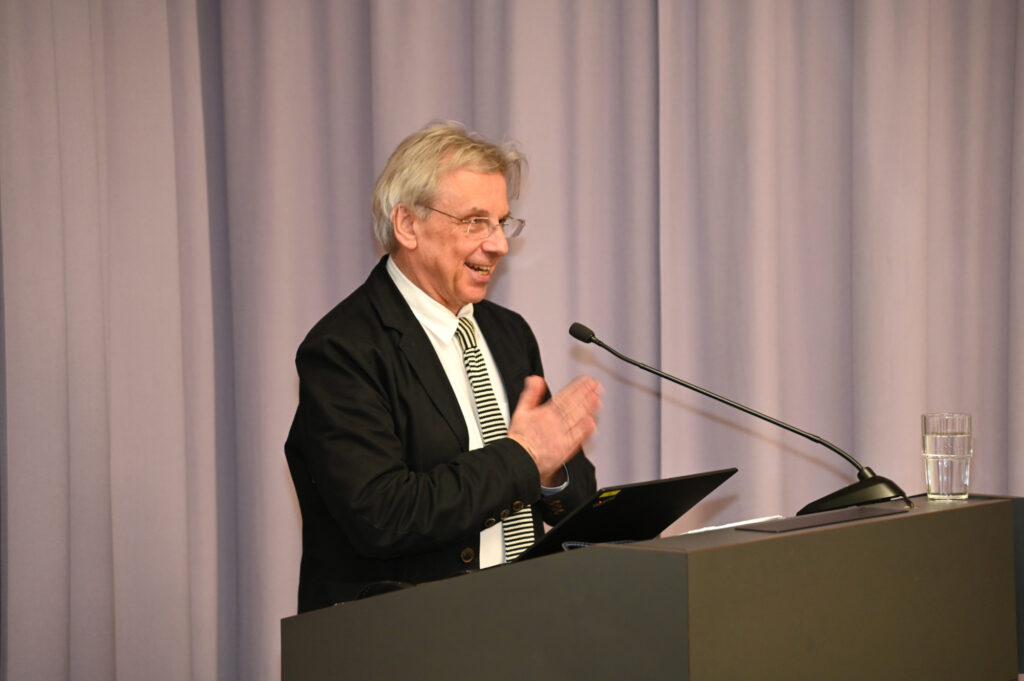
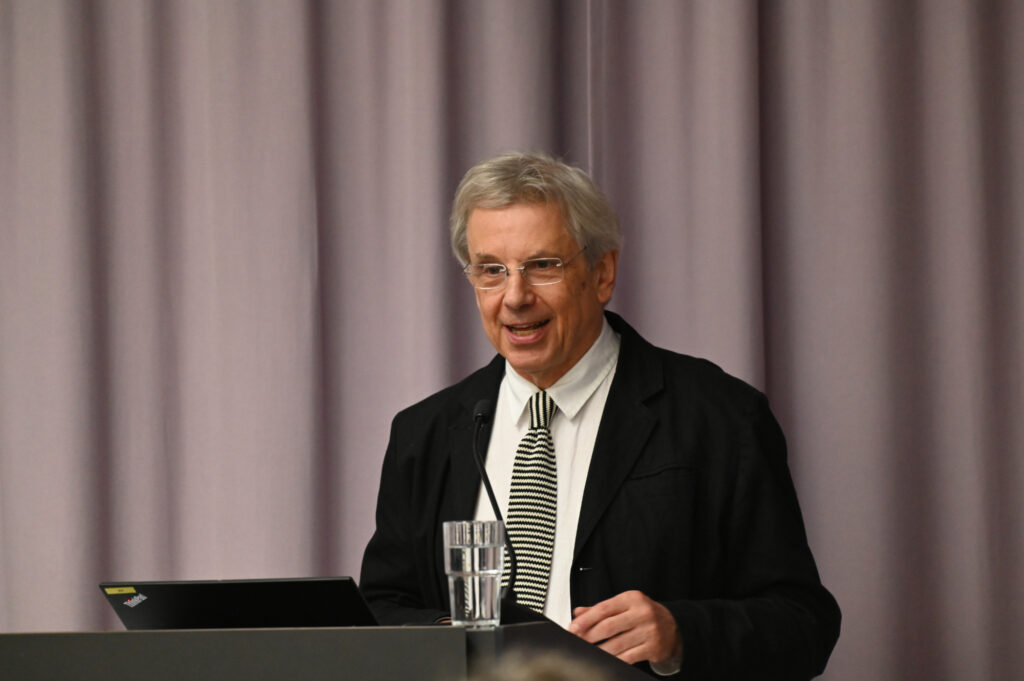
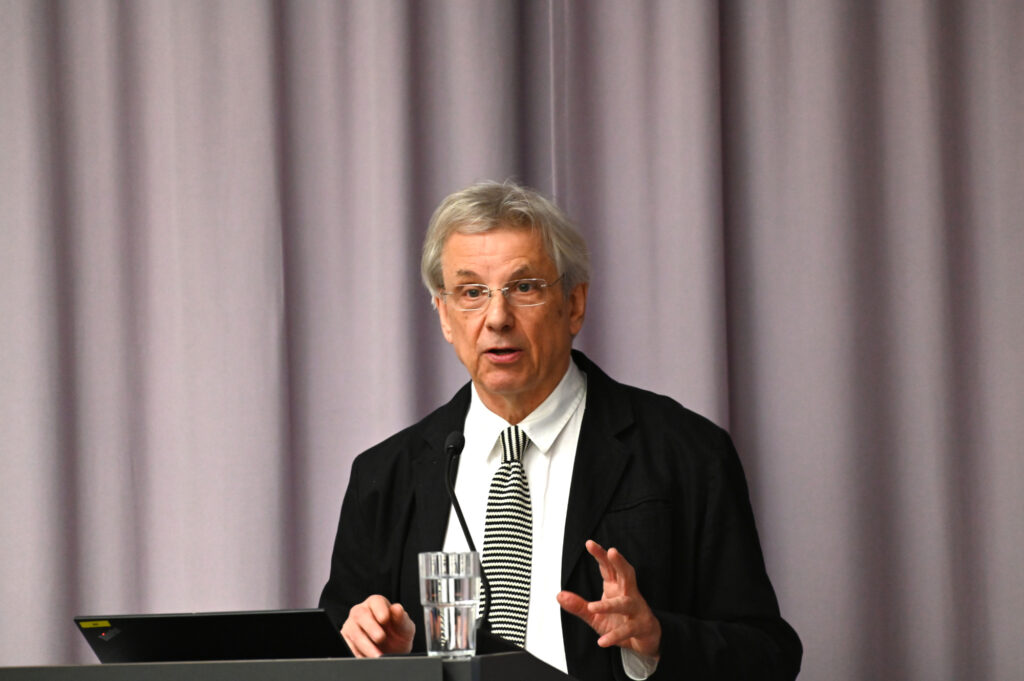
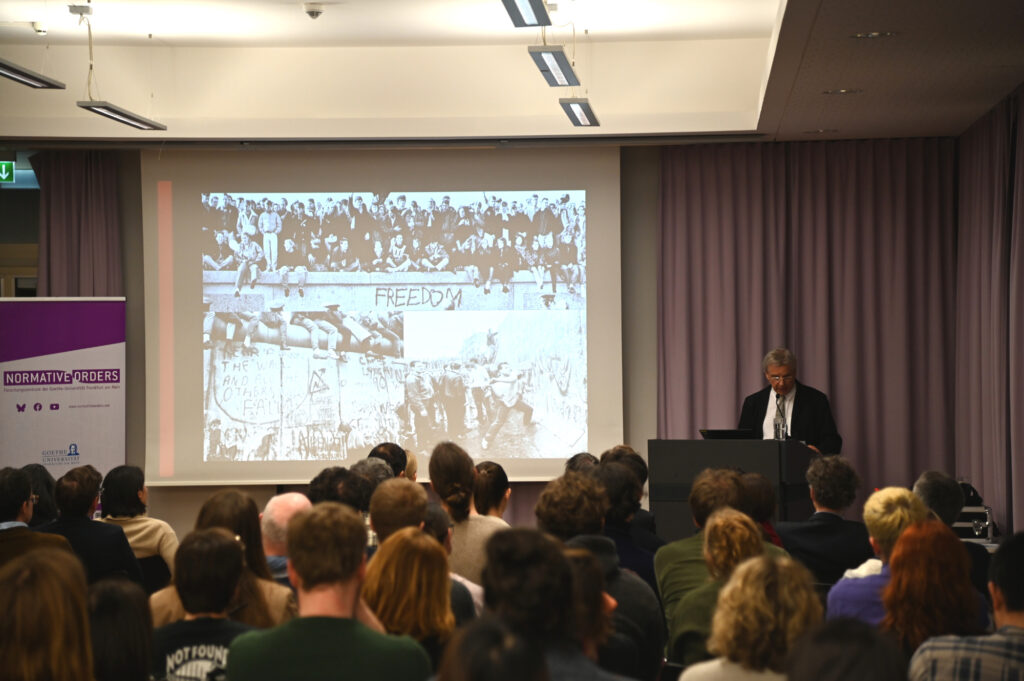
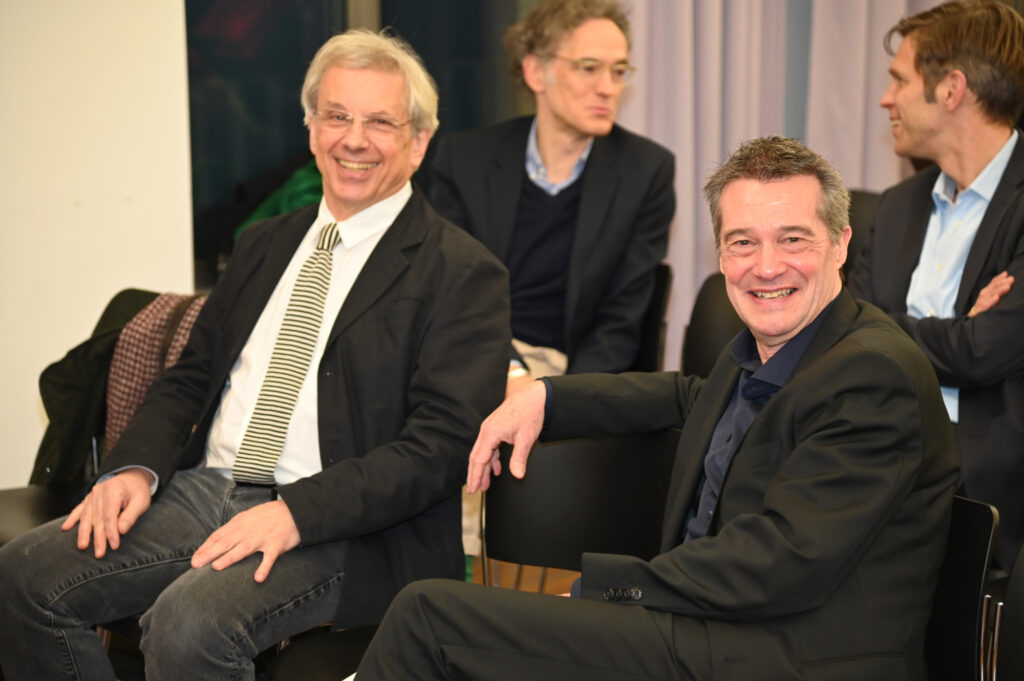
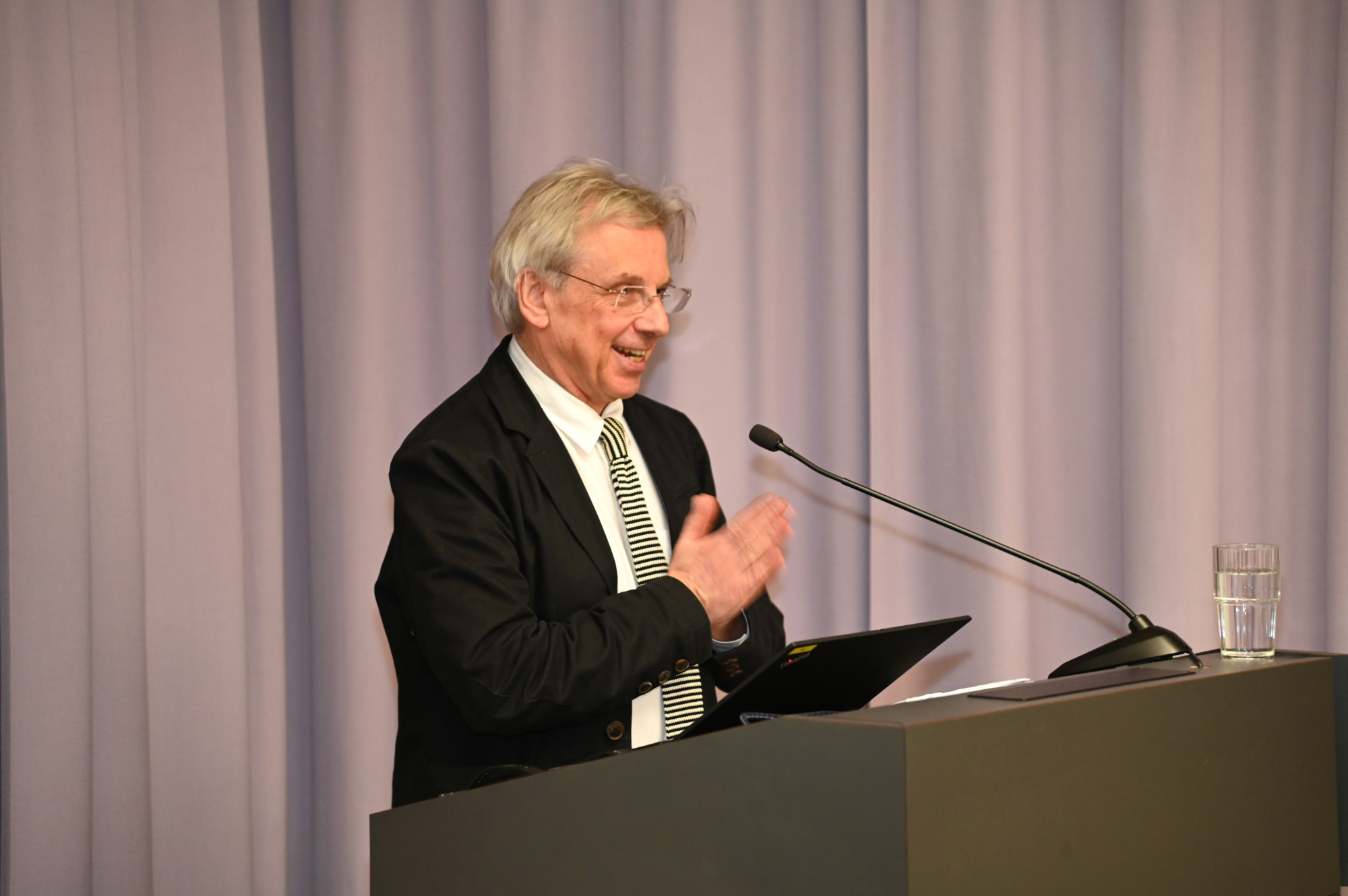
For the last time in the winter semester 2025/26, the Research Center hosted the lecture series “Am Scheidepunkt. On the crisis of democracy”. At the end, philosopher Michael Rosen from Harvard University presented his concept of “satanic politics” as a variant of the political interpretation of the world.

After an introduction by Rainer Forst, Michael Rosen began his lecture with a discussion of early liberalism’s belief in progress and the tension between individual freedom and moral virtue. A religiously influenced, providentialist world view, according to which a divine order contributes to the moral development of people, helped to bridge the tensions here.
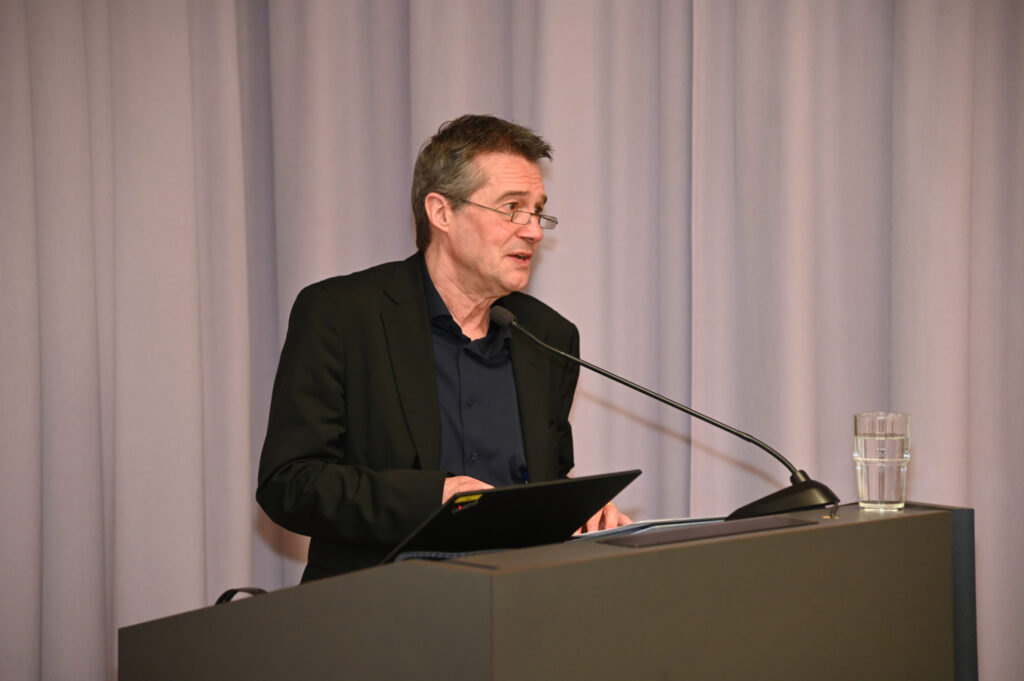
In contrast, in the context of the current crises of liberal democracies, it is helpful to start from a different, satanic style of politics in understanding the interpretation of the world. This style understands politics as a struggle against hidden, deceptive forces and mistrusts the idea of rational procedures and a moderate balancing of interests to overcome political conflicts. Using the example of the paranoid style of politics, which he described on the basis of the USA and with recourse to Richard Hofstadter’s “paranoid style”, Rosen made it clear how politics is understood as a fight against hidden, manipulative enemies. Satanist politics therefore involves deception, structural evil and enmity. Rosen gains this perspective of satanic politics from a variety of theological and ideological motifs and authors, including the Bible and Immanuel Kant.

In a second part of the lecture, the philosopher turned his attention to Marxism, especially in its Hegelian form. The capitalist system, or specifically the understanding of capital, could be seen as having satanic characteristics, similar to Hegel’s Weltgeist. It is ascribed the power to act and the potential for deception. An anonymous, structural power structure determines social reality and conceals its mechanisms of action.

Important basic assumptions of today’s politics, both liberal democracies and various political styles, are based on normative values that are historically contingent and largely shaped by religious motifs, explained Michael Rosen at the end of his lecture. Understanding the fragility of democratic orders therefore requires reflection on such styles and the continuities of religious ideas. This is the only way to analyze the challenges for democracy and reason.
News from the research center

Event
20.04.2026 | Brussels

Militärische KI verantwortungsvoll nutzen und Regulierung neu denken

Panel Discussion, Lecture

Künstliche Intelligenz findet im Militär immer breiteren Einsatz, von Logistik und Training über Missionsplanung und Zielidentifikation bis hin zu autonomen Waffensystemen. Gleichzeitig wächst die Bedeutung von Mikroprozessoren immer stärker, der Zugang zu seltenen Erden und Chips wird zur zentralen Ressource. KI kann das Kampfgeschehen beschleunigen und damit destabilisierend wirken. Der Wettlauf um neue Fähigkeiten birgt jedoch auch Eskalationsrisiken. Wir laden Sie ein, diese Themen im nächsten Crisis Talk gemeinsam mit unseren hochkarätigen Podiumsgästen zu diskutieren.

more information ›
Event
28./29.05.2026 | Frankfurt am Main

Global Health Justice: Principles and Practice

Conference

Following the research focus of the Global Health Justice Postdoctoral Programme, the "Global Health Justice: Principles and Practice" conference places a particular emphasis on themes such as the human right to health, political activism and health justice issues, and problems of structural injustice and vulnerable populations in health care. Keynote lectures by Jonathan Wolff and Kanchana Mahadevan.

more information ›
Publication
26.03.2026 | Monograph

The Cambridge History of Latin American Law in Global Perspective

Duve, Thomas; Herzog, Tamar (eds.): The Cambridge History of Latin American Law in Global Perspective, Cambridge: Cambridge University Press, 2024 (portugiesisch 2025; spanisch 2026).

more information ›
Publication
26.03.2026 | Monograph

Rechtsgeschichte des frühneuzeitlichen Hispanoamerika

Duve, Thomas; Egío, José Luis  (2023): Rechtsgeschichte des frühneuzeitlichen Hispanoamerika, Berlin: De Gruyter, 2023.

more information ›
Event
18.04.2026 | Frankfurt am Main

Das Prinzip Donald Trump und die Verrohung der Welt

Panel Discussion, Lecture

Ein neuer Politikstil macht international Karriere. Er ist gekennzeichnet von Vulgarität, Verrohung und erklärter Rechtsfeindschaft. Machtinteressen werden nicht mehr juristisch bemäntelt. Stattdessen wird das angebliche Recht des Stärkeren zur Staatsdoktrin gemacht – innenpolitisch wie außenpolitisch. Treibende Kraft hinter dieser Verrohung der politischen Sitten ist ein US-Präsident, der nicht nur die amerikanische Gesellschaft und Kultur, sondern auch die globale Ordnung nach seinen Vorstellungen und Interessen umgestaltet. Die Römerberggespräche wollen diesen Politikstil verstehen.

more information ›
Event
14.07.2026 | Frankfurt am Main

Democracy Over Time and the Climate Crisis

Lecture Series

Vortrag von Anja Karnein (Binghamton). Die Vortragsreihe untersucht Fragen der Klimakrise als Herausforderungen für demokratische Gesellschaften und konzentriert sich auf Themen wie politische Legitimität, Widerstand gegen fossile Brennstoffe und die Interessen künftiger Generationen. Sie wird organisiert von Prof. Dr. Darrel Moellendorf und Dr. Lukas Sparenborg.

more information ›
Event
10.06.2026 | Frankfurt am Main

Capital Investment, Inequality, and State Power in a Time of Climate Emergency

Lecture, Lecture Series

The lecture series examines questions of the climate crisis as challenges for democratic
societies and focuses on issues of political legitimacy, fossil fuel resistance, and the interests
of future generations.

more information ›
Event
13.05.2026 | Frankfurt am Main

Failed States and Cloudy skies: Tipping Points, Overshoot and Permanent Emergency, after America

Lecture Series

The lecture series examines questions of the climate crisis as challenges for democratic
societies and focuses on issues of political legitimacy, fossil fuel resistance, and the interests
of future generations.

more information ›
Event
22.04.2026

Political Legitimacy, Authoritarianism, and Climate Change

Lecture, Lecture Series

Lecture by Ross Mittiga (SOAS London). The lecture series examines questions of the climate crisis as challenges for democratic societies and focuses on issues of political legitimacy, fossil fuel resistance, and the interests of future generations. It is organized by Prof. Dr. Darrel Moellendorf and Dr. Lukas Sparenborg.

more information ›