
About us

How do political, legal, religious or economic orders establish and change, how do power structures crystallize, how are power and life chances distributed – also on a transnational level? The academics involved in the Research Centre Normative Orders think about these questions. It is about current social conflicts, in particular about a just order of society in times of globalization, and their long histories. The normative ideas that play a role in such processes and conflicts will be examined.

The questions are complex. This is why Research Centre Normative Orders at Goethe University Frankfurt works on an interdisciplinary basis: from philosophy, history, political science and law to ethnology, economics, sociology and theology.

Normative orders are understood as “orders of justification” that are historically founded and based on “narratives of justification”. They are characterized by certain legitimations, whereby norms and values of various kinds (morality, law, religion, to name but a few) intertwine or create tensions.

Goethe University’s Research Centre Normative Orders is a network in which a number of partner institutions participate, including the Peace Research Institute Frankfurt, the Institute for Social Research (Frankfurt am Main), the Max Planck Institute for Comparative Public Law and International Law (Heidelberg), Point Sud, Centre for Research on Local Knowledge (Bamako, Mali) and the Technical University of Darmstadt.

The research centre emerged from the Cluster of Excellence “The Formation of Normative Orders”, which was funded by the German Research Foundation as part of the Excellence Initiative of the German federal and state governments.

Spokespersons of the research centre
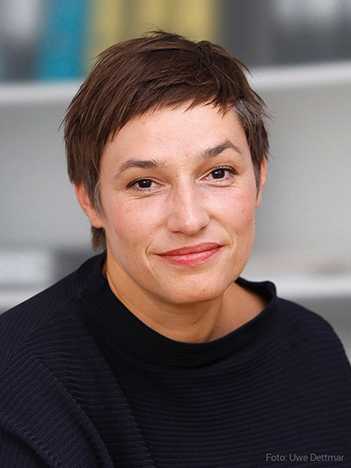
Prof. Dr. Nicole Deitelhoff (Institute for Political Science) and
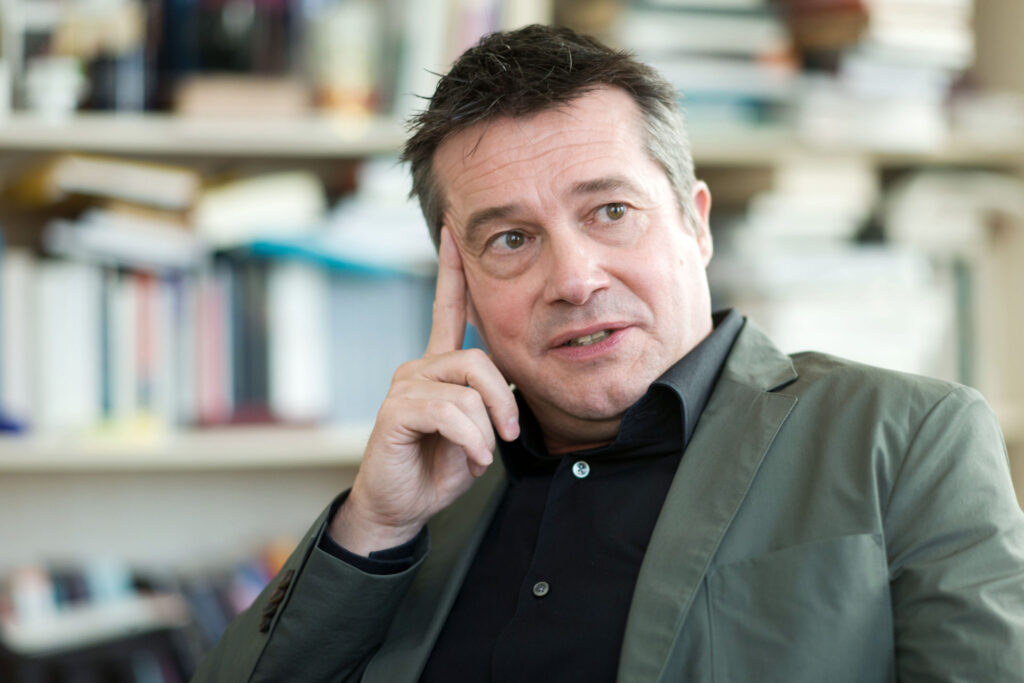
Prof. Dr. Rainer Forst (Institute of Political Science and Institute of Philosophy)


Managing Director
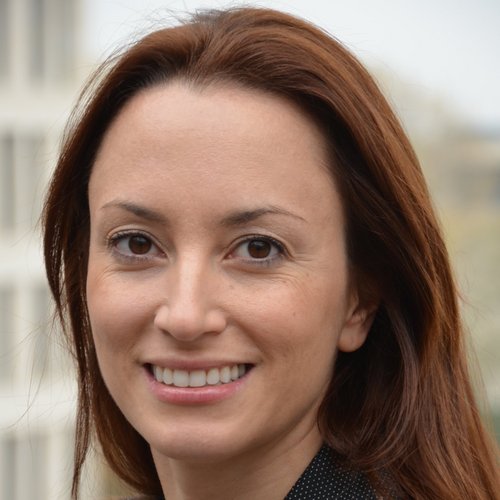
Rebecca C. Schmidt

News from the research center

Publication
20.08.2026 | Chapter

Abschied vom Neoliberalismus im Zeichen des Postliberalismus?

Biebricher, Thomas (2026): Abschied vom Neoliberalismus im Zeichen des Postliberalismus? In: Selk, Veith; Hofmann, Julian Nicolai (Hrsg.): Postliberalismus? Eine transatlantische Debatte. Berlin: Suhrkamp, S. 222-246.

more information ›
Publication
20.08.2026 | Chapter

Krise oder Verfall der Weltordnung? Liberale und postliberale Erklärungen internationalen Wandels

Daase, Christopher (2026): Krise oder Verfall der Weltordnung? Liberale und postliberale Erklärungen internationalen Wandels. In: Selk, Veith; Hofmann, Julian Nicolai (Hrsg.): Postliberalismus? Eine transatlantische Debatte. Berlin: Suhrkamp, S. 205-221.

more information ›
Publication
19.08.2026 | Anthology

Sokrates revised and revisited

Bohl, Judith K.; Brandis, Veronika; Pfeifer, Guido (Hrsg.) (2026): „Sokrates revised and revisited. Überlieferung, Diskurs, Inszenierung“. Heidelberg: Propylaeum. 

more information ›
Publication
14.08.2026 | Chapter

Vom rechtshistorischen Erkenntniswert antiker Tragödiendichtung: Überlegungen anhand Euripides’ Medeia

Pfeifer, Guido (2026): "Vom rechtshistorischen Erkenntniswert antiker Tragödiendichtung: Überlegungen anhand Euripides’ Medeia". In: Gsell, Beate; Rüfner, Thomas; Babusiaux, Ulrike (Hrsg.): Die unverzichtbare Wissenschaft – The Indispensable Science, Mohr Siebeck, S. 663-671.

more information ›
Publication
01.08.2026 | Chapter

"Das Andere in uns selbst" (Marcel Gauchet). Das Ideal gesellschaftlicher Autonomie und die Denkfigur der Alterität

Langner-Pitschmann, Annette (2026): „Das Andere in uns selbst“ (Marcel Gauchet). Das Ideal gesellschaftlicher Autonomie und die Denkfigur der Alterität. In: Schlette, Magnus et. al. (Hrsg.): Ordnung im Übergang Zur Funktion von Transzendenzbezügen in der Konstitution und Transformation politischer Gemeinschaft, Tübingen: Mohr Siebeck, S. 185-205.

more information ›
Event
24.09.2026 | Frankfurt am Main

Die neuen Warlords. Gewaltdynamiken einhegen / Friedensgutachten 2026

Book Presentation

Die imperialistische Großmachtpolitik ändert die Vorzeichen von Krieg, Frieden und Sicherheit. Staaten agieren zunehmend wie Warlords und setzen Krieg als Mittel der Politik ein. Übergänge von Gewaltkonflikten zu Frieden werden als „Deals“ behandelt, Mittelmächte treten mit neuem Selbstbewusstsein, aber ambivalentem Kurs auf, und technologische Innovation verändert Kriege und erschwert die Regulierung. Zugleich befindet sich die internationale Kooperation in der Friedenssicherung in ihrer schwersten Krise. Das Friedensgutachten 2026 analysiert Optionen, dennoch Frieden zu fördern.

more information ›
Publication
23.07.2026 | Journal article

Governing the Subject of Populism

Biebricher, Thomas: "Governing the Subject of Populism". In: European Journal of Social Theory, OnlineFirst.

more information ›
Publication
15.07.2026 | Monograph

Das Recht der Gewalt. Warum Waffen allein keinen Frieden schaffen

Simon, Hendrik (2026): Das Recht der Gewalt. Warum Waffen allein keinen Frieden schaffen. Ditzingen: Reclam.

more information ›
Publication
10.07.2026 | Anthology

Schnittstellen im Gesundheitsrecht

Kießling, Andrea (Hrsg.) (2026): „Schnittstellen im Gesundheitsrecht“. Nomos.

more information ›