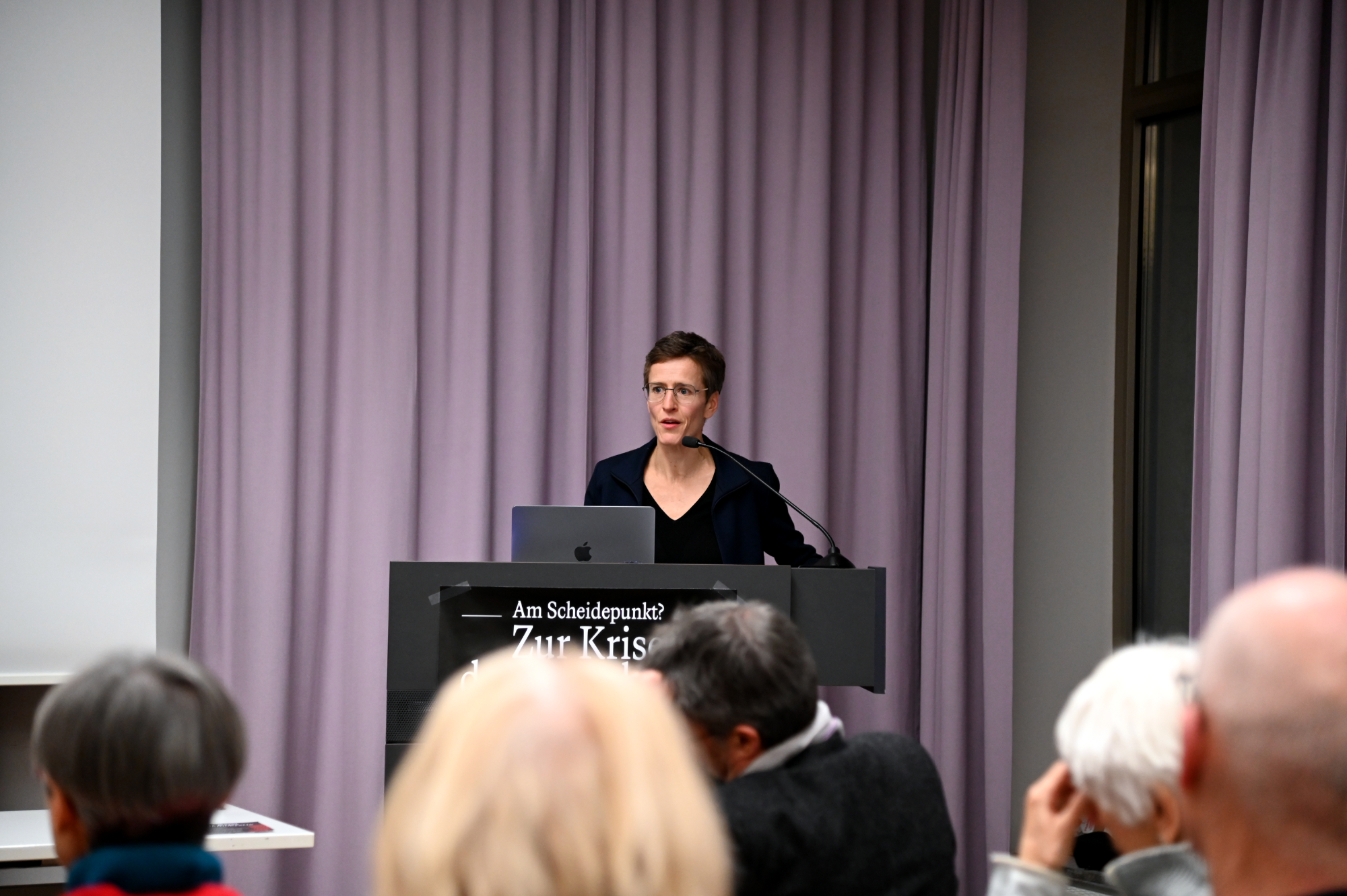
Christine Hentschel on reorientation in catastrophic times
As part of the lecture series “At the crossroads? On the crisis of democracy”, the sociologist spoke about living in and dealing with catastrophic times. Against the backdrop of the destruction of living conditions, wars, permanent crises and threats to democracy, Hentschel addressed the infiltration of the catastrophic into everyday social life and a changing activist and literary approach to the future.
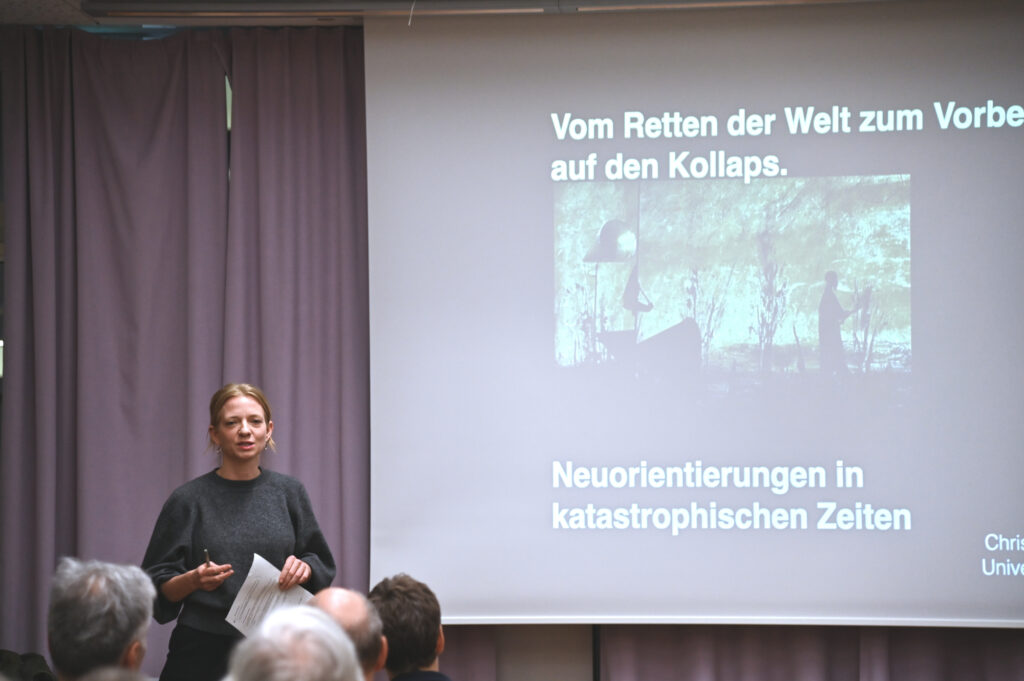
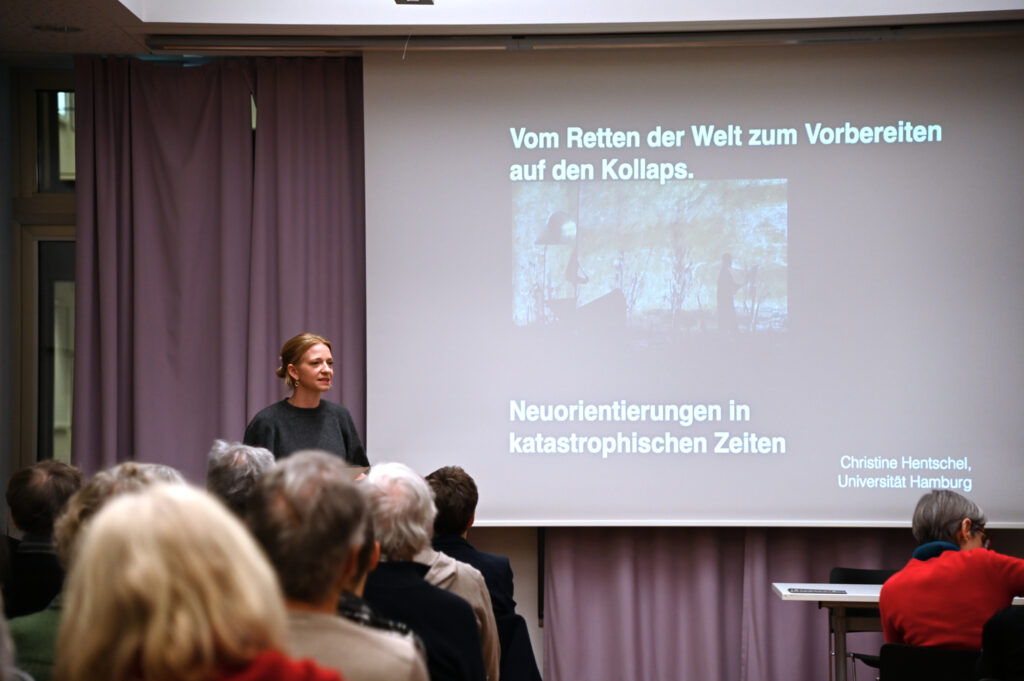
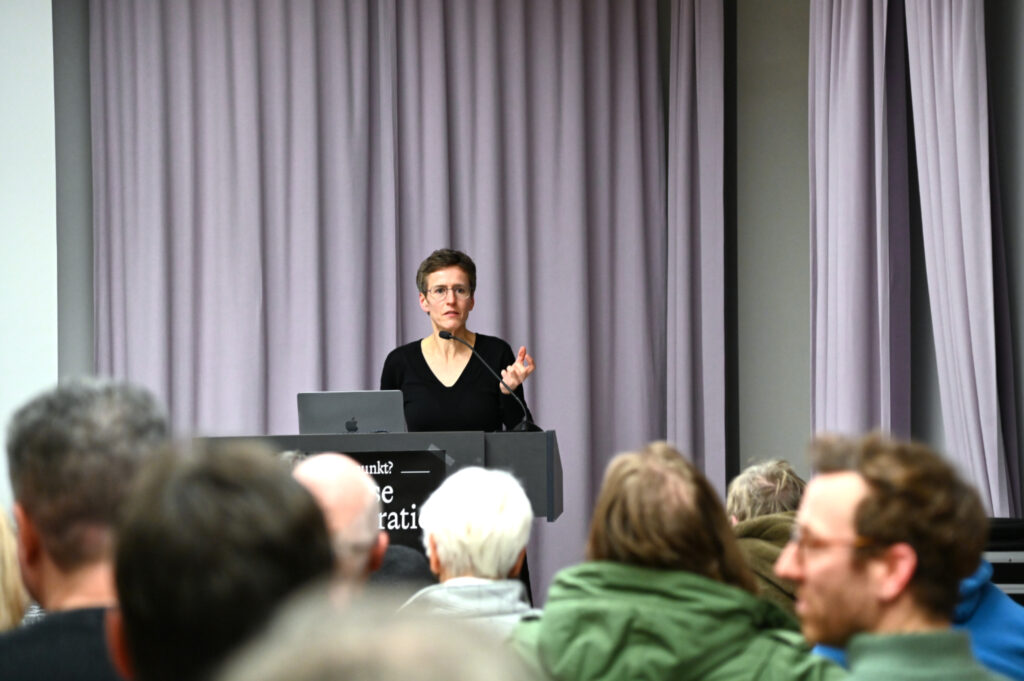
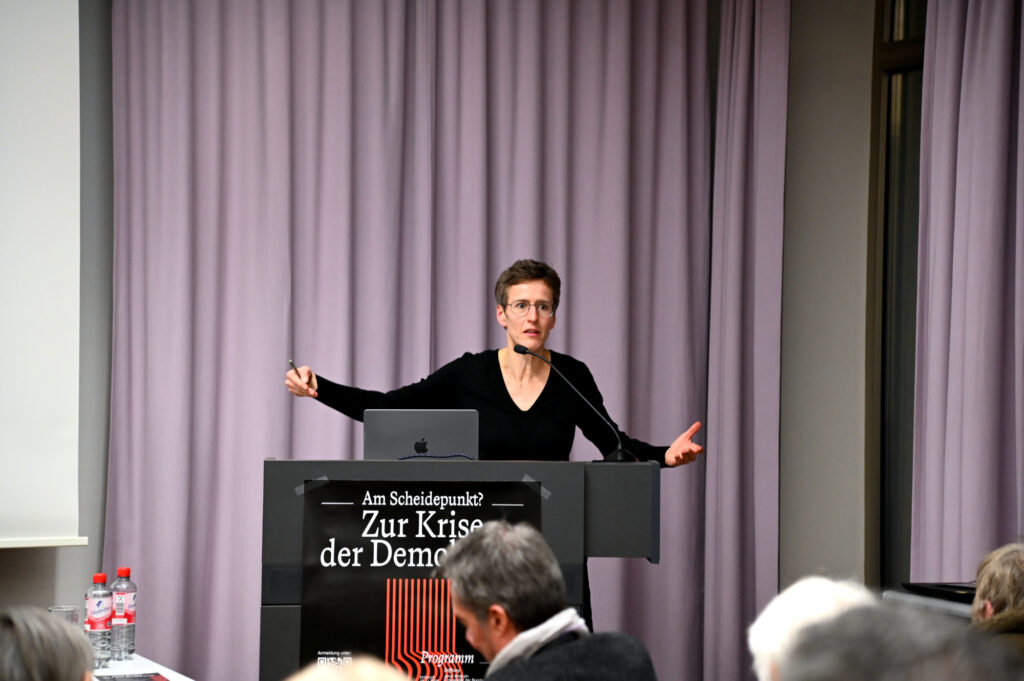
With the help of sociological theories, affect studies, psychoanalysis and philosophy, the sociologist from the University of Hamburg analyzed different modes of reaction to the catastrophic: pushing away and denying the crises as well as reorientation and the search for an open future horizon. These are each extremes, but they fulfill important functions.
“On the one hand, it’s about reopening the future, taking ownership of it, understanding it as a long-term project that is worth fighting for. On the other hand, there is the appeal to really look into the abyss and think ahead from there. And I think we need both extremes.”
Following on from these two modes, Hentschel looked at activism and literature as two genres that affectively and imaginatively sketch out a different temporal orientation. Activism, especially “end-time activism” with its apocalyptic language and the attempt to achieve mobilization via the detour of the imminent catastrophic end, has lost its (frightening) power. According to Hentschel, the focus is now on more practical issues, a “hands-on approach to the catastrophe”. In the literary field, the scientist referred above all to the debut novel “On Saturday the girls go into the woods and blow things up” by Fiona Sironic, in which experiences of loss and destruction are omnipresent. However, in addition to survival in a broken future, it was the functional, solidary relationships within this scenario that Hentschel focused on in her lecture.
These activist and literary approaches focused on a practical hands-on approach and less on an emotional – including mourning and spiritual – approach to the disaster. According to Hentschel, a field of disaster management is emerging from below. Hentschel concluded her presentation by explaining that a sociology in catastrophic times examines modes of dealing with current and future emergencies, communities, emotional structures and imaginations. She argued for a preparative democracy that builds structures in the now that focus on protecting people in the future: A preparation for bad times and taking the challenges for democracy in a catastrophic future seriously.