

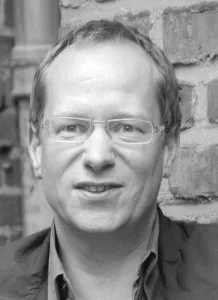
Holder of the Canada Research Chair in German and European Studies at the Université de Montréal
Research project:
Forms, Style and Manners: Democracy as a Way of Life
Research project: “We are all democrats now. Yet concerns over the future viability of democracy pervade scholarly and public controversies. Today, the social sciences dominate the domain of democratic theory. In contrast, the humanities have contributed comparatively little to our understanding of democracy’s fragile and contingent nature in the past and in the present. Against this background, I aim to strengthen the role of the humanities in scholarly exchanges over the meaning, the fragility and the contingency of democracy as a way of life. The focus of the research project is not on the content of content, i.e. democratic ideas in democratic polities, but on the content of form. It therefore invites conversations about the democratic content of aesthetic forms, styles, and manners. Such an endeavor responds to the suspicion that an emphasis on democratic forms, styles, and aesthetics detracts from more urgent questions about democratic substance and procedures. Key questions of such an endeavor include: If we argue that a specific culture is an essential, if elusive bedrock for democratic polities, is it possible to identify which forms and styles stimulate, sustain and revive democracy as a way of life?” (Till van Rahden)
Events:
May 8, 2017, 6:15 p.m.
Collecting rags: Siegfried Kracauer and the history of the 19th century
March 13, 2017, 7 p.m.
Lecture
How Daddy learned democracy: On the question of authority in the early Federal Republic of Germany
May 8, 2017, 6 p.m. c.t.Lecture
Lumpensammeln: Siegfried Kracauer and the history of the 19th century
July 7, 2017
Workshop with Johannes Voelz (Heisenberg Professor of American Studies, Democracy, and Aesthetics)
What was democratic culture? Moral passions, aesthetics and politics
Events:
Workshop, May 21, 2015
Democracy as a way of life? Style and aesthetics as key concepts in political theory
Paper Presentation, July 22, 2015, 11:30 a.m.
History in the House of the Hangman: How Postwar Germany Became a Key Site for the Study of Jewish History
-
Biografische Angaben
Till van Rahden holds the Canada Research Chair in German and European Studies at the Université de Montréal, Canada. He has been a Research Fellow at the Forschungskolleg Humanwissenschaften in cooperation with the Cluster of Excellence "The Formation of Normative Orders" since 2010. His research interests include modern European and German history and the history of democracy. In Germany, he held professorships in history in Cologne and Bielefeld, where he completed his doctorate. -
Publikationen
»Sanfte Vaterschaft und Demokratie in der frühen Bundesrepublik«, in: Bernhard Gotto and Elke Seefried (Hg.), Männer mit ›Makel‹. Männlichkeiten und gesellschaftlicher Wandel in der Bundesrepublik Deutschland. Zeitgeschichte im Gespräch, Bd. 25, München: de Gruyter, 2016, S. 142-156. (Hg. mit Oliver Kohns and Martin Roussel), Autorität: Krise, Konstruktion und Konjunktur (=Texte zur politischen Ästhetik Bd. 5), Paderborn: Wilhelm Fink, 2016. »History in the House of the Hangman: How Postwar Germany Became a Key Site for the Study of Jewish History«, in: Steven E. Aschheim and Vivian Liska (Hg.), The German-Jewish Experience Revisited, Berlin: de Gruyter, 2015, S. 171-192. Genealogie der Autorität, Texte zur politischen Ästhetik (Co-Hrsg. mit Kohns und Roussel) , Fink, München 2014. Clumsy Democrats: Moral Passions in the Federal Republic, in: German History, Bd. 29 (2011), Nr. 3, S. 485–504. Demokratie im Schatten der Gewalt: Geschichten des Privaten im deutschen Nachkrieg (Co-Hrsg. mit Fulda, Hoffmann und Herzog), Wallstein-Verlag, Göttingen 2010.