“A triumph of unreason”
Crisis Talk on the regression of democracy in Europe 100 days after the election – A follow-up report
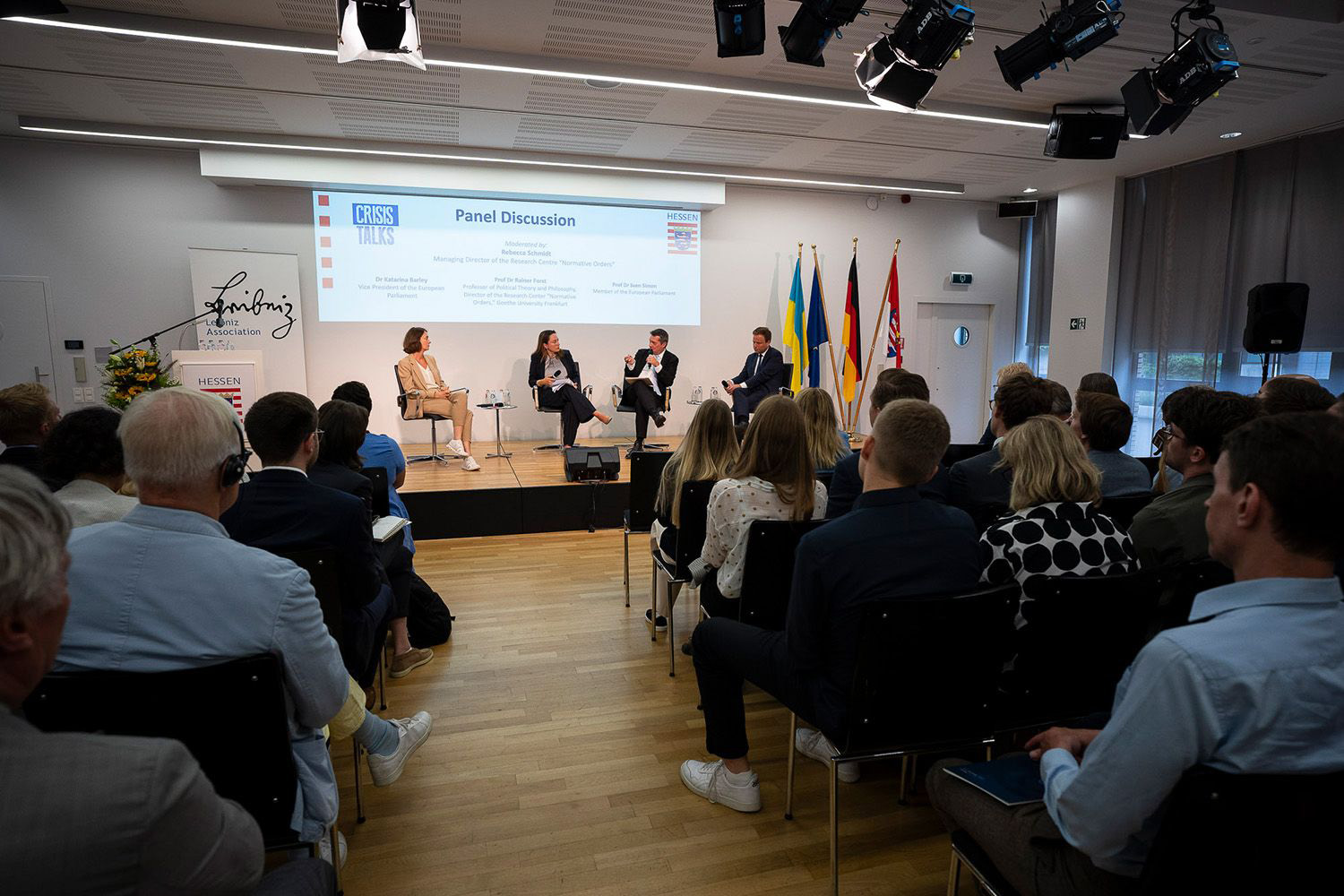
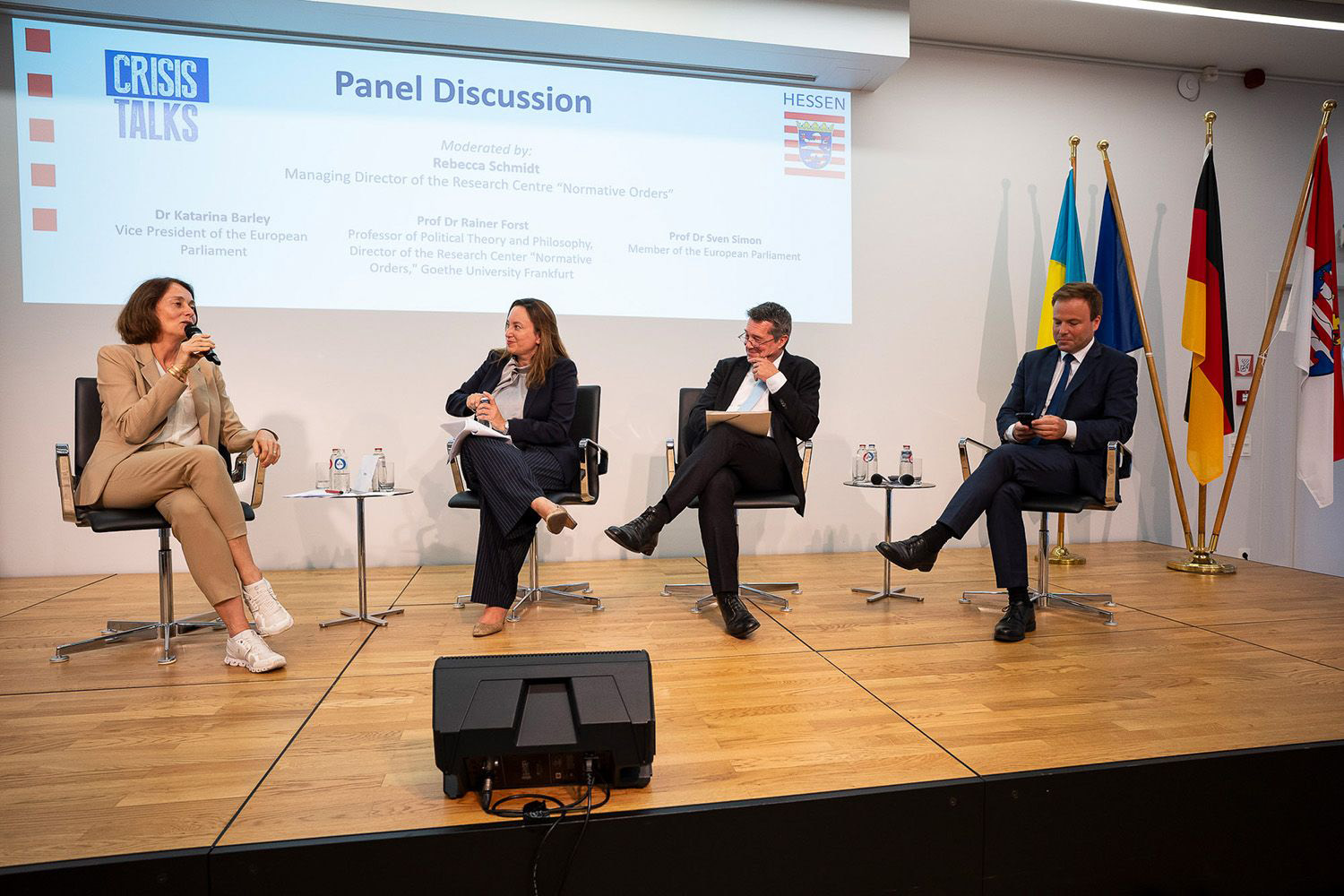
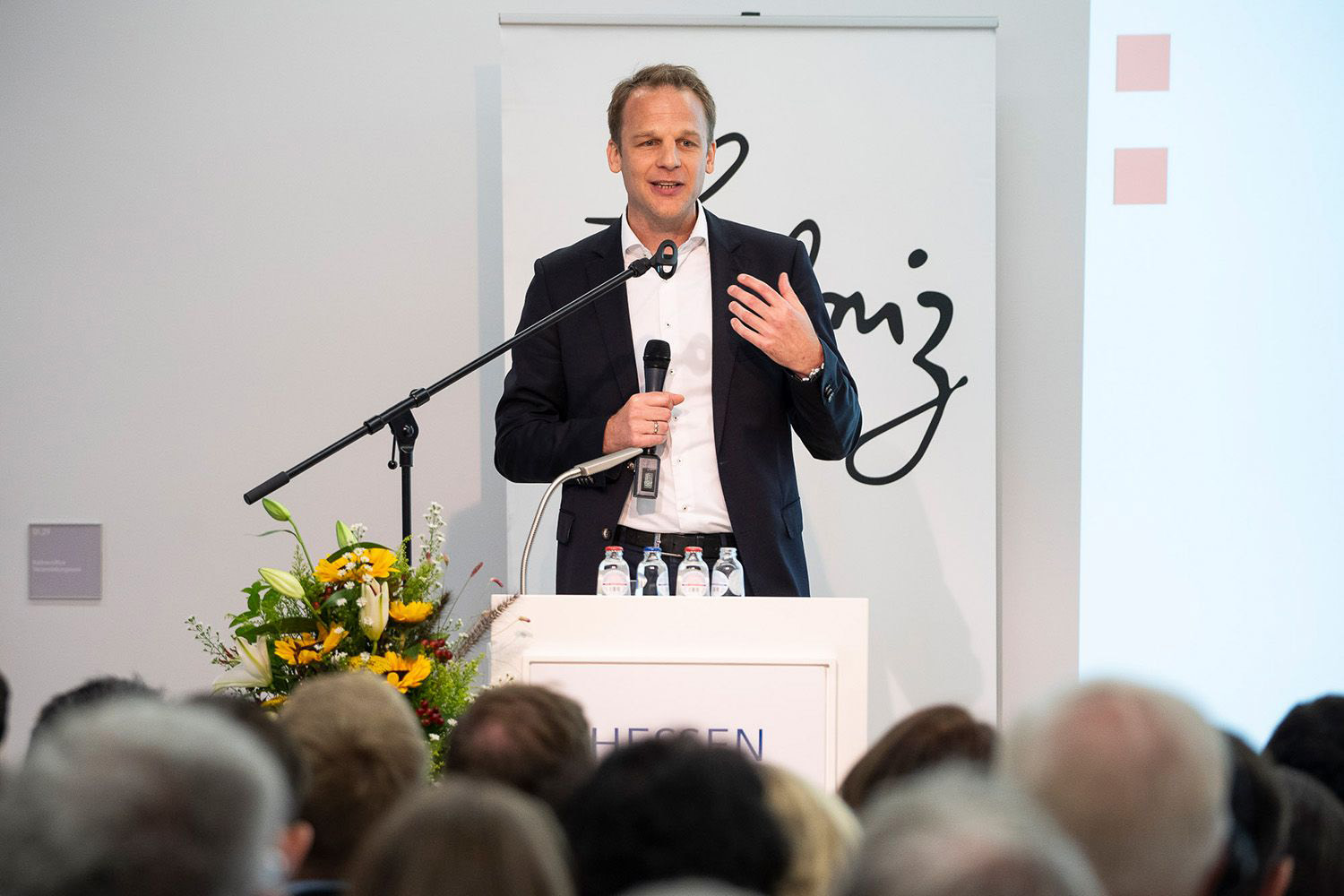
2024 is a global super election year: around 45% of the world’s population will be called upon to cast their vote in around 70 elections. At the same time, however, data from the Varieties of Democracy Project (V-Dem) shows that the quality of democracy is declining globally and that autocratization, often described as the regression of democracy, can be observed in various places. Last Tuesday, Vice-President of the European Parliament Dr. Katarina Barley, MEP Prof. Dr. Sven Simon and Prof. Dr. Rainer Forst (Director of the Research Center Normative Orders at Goethe University Frankfurt) discussed the state of the regression of democracy 100 days after the European elections. The event took place as part of the Crisis Talks series organized by the Leibniz Research Alliance CrisEn , the Research Centre Normative Orders and the European Office of the Leibniz Association together with the Representation of the State of Hesse to the EU.
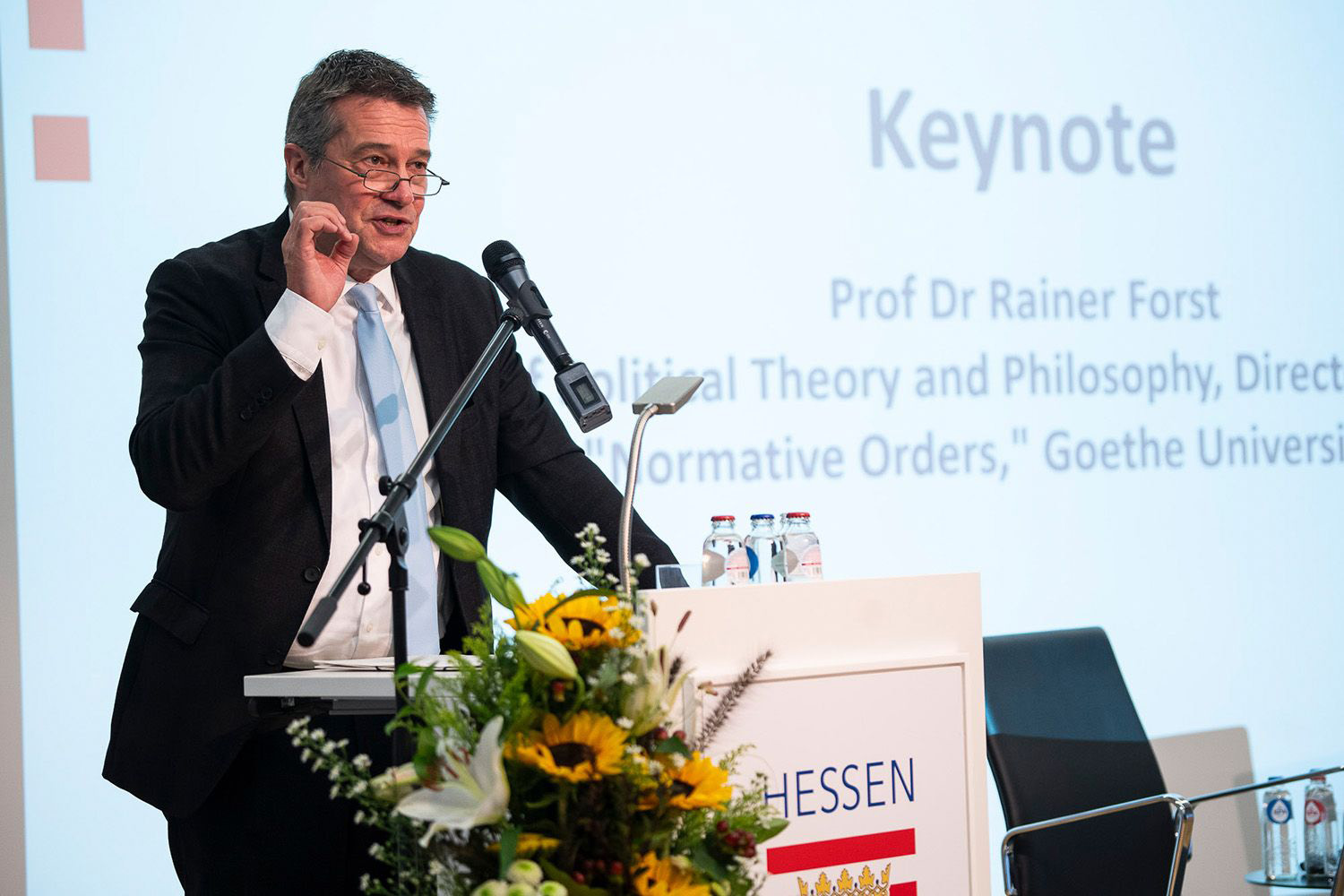
Following the welcoming addresses by Dr. Parinas Parhisi (LV Hessen) and Dr. Stefan Kroll (PRIF), the event began with a keynote speech by Rainer Forst on the sociologically abstract concept of regression, which is essentially about authoritarian and anti-human rights actors who “invoke democracy and endanger it at the same time”. Specifically with regard to the EU, there is a “real paradox” in the fact that “parties have been elected to parliament for whom this parliament itself and the principles of the EU are a thorn in their side”. This is associated with a deep attack on the understanding of democracy, which must be fended off at all costs. Democracy should never be understood in such a way that political power is used to dominate minorities in a way that deprives them of opportunities to participate. Democracy is based on “respecting the rights of every person as free and equal”. Not only undermining these minimum standards, but aggressively fighting against them and thus being successful in elections is far from being an expression of legitimate democracy, but rather a “triumph of unreason” that must be countered.
Following on from this, Katarina Barley emphasized that this reinterpretation of democratic terms does not happen by chance, but is rather the core of regressive strategies. In her political practice, she has repeatedly experienced that terms are taken over, twisted at their core and actually used with anti-democratic intentions. The strengthening of the right in the European elections is now leading to these interpretations being normalized and upgraded in the political process. Sven Simon shares this observation, citing inappropriate attacks on Commission President Ursula von der Leyen as another example. However, Simon also emphasized the clear pro-European majority in Parliament, which stands in opposition to the regressive forces.
During the ensuing discussion, moderator Rebecca C. Schmidt navigated a number of other important topics in EU politics that provide information about the state and self-image of democracy in the Union, such as the current Hungarian Council Presidency. Katarina Barley admitted that there had repeatedly been mixed expectations in the past when actors critical of the EU had taken on responsible roles, but that this had often turned out not to be so problematic. In the case of the current presidency, however, it is indeed the case that it is seeking escalation in parts.
There were different perspectives on the panel with regard to the issue of migration of asylum seekers. While Rainer Forst pointed to human rights as the central benchmark, Sven Simon emphasized the legal basis of migration, such as the requirement of the German Basic Law that the right to asylum cannot be invoked by anyone entering from an EU country or a safe third country. The aim must also be not only to take people in, but also to offer them integration, and this is where resources are ultimately limited. However, it is also important – and this builds a bridge to the sovereignty of interpretation of the terms – not to leave the definition of the challenges in the field of migration to the extremists. According to Forst, it also has an effect here when migration is always associated with concepts of threat and security.
Concluding questions from the audience focused, among other things, on the possibility of expanding direct democratic elements. While Sven Simon and Katharina Barley made a clear commitment to representative democracy, Rainer Forst once again highlighted the potential of democracy beyond elections – democracy is more than just a “ballot paper counting event”. A nice closing statement, we think.