

24.10.2023
Buchkapitel

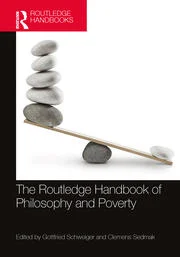
Climate Change and Poverty

Abstract:

Responding adequately to climate change requires taking seriously its effects on poor people. This chapter argues that the best candidate for broad agreement regarding how to identify dangerous climate change is the anti-poverty principle, which holds that climate change that imposes avoidable involuntary poverty is dangerous. The anti-poverty principle lends support to the mitigation aim of limiting warming to 1.5°C above pre-industrial levels. But if we take seriously the objective of avoiding dangerous climate change, the anti-poverty principle should inform adaptation policy as well. The principle can be operationalized for adaptation policy by using the pro-poor formula, which evaluates projects according to their effectiveness, the number of impoverished people protected, and the level of their deprivation. Additionally, the right to promote sustainable development, understood as a liberty of right of states to pursue poverty eradicating human development within the context of an international climate change agreement, is an important principle of international justice for purposes of climate policy. Taking this principle of justice seriously has implications for responsibility for climate policy. States should be assigned responsibility on the basis of their capacity to take on burdens without harming their human development aspirations. In other words, the most highly human developed states should bear the most responsibility for climate policy.
Aktuelles aus dem Forschungszentrum

Veranstaltung
25./26.06.2026 | Frankfurt

DGTF Conference 2026: Shifting Regimes, Changing Orders

Konferenz

Conference as part of WDC 2026 in collaboration with Deutsche Gesellschaft für Designtheorie und -forschung (DGTF), Kunstgewerbemuseum/Design Campus SKD and Design and Democracy

weitere Infos ›
Veranstaltung
30.06.2026 | Frankfurt am Main

Recht und Angst in Demokratien

Vortrag

Vortrag von Benno Zabel (Universitätslehrer für Strafecht und Rechtsphilosophie der Goethe-Universität Frankfurt a.M., Forschungszentrum Normative Ordnungen der Goethe-Universität Frankfurt a.M.) im Rahmen der partizipativen Redenreihe "DenkArt_ Im Schmelztiegel der Angst"

weitere Infos ›
Veranstaltung
09./10.07.2026 | Frankfurt am Main

Democracy: Principles and Practice, Resilience and Innovation

Konferenz

Annual Conference of the Research Program "Zeitenwenden. Normative Ordnungen im Umbruch?" with Arthur Ripstein, Astrid Séville, John McCormick, Nadia Urbinati, Claudia Landwehr, Hubertus Buchstein and Peter Niesen.

weitere Infos ›
News
19.06.2026

Internationales Symposium würdigt Lebenswerk von Jürgen Habermas

Am Freitag, den 19. Juni 2026, würdigte das Forschungszentrum Normative Orders gemeinsam mit dem Suhrkamp-Verlag den verstorbenen Jürgen Habermas mit einem internationalen Symposium an der Goethe-Universität Frankfurt.

weitere Infos ›
Veranstaltung
01./03.07.2026 | Frankfurt am Main

Sexual Agency

Konferenz

Die dreitägige Konferenz über Sexual Agency befasst sich mit Fragen von sexueller Handlungsfähigkeit, Autonomie, Verantwortung, Macht, Zustimmung, Lust und Verkörperung. Organisiert von Manon Garcia und Milena Bartholain.

weitere Infos ›
News
26.05.2026

Neuer Sammelband zu Ehren von Ute Sacksofsky

Der Sammelband „Gerechtigkeit als Thema der Rechtswissenschaft“ bündelt die Beiträge des Ehrensymposiums zum 65. Geburtstag von Prof. Dr. Dr. hc. Ute Sacksofsky und beleuchtet aus intergenerationeller Perspektive zentrale Fragen feministischer Rechtswissenschaft zu Geschlecht, Gerechtigkeit, Gleichheit und juristischen Methoden.

weitere Infos ›
News
18.05.2026

Videopodcast-Reihe „Our Planet, Our Health“ gestartet

Mit „Our Planet, Our Health“ startet eine neue Videopodcast-Reihe zu Fragen globaler Gesundheitsgerechtigkeit. Die Reihe, gehostet von Dr. Romina Rekers, ist eine Initiative des Global Health Justice Postdoctoral Programme (GHJ), gefördert von der Höppschen Stiftung.

weitere Infos ›
Publikation
12.05.2026 | Onlineartikel

Disinhibited Informalization: Talk Radio, Bro Podcasts and the Aesthetics of Populism

Völz, Johannes (2026): "Disinhibited Informalization: Talk Radio, Bro Podcasts and the Aesthetics of Populism". In: b2o - boundary 2 online.

weitere Infos ›
News
11.05.2026

Gertrud Koch spricht über Kulturindustrie heute

Im Rahmen der Gesprächsreihe Frankfurter Schule hat die Professorin für Filmwissenschaft gemeinsam mit dem Journalisten und Filmkritiker Bert Rebhandl über die Aktualität des Begriffs Kulturindustrie und sein Verständnis im Kontext digitaler und globaler Medien gesprochen.

weitere Infos ›