
Fellow (ehemalig)

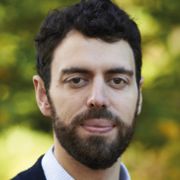
Dr. Luke Ulas

Research Project:
Cosmopolitanism and global solidarity

Abstract:
Cosmopolitanism faces a problem that has to date not been adequately confronted, namely the cosmopolitan solidarity problem. This problem, put simply, recognises the reality that, currently, the global population has little appetite for redistributing resources or for otherwise changing behaviours and practices so as to realise cosmopolitan principles. There are two different versions of this problem. In one, it is assumed that cosmopolitan principles are widely accepted and yet are not being acted upon; the problem is thus largely one of moral motivation (Dobson, 2006; Lenard, 2010). In another version, the problem is not simply one of motivation, but also that cosmopolitan principles are in fact not widely accepted in the first place (Miller, 2000).  This problem, in both its forms, is a critical one for cosmopolitan theory, because those who defend cosmopolitan principles consider themselves to be engaged in a normative pursuit, which entails those principles being feasibly realisable. The cosmopolitan solidarity problem imperils the normativity of cosmopolitanism, because it raises the concern that humanity being guided by cosmopolitan principles may in some sense be infeasible.

My year as a Normative Orders Postdoctoral Fellow will be spent investigating theoretical questions that arise in relation to the cosmopolitan solidarity problem, to include:  
–     In which ways can global solidarity be conceptualised? In other words, which theoretical possibilities for turning the global population toward acceptance of cosmopolitan principles and/or motivating action in accordance with those principles have been – and can be – offered?
–     What are the institutional preconditions that these various conceptualisations bring with them?
–    Which, if any, appear to have morally troubling consequences?
–    Which, if any, appear in the end to be a promising theoretical response to the cosmopolitan solidarity problem

Events:
11 July 2016, 6-8pm
Lecture within the IGP-Kolloquium

  • Biografische Angaben

    Luke Ulas achieved his Ph.D. in Political Theory at the London School of Economics and Political Science in 2014. His thesis was titled „Realising Cosmopolitanism: The Role of a World State“. In 2014/15 he was a Justitia Amplificata Postdoctoral Research Fellow at Goethe University Frankfurt.

  • Publikationen

    Doing Things By Halves: On Intermediary Global Institutionl Proposals?, Ethics and Global Politics (forthcoming 2016).

    Cosmopolitanism, Self-Interest and World Government?, Political Studies (forthcoming 2016).

    Transforming (but not Transcending) the State System? On Statist Cosmopolitanism? Critical Review of International Social and Political Philosophy (Online early DOI: 10.1080/13698230.2015.1048071).

    Global Community as a Response to the Cosmopolitan Solidarity Problem?, in Henrik Enroth and Douglas Brommesson (eds.) Global Community? Transnational and Transdisciplinary Exchanges (Rowman and Littlefield, 2015).

    Miller’s Models and their Applicability to Nations?, Theoria 129: 79?94 (2011)

Aktuelles aus dem Forschungszentrum

Veranstaltung
18.04.2026 | Frankfurt am Main

Das Prinzip Donald Trump und die Verrohung der Welt

Podiumsdiskussion, Vortrag

Ein neuer Politikstil macht international Karriere. Er ist gekennzeichnet von Vulgarität, Verrohung und erklärter Rechtsfeindschaft. Machtinteressen werden nicht mehr juristisch bemäntelt. Stattdessen wird das angebliche Recht des Stärkeren zur Staatsdoktrin gemacht – innenpolitisch wie außenpolitisch. Treibende Kraft hinter dieser Verrohung der politischen Sitten ist ein US-Präsident, der nicht nur die amerikanische Gesellschaft und Kultur, sondern auch die globale Ordnung nach seinen Vorstellungen und Interessen umgestaltet. Die Römerberggespräche wollen diesen Politikstil verstehen.

weitere Infos ›
Veranstaltung
29.04.2026 | Frankfurt am Main

Kulturindustrie heute?

Podiumsdiskussion

Das Gespräch „Kulturindustrie heute?“ widmet sich der Aktualität und Tragfähigkeit eines zentralen Begriffs der Kritischen Theorie. Die Filmwissenschaftlerin Gertrud Koch diskutiert im Rahmen der Gesprächsreihe "Frankfurter Schule" mit dem Filmkritiker Bert Rebhandl die gegenwärtigen Formen kultureller Produktion und Verbreitung vor dem Hintergrund von Digitalisierung, Plattformen und globalen Medienmärkten.

weitere Infos ›
News
19.02.2026

Call for Applications – Postdoctoral Fellowships

Am Forschungszentrum Normative Ordnungen sind für das akademische Jahr 2026/2027 mehrere Postdoctoral Fellowships mit einer Laufzeit von 10 Monaten (Beginn: 1. Oktober 2026) ausgeschrieben. Bewerbungsschluss für alle Programme ist der 15. März 2026.

weitere Infos ›
Veranstaltung
20.03.2026 | Frankfurt am Main

40 Jahre Schengen-Raum

Kolloqium

Der 1984 geschlossene Schengen-Vertrag schuf einen heute 29 Staaten umfassenden Raum ohne Binnengrenzen, doch Migration über die Außengrenzen führte zuletzt zur Wiedereinführung von Kontrollen, auch durch die Bundesregierung ab 8. Mai 2025. Das Walter Hallstein-Kolloquium diskutiert die rechtliche Zulässigkeit, wirtschaftliche Folgen insbesondere für Arbeitsmigration und Arbeitsmarkt sowie die Zukunft des Schengen-Raums.

weitere Infos ›
News
12.02.2026

Satanistische Politik und der Niedergang der Vernunft in liberalen Demokratien

Ein letztes Mal im Wintersemester 2025/26 lud das Forschungszentrum zur Ringvorlesung „Am Scheidepunkt. Zur Krise der Demokratie“. Zum Abschluss hat der Philosoph Michael Rosen von der Harvard University sein Konzept der „satanic politics“ als eine Variante der politischen Deutung der Welt vorgestellt.

weitere Infos ›
News
09.02.2026

Zur Aktualität des Gewaltbegriffs anhand von Camus und Derrida

Prof. Dr. Christine Abbt von der Universität St. Gallen hat im Rahmen der Ringvorlesung „Am Scheidepunkt? Zur Krise der Demokratie“ einen Vortrag über Demokratien und den Gewaltbegriff gehalten. Unter dem Titel „Demokratien verteidigen. Zur Aktualität des Gewaltbegriffs bei Camus und Derrida“ besprach die Philosophin Formen von Gewalt und Revolte und ordnete diese im Hinblick auf ein demokratisches Setting ein.

weitere Infos ›
Publikation
04.02.2026 | Zeitschriftenartikel

New Perspectives on Trust in International Conflicts

Wille, Tobias; Simon, Hendrik; Daase, Christopher; Deitelhoff, Nicole; Wheeler, Nicholas J.; Holmes, Marcus; Rathbun, Brian C.; Acharya, Amitav; Mitzen, Jennifer (2026): „New Perspectives on Trust in International Conflicts“. In: International Studies Review 28 (1), viaf027. 

weitere Infos ›
News
02.02.2026

Staatlicher Wettbewerb um Menschen – David Owen über civil geopolitics

Im Rahmen der Ringvorlesung „Am Scheidepunkt – Zur Zukunft der Demokratie“ präsentierte David Owen von der Universität Southampton sein Konzept der civil geopolitics.

weitere Infos ›
News
20.01.2026

Christine Hentschel über Neuorientierungen in katastrophischen Zeiten

Im Rahmen der Ringvorlesung „Am Scheidepunkt? Zur Krise der Demokratie“ sprach die Soziologin über das Leben in und den Umgang mit katastrophischen Zeiten. Vor dem Hintergrund der Zerstörung der Lebensbedingungen, Kriegen, dauerhafter Krisenhaftigkeit sowie der Bedrohungen der Demokratie widmete sich Hentschel dem Einsickern des Katastrophischen in den gesellschaftlichen Alltag und einem sich verändernden aktivistischen und literarischen Umgang mit der Zukunft.

weitere Infos ›