

Movie
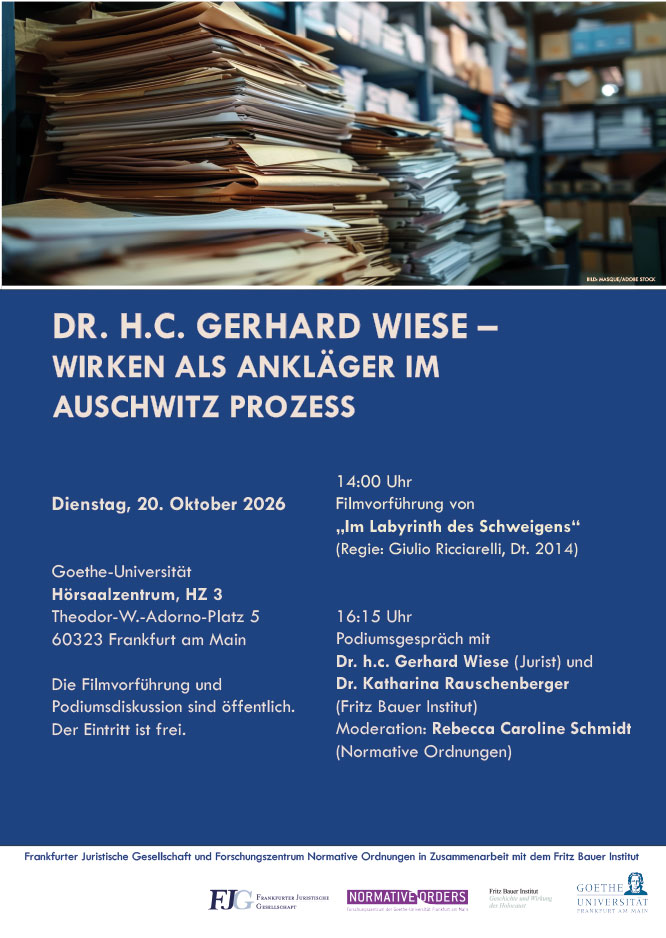
Dr. h.c. Gerhard Wiese – Wirken als Ankläger im Auschwitz Prozess
Der Frankfurter Auschwitz-Prozess von 1963 bis 1965 gilt als ein zentraler Wendepunkt in der juristischen und öffentlichen Auseinandersetzung mit den nationalsozialistischen Verbrechen in der Bundesrepublik Deutschland. Dr. h.c. Gerhard Wiese, der als junger Staatsanwalt zum Anklägerteam des Prozesses gehörte, berichtet aus seiner Perspektive auf die damaligen Ermittlungen und die Hauptverhandlung. Im Gespräch mit der Historikerin Dr. Katharina Rauschenberger (Fritz Bauer Institut) wird die Bedeutung des Prozesses für die strafrechtliche Aufarbeitung der NS-Verbrechen in den Blick genommen.
more information ›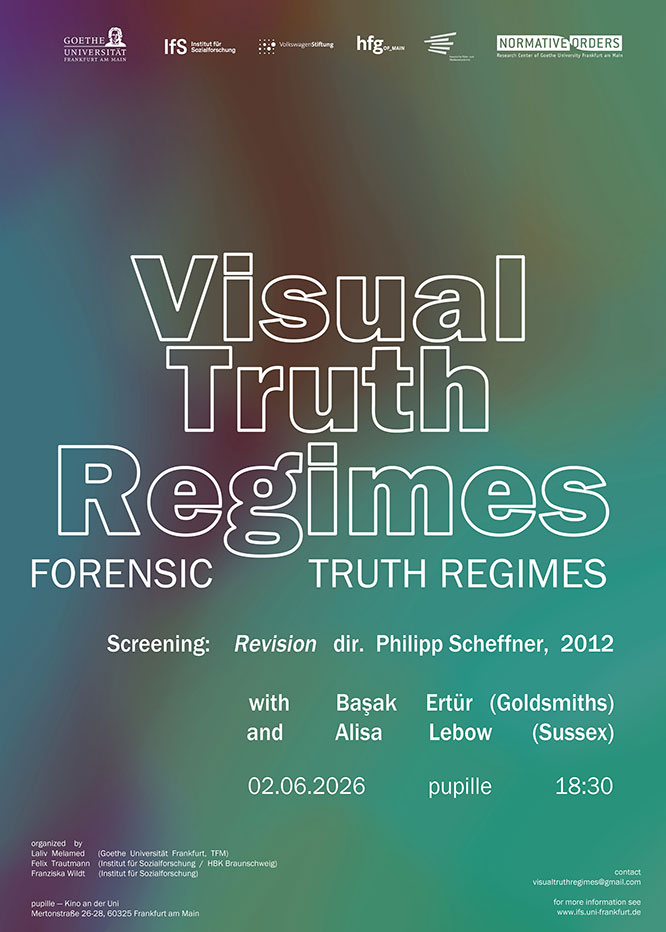
Forensic Truth Regimes
The event explores how documentary film and aesthetic investigations can reopen unresolved questions of justice and accountability by revisiting the 1992 killing of two Romanian Roma men at the German-Polish border and examining the counter-forensic potential of visual media to critique legal violence and truth regimes. It is part of the series “Visual Truth Regimes,” organized by Laliv Melamed (Goethe University Frankfurt, TFM), Felix Trautmann (HBK Braunschweig / Institute for Social Research), and Franziska Wildt (Institute for Social Research).
more information ›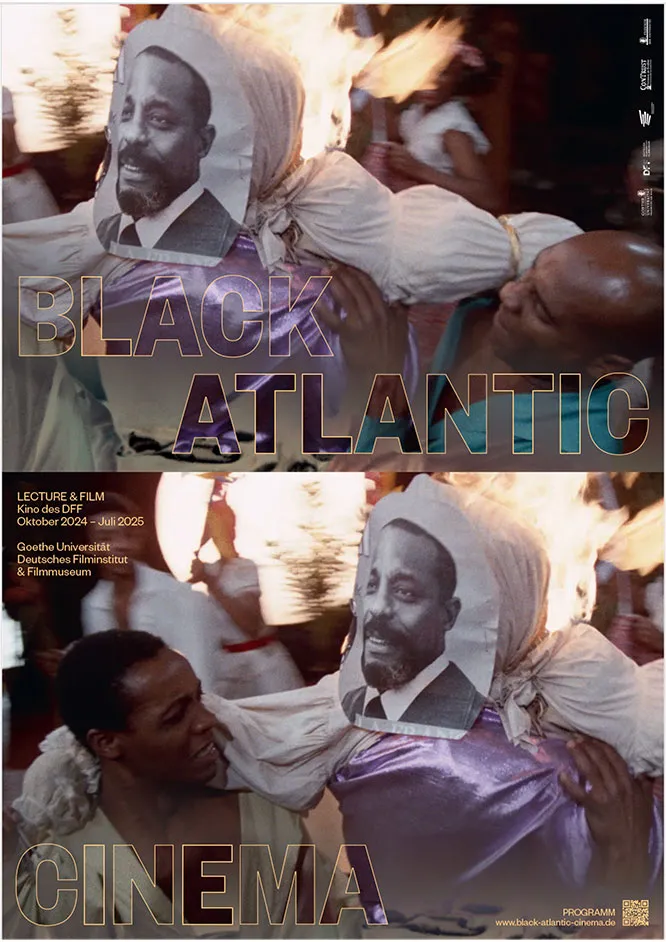
African Boats and Scenes of Mourning in the Postcolonial Black Atlantic
Lecture by Ayo Coly (Dartmouth) with a screening of “The Pirogue” (2013).
more information › Encruzilhadas das águas / Water Crossings, routes for the Black Brazilian Cinemas’ experiences
Lecture & Film “Black Atlantic Cinema” Lecture: Janaína Oliveira (Rio de Janeiro) “We are always in the middle of the journey,” says essayist and poet Dionne Brand in A Map […]
more information › Flânoirie: inscribing mobility through walking in Black German film
Lecture & Film “Black Atlantic Cinema” Karina Griffith (Berlin) A young university student searches for a room to let. An American GI searches for love between visiting record stores and […]
more information › LA PERMISSION (FR 1967. D: Melvin van Peebles)
Lecture & Film “Black Atlantic Cinema” Lecture: Greg de Cuir Jr Lecture: A Black American in Paris Melvin van Peebles left the United States to live and work in Europe […]
more information ›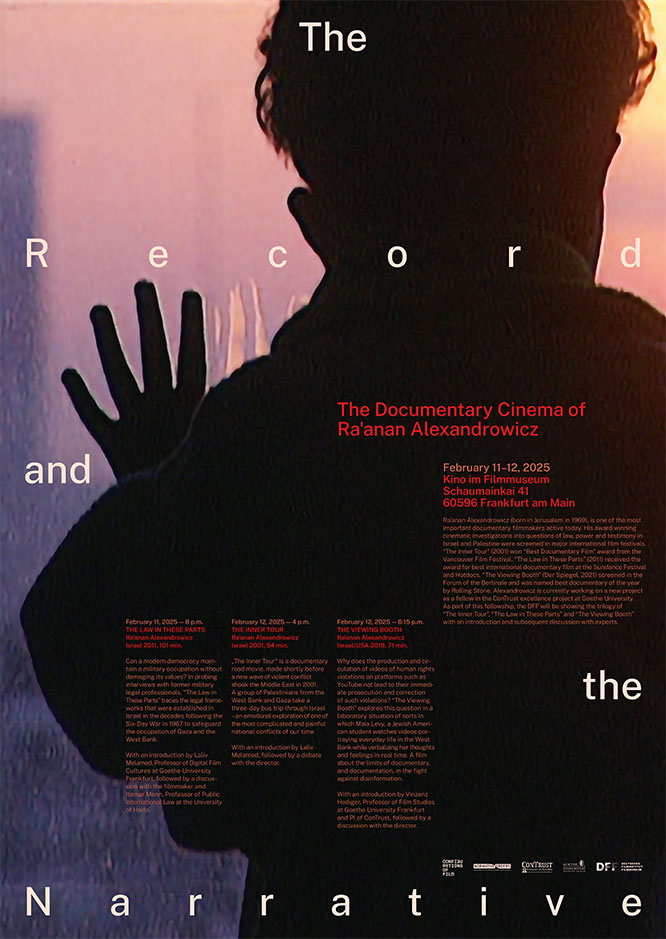
The Viewing Booth
The Record and the Narrative. The Documentary Cinema of Ra’anan Alexandrowicz Ra’anan Alexandrowicz, born in Jerusalem in 1969, is one of the most important documentary filmmakers of our time. His […]
more information › The Inner Tour
The Record and the Narrative. The Documentary Cinema of Ra’anan Alexandrowicz Ra’anan Alexandrowicz, born in Jerusalem in 1969, is one of the most important documentary filmmakers of our time. His […]
more information › The Law in These Parts
The Record and the Narrative. The Documentary Cinema of Ra’anan Alexandrowicz Ra’anan Alexandrowicz, born in Jerusalem in 1969, is one of the most important documentary filmmakers of our time. His […]
more information › Key Works of Afro-Brazilian Short Film
Lecture & Film: Black Atlantic Cinema Lecture: Janaína Oliveira (Rio de Janeiro) Lecture: Key Works of Afro-Brazilian Short Film Janaína Oliveira has a Ph.D. in History and is a professor […]
more information › SAMBIZANGA (1972. D: Sarah Maldoror)
Lecture & Film “Black Atlantic Cinema” Lecture: Jennifer Blaylock (Rowan University) Lecture: The Thin Green Line Between Canons and Revolutions. On Sarah Maldoror’s Sambizanga (1972) What happens to the revolutionary […]
more information ›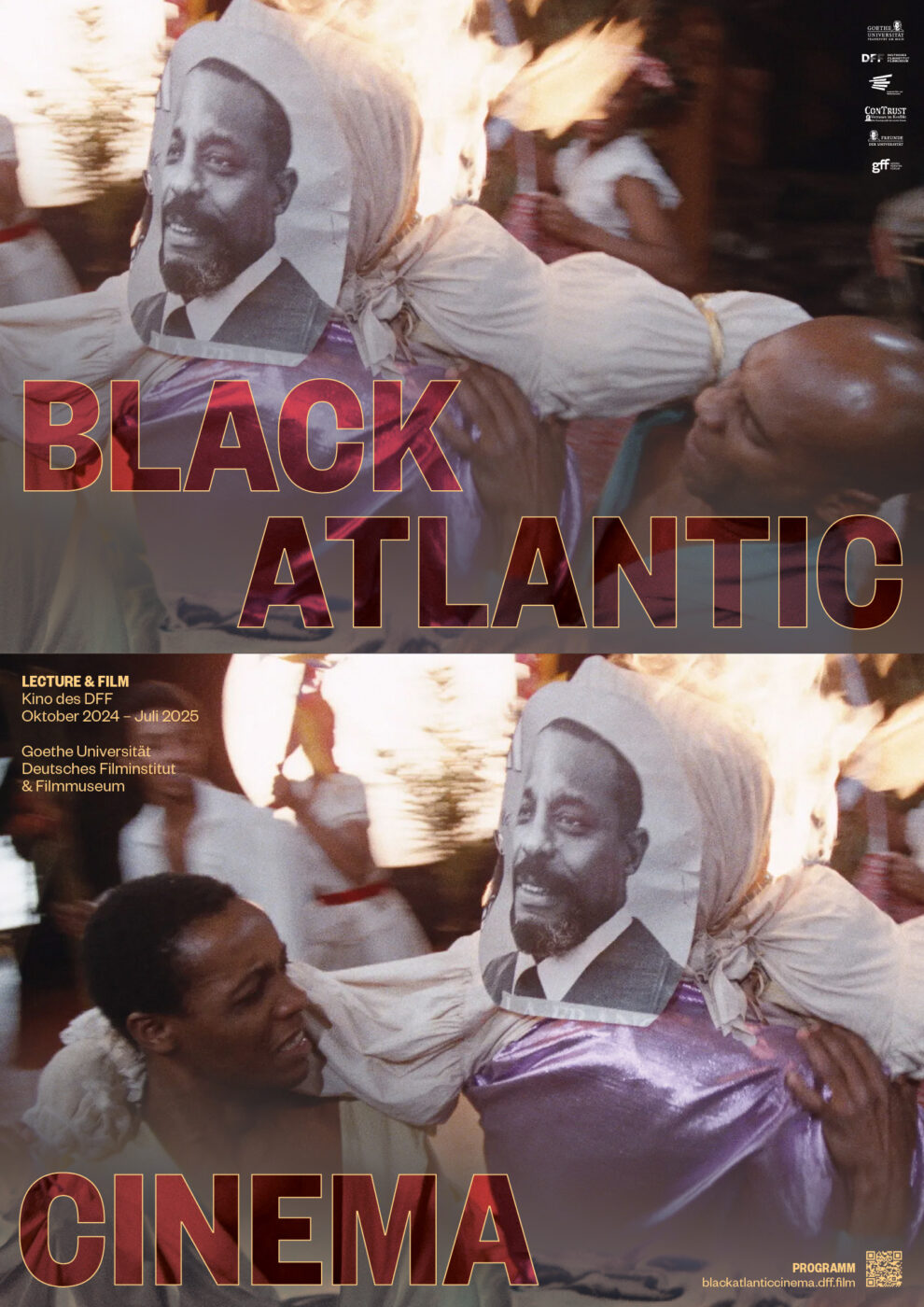
MANDABI The Postal Money Order (SN 1968. D: Ousmane Sembene)
Lecture & Film “Black Atlantic Cinema” Lecture: Daniel Fairfax (Frankfurt) Lecture: Symbolic Capital: Mandabi (1968) by Ousmane Sembene An adaptation of his own novella Le Mandat, Ousmane Sembene’s Mandabi (1968) […]
more information ›