

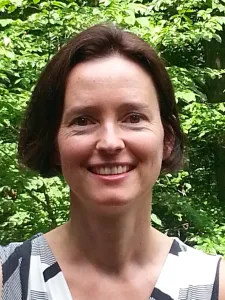
Former Fellow

Julia Roos

Professor of History, Indiana University

Research project:
German Racial Regimes in a Transnational Context: An Afro-German Microhistory

Research project:
The project focuses on a biographical microhistory to examine broader aspects of different German “racial regimes”-or, historically specific constellations of predominant beliefs about, and legal and political practices towards, Blacks as perceived racial “Others”-during crucial moments of the twentieth century. “Erika Diekmann” was born in Worms in the occupied Rhineland in 1920. Her mother was German. Her father was a Senegalese French soldier. Until she was eleven, Erika stayed in a Protestant children’s home in Worms. In 1931, her guardians sent her to a Lutheran school for Christian Arab girls in Jerusalem. In 1949, Erika returned to West Germany, along with her (white) German husband and their son. In 1957, she and her family immigrated to the United States. Erika died in Kentucky in 1963.
Erika’s story offers unique opportunities for situating German attitudes towards Blacks within broader international and transnational contexts. As a child of the first Rhineland occupation, Erika was the target of 1920s propaganda against the “black horror on the Rhine” (schwarze Schmach), which aimed to discredit the Versailles Treaty by falsely accusing colonial French soldiers of mass rapes of Rhenish women. “Black horror” propaganda borrowed selectively from Allied war propaganda about the “rape of Belgium” by atavistic “Huns.” The Nazis revived black horror propaganda in their murderous campaign against African French soldiers during WW II. Memories of the Weimar-era and Nazi campaigns against colonial French soldiers continued to reverberate in postwar West Germany and helped shape Germans’ encounters with African-American GIs. Erika’s biography also points to certain hitherto neglected complexities and realignments in twentieth-century German racial discourse. For instance, while Erika’s conservative Protestant mentors impressed on her the centrality of marriage and motherhood, the Nazis subjected hundreds of other Afro-German children of the Rhineland occupation to compulsory sterilization, irrevocably depriving them of the right to become parents.

Events:
October 29, 2016, 2 p.m.
Fireside chat of the women’s network of the Cluster of Excellence “The Formation of Normative Orders”

November 11, 2016, 11.30 a.m.
Paper Presentation
Forschungskolleg Humanwissenschaften
Am Wingertsberg 4
61348 Bad Homburg v.d. Höhe

  • Biografische Angaben

    Julia Roos received her doctorate in history from Carnegie Mellon University in 2001. In 2002, she received the Fritz Stern Prize for the best dissertation submitted in the field of German history at a North American university. From 2002-2003, she was a Visiting Research Fellow at the Department of History at Princeton University. Since 2006, Roos has held a position as Professor of History at Indiana University in Bloomington. In 2012, she was promoted from Assistant Professor Without Tenure to Associate Professor With Tenure.
  • Publikationen

    Weimar through the Lens of Gender: Prostitution Reform, Woman’s Emancipation, and German Democracy, 1919-1933. Ann Arbor: University of Michigan Press, 2010. “An Afro-German Microhistory: Gender, Religion, and the Challenges of Diasporic Dwelling,” Central European History vol. 49, no. 2 (June 2016): 240-60. “Racist Hysteria to Pragmatic Rapprochement? The German Debate about Rhenish ‘Occupation Children,’ 1920-1930.” Contemporary European History 22, no.2 (May 2013): 155-180. “Nationalism, Racism, and Propaganda in Early Weimar Germany: Contradictions in the Campaign against the ‘Black Horror on the Rhine.’” German History 30, no. 1 (March 2012): 45-74.

News from the research center

Event
12.05.2026 | Frankfurt am Main

Zwischen Transformation und Abolitionismus

Book Presentation

Buchvorstellung mit Christine Graebsch, Katrin Höffler, Jochen Bung & Ronen Steinke

more information ›
Event
20.04.2026 | Brussels

Militärische KI verantwortungsvoll nutzen und Regulierung neu denken

Panel Discussion, Lecture

Künstliche Intelligenz findet im Militär immer breiteren Einsatz, von Logistik und Training über Missionsplanung und Zielidentifikation bis hin zu autonomen Waffensystemen. Gleichzeitig wächst die Bedeutung von Mikroprozessoren immer stärker, der Zugang zu seltenen Erden und Chips wird zur zentralen Ressource. KI kann das Kampfgeschehen beschleunigen und damit destabilisierend wirken. Der Wettlauf um neue Fähigkeiten birgt jedoch auch Eskalationsrisiken. Wir laden Sie ein, diese Themen im nächsten Crisis Talk gemeinsam mit unseren hochkarätigen Podiumsgästen zu diskutieren.

more information ›
Event
28./29.05.2026 | Frankfurt am Main

Global Health Justice: Principles and Practice

Conference

Following the research focus of the Global Health Justice Postdoctoral Programme, the "Global Health Justice: Principles and Practice" conference places a particular emphasis on themes such as the human right to health, political activism and health justice issues, and problems of structural injustice and vulnerable populations in health care. Keynote lectures by Jonathan Wolff and Kanchana Mahadevan.

more information ›
Publication
26.03.2026 | Monograph

The Cambridge History of Latin American Law in Global Perspective

Duve, Thomas; Herzog, Tamar (eds.): The Cambridge History of Latin American Law in Global Perspective, Cambridge: Cambridge University Press, 2024 (portugiesisch 2025; spanisch 2026).

more information ›
Publication
26.03.2026 | Monograph

Rechtsgeschichte des frühneuzeitlichen Hispanoamerika

Duve, Thomas; Egío, José Luis  (2023): Rechtsgeschichte des frühneuzeitlichen Hispanoamerika, Berlin: De Gruyter, 2023.

more information ›
Event
18.04.2026 | Frankfurt am Main

Das Prinzip Donald Trump und die Verrohung der Welt

Panel Discussion, Lecture

Ein neuer Politikstil macht international Karriere. Er ist gekennzeichnet von Vulgarität, Verrohung und erklärter Rechtsfeindschaft. Machtinteressen werden nicht mehr juristisch bemäntelt. Stattdessen wird das angebliche Recht des Stärkeren zur Staatsdoktrin gemacht – innenpolitisch wie außenpolitisch. Treibende Kraft hinter dieser Verrohung der politischen Sitten ist ein US-Präsident, der nicht nur die amerikanische Gesellschaft und Kultur, sondern auch die globale Ordnung nach seinen Vorstellungen und Interessen umgestaltet. Die Römerberggespräche wollen diesen Politikstil verstehen.

more information ›
Event
14.07.2026 | Frankfurt am Main

Democracy Over Time and the Climate Crisis

Lecture Series

Vortrag von Anja Karnein (Binghamton). Die Vortragsreihe untersucht Fragen der Klimakrise als Herausforderungen für demokratische Gesellschaften und konzentriert sich auf Themen wie politische Legitimität, Widerstand gegen fossile Brennstoffe und die Interessen künftiger Generationen. Sie wird organisiert von Prof. Dr. Darrel Moellendorf und Dr. Lukas Sparenborg.

more information ›
Event
10.06.2026 | Frankfurt am Main

Capital Investment, Inequality, and State Power in a Time of Climate Emergency

Lecture, Lecture Series

The lecture series examines questions of the climate crisis as challenges for democratic
societies and focuses on issues of political legitimacy, fossil fuel resistance, and the interests
of future generations.

more information ›
Event
13.05.2026 | Frankfurt am Main

Failed States and Cloudy skies: Tipping Points, Overshoot and Permanent Emergency, after America

Lecture Series

The lecture series examines questions of the climate crisis as challenges for democratic
societies and focuses on issues of political legitimacy, fossil fuel resistance, and the interests
of future generations.

more information ›