

Former Fellow

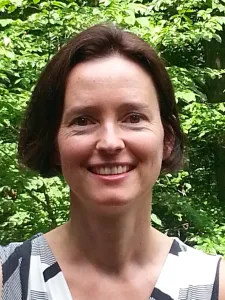
Julia Roos

Professor of History, Indiana University

Research project:
German Racial Regimes in a Transnational Context: An Afro-German Microhistory

Research project:
The project focuses on a biographical microhistory to examine broader aspects of different German “racial regimes”-or, historically specific constellations of predominant beliefs about, and legal and political practices towards, Blacks as perceived racial “Others”-during crucial moments of the twentieth century. “Erika Diekmann” was born in Worms in the occupied Rhineland in 1920. Her mother was German. Her father was a Senegalese French soldier. Until she was eleven, Erika stayed in a Protestant children’s home in Worms. In 1931, her guardians sent her to a Lutheran school for Christian Arab girls in Jerusalem. In 1949, Erika returned to West Germany, along with her (white) German husband and their son. In 1957, she and her family immigrated to the United States. Erika died in Kentucky in 1963.
Erika’s story offers unique opportunities for situating German attitudes towards Blacks within broader international and transnational contexts. As a child of the first Rhineland occupation, Erika was the target of 1920s propaganda against the “black horror on the Rhine” (schwarze Schmach), which aimed to discredit the Versailles Treaty by falsely accusing colonial French soldiers of mass rapes of Rhenish women. “Black horror” propaganda borrowed selectively from Allied war propaganda about the “rape of Belgium” by atavistic “Huns.” The Nazis revived black horror propaganda in their murderous campaign against African French soldiers during WW II. Memories of the Weimar-era and Nazi campaigns against colonial French soldiers continued to reverberate in postwar West Germany and helped shape Germans’ encounters with African-American GIs. Erika’s biography also points to certain hitherto neglected complexities and realignments in twentieth-century German racial discourse. For instance, while Erika’s conservative Protestant mentors impressed on her the centrality of marriage and motherhood, the Nazis subjected hundreds of other Afro-German children of the Rhineland occupation to compulsory sterilization, irrevocably depriving them of the right to become parents.

Events:
October 29, 2016, 2 p.m.
Fireside chat of the women’s network of the Cluster of Excellence “The Formation of Normative Orders”

November 11, 2016, 11.30 a.m.
Paper Presentation
Forschungskolleg Humanwissenschaften
Am Wingertsberg 4
61348 Bad Homburg v.d. Höhe

  • Biografische Angaben

    Julia Roos received her doctorate in history from Carnegie Mellon University in 2001. In 2002, she received the Fritz Stern Prize for the best dissertation submitted in the field of German history at a North American university. From 2002-2003, she was a Visiting Research Fellow at the Department of History at Princeton University. Since 2006, Roos has held a position as Professor of History at Indiana University in Bloomington. In 2012, she was promoted from Assistant Professor Without Tenure to Associate Professor With Tenure.
  • Publikationen

    Weimar through the Lens of Gender: Prostitution Reform, Woman’s Emancipation, and German Democracy, 1919-1933. Ann Arbor: University of Michigan Press, 2010. “An Afro-German Microhistory: Gender, Religion, and the Challenges of Diasporic Dwelling,” Central European History vol. 49, no. 2 (June 2016): 240-60. “Racist Hysteria to Pragmatic Rapprochement? The German Debate about Rhenish ‘Occupation Children,’ 1920-1930.” Contemporary European History 22, no.2 (May 2013): 155-180. “Nationalism, Racism, and Propaganda in Early Weimar Germany: Contradictions in the Campaign against the ‘Black Horror on the Rhine.’” German History 30, no. 1 (March 2012): 45-74.

News from the research center

Event
18.04.2026 | Frankfurt am Main

Das Prinzip Donald Trump und die Verrohung der Welt

Panel Discussion, Lecture

Ein neuer Politikstil macht international Karriere. Er ist gekennzeichnet von Vulgarität, Verrohung und erklärter Rechtsfeindschaft. Machtinteressen werden nicht mehr juristisch bemäntelt. Stattdessen wird das angebliche Recht des Stärkeren zur Staatsdoktrin gemacht – innenpolitisch wie außenpolitisch. Treibende Kraft hinter dieser Verrohung der politischen Sitten ist ein US-Präsident, der nicht nur die amerikanische Gesellschaft und Kultur, sondern auch die globale Ordnung nach seinen Vorstellungen und Interessen umgestaltet. Die Römerberggespräche wollen diesen Politikstil verstehen.

more information ›
Event
29.04.2026 | Frankfurt am Main

Kulturindustrie heute?

Panel Discussion

Das Gespräch „Kulturindustrie heute?“ widmet sich der Aktualität und Tragfähigkeit eines zentralen Begriffs der Kritischen Theorie. Die Filmwissenschaftlerin Gertrud Koch diskutiert im Rahmen der Gesprächsreihe "Frankfurter Schule" mit dem Filmkritiker Bert Rebhandl die gegenwärtigen Formen kultureller Produktion und Verbreitung vor dem Hintergrund von Digitalisierung, Plattformen und globalen Medienmärkten.

more information ›
Event
20.03.2026 | Frankfurt am Main

40 Jahre Schengen-Raum

Colloquium

Der 1984 geschlossene Schengen-Vertrag schuf einen heute 29 Staaten umfassenden Raum ohne Binnengrenzen, doch Migration über die Außengrenzen führte zuletzt zur Wiedereinführung von Kontrollen, auch durch die Bundesregierung ab 8. Mai 2025. Das Walter Hallstein-Kolloquium diskutiert die rechtliche Zulässigkeit, wirtschaftliche Folgen insbesondere für Arbeitsmigration und Arbeitsmarkt sowie die Zukunft des Schengen-Raums.

more information ›
News
12.02.2026

Satanist politics and the decline of reason in liberal democracies

For the last time in the winter semester 2025/26, the Research Center hosted the lecture series "Am Scheidepunkt. On the crisis of democracy". At the end, philosopher Michael Rosen from Harvard University presented his concept of "satanic politics" as a variant of the political interpretation of the world.

more information ›
News
09.02.2026

On the topicality of the concept of violence based on Camus and Derrida

Prof. Dr. Christine Abbt from the University of St. Gallen gave a lecture on democracies and the concept of violence as part of the lecture series "At the crossroads? On the crisis of democracy", she gave a lecture on democracies and the concept of violence. Under the title "Defending democracies. On the topicality of the concept of violence in Camus and Derrida", the philosopher discussed forms of violence and revolt and categorized them with regard to a democratic setting.

more information ›
Publication
04.02.2026 | Journal article

New Perspectives on Trust in International Conflicts

Wille, Tobias; Simon, Hendrik; Daase, Christopher; Deitelhoff, Nicole; Wheeler, Nicholas J.; Holmes, Marcus; Rathbun, Brian C.; Acharya, Amitav; Mitzen, Jennifer (2026): „New Perspectives on Trust in International Conflicts“. In: International Studies Review 28 (1), viaf027.

more information ›
News
02.02.2026

States competing for people - David Owen on civil geopolitics

As part of the lecture series "At the Crossroads - The Future of Democracy", David Owen from the University of Southampton presented his concept of civil geopolitics.

more information ›
News
20.01.2026

Christine Hentschel on reorientation in catastrophic times

As part of the lecture series "At the crossroads? On the crisis of democracy", the sociologist spoke about living in and dealing with catastrophic times. Against the backdrop of the destruction of living conditions, wars, permanent crises and threats to democracy, Hentschel addressed the infiltration of the catastrophic into everyday social life and a changing activist and literary approach to the future.

more information ›
Publication
08.01.2026 | Journal article

Gender Differences in Financial Advice

Bucher-Koenen, Tabea; Hackethal, Andreas; Koenen, Johannes; Laudenbach, Christine (2025): „Gender Differences in Financial Advice“. In: American Economic Review, 115 (12), pp. 4218–4252.

more information ›