
Fellow

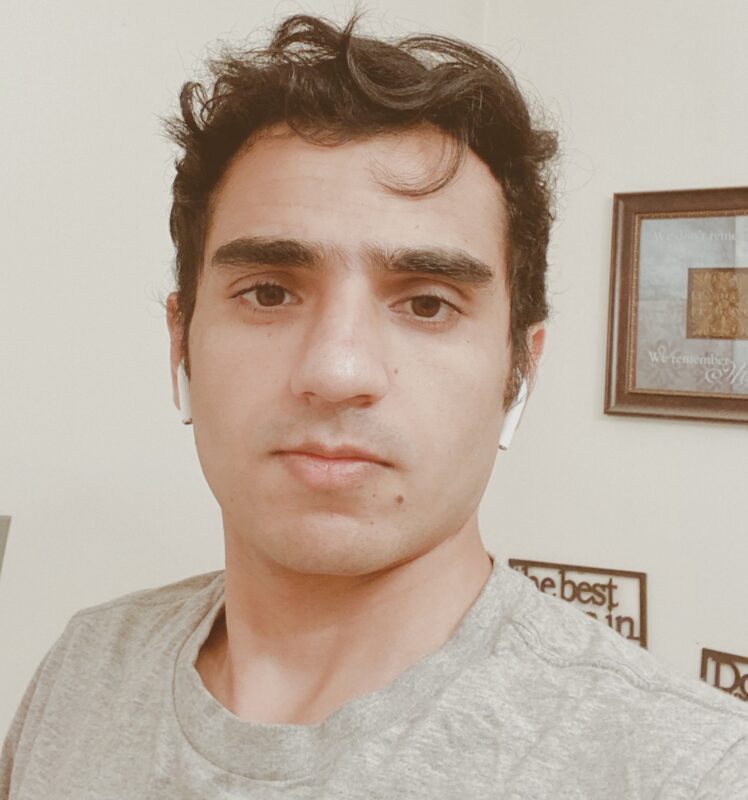
Husnain Iqbal, PhD

Research Project

Global Power Transition and the Legitimation of the Sovereign-Territorial State

This project examines how global power transition reshapes the legitimation of political authority across time and space, with a central focus on the persistence of the sovereign-territorial state. As power disperses beyond the Euro-Atlantic world and US–China rivalry intensifies, it asks how this state form is legitimated and reproduced as the dominant normative template despite persistent unevenness and contestation in how authority is organised. Drawing on the systemic theory of state formation developed in my doctoral dissertation, the project conceptualises global power transition as the primary systemic driver of spatial transformation through which historically contingent state forms emerge and diffuse across time and space. Systemic pressures generated by shifts in the system-wide distribution of power are mediated through international process, with great powers as principal actors whose ordering strategies translate these pressures into uneven spatial transformations across regions. These transformations unfold through three interrelated mechanisms of spatial ordering: material, institutional, and ideational. During the fellowship, the project focuses particularly on the ideational mechanism, examining how legitimation narratives, classificatory schemes, and recognition practices define and stabilise political boundaries and help reproduce the sovereign-territorial state. Empirically, it uses evolving debates over how China understands and describes its surrounding region, often termed its ‘periphery’ in official discourse, as a focal arena for examining how these mechanisms interact under contemporary conditions of global power transition.

  • Biografische Angaben

    Husnain Iqbal completed his PhD in Political Science at the University of Victoria, Canada. His research focuses on systemic theorising in International Relations, hegemonic ordering, state formation, and historical international systems, with a regional focus on the Asia-Pacific and Indian Ocean. As part of Zeitenwenden. Normative Ordnungen im Umbruch? , he examines how contemporary global power transition shapes the legitimation and persistence of the sovereign-territorial state. Alongside this work, he is developing his doctoral dissertation on the systemic theory of state formation into a monograph. He is also a Research Associate at the Centre for Asia-Pacific Initiatives at the University of Victoria.

News from the research center

Event
13.11.2026 | Frankfurt am Main

When Design Gets Political

Exhibition, Conference, Panel Discussion, Lecture, Workshop

Der dritte Tag der Design Policy Days an der Goethe-Universität Frankfurt richtet sich an alle, die Design als politische Kraft denken. Gemeinsam mit dem Deutschen Designtag und der World Design Capital 2026 widmet er sich in Roundtables, Projektpräsentationen, Workshops und Ausstellungen der institutionellen Politik: Wie lässt sich Design methodisch, strukturell und normativ in politische Entscheidungsprozesse integrieren – und wie kann Politik selbst als Gestaltungsfeld verstanden werden?

more information ›
Event
20.10.2026 | Frankfurt

Dr. h.c. Gerhard Wiese – Wirken als Ankläger im Auschwitz Prozess

Movie, Panel Discussion

Der Frankfurter Auschwitz-Prozess von 1963 bis 1965 gilt als ein zentraler Wendepunkt in der juristischen und öffentlichen Auseinandersetzung mit den nationalsozialistischen Verbrechen in der Bundesrepublik Deutschland. Dr. h.c. Gerhard Wiese, der als junger Staatsanwalt zum Anklägerteam des Prozesses gehörte, berichtet aus seiner Perspektive auf die damaligen Ermittlungen und die Hauptverhandlung. Im Gespräch mit der Historikerin Dr. Katharina Rauschenberger (Fritz Bauer Institut) wird die Bedeutung des Prozesses für die strafrechtliche Aufarbeitung der NS-Verbrechen in den Blick genommen.

more information ›
Publication
21.09.2026 | Working Paper

Dimensionen wehrhafter Demokratie in unsicheren Zeiten

Abich, Leon; Adams, Cosima; Biebricher, Thomas; Britz, Gabriele; Daase, Christopher; Deitelhoff, Nicole; Dönges, Jan; Krause, Leon; Nitzschner, Patrick; Siebert, Hannes; Siefert, Julian; Stephanblome, Isabelle (2026): "Dimensionen wehrhafter Demokratie in unsicheren Zeiten". DemoReg Working Paper 3.1.

more information ›
Event
10.02.2027 | Frankfurt am Main

Shifting Visions of Peace and Security

Panel Discussion, Lecture Series

Podiumsdiskussion im Rahmen der Ringvorlesung “Peace and Security in Post-Liberal Times” mit Lisbeth Zimmermann (Goethe University/Normative Orders), Antonia Witt (PRIF), Siddarth Tripathi (University of Erfurt). Moderation: Jonas Wolff (Goethe University/PRIF/Normative Orders).

more information ›
Event
03.02.2027 | Frankfurt am Main

AI, War, and Big Tech

Lecture Series, Lecture

Vortrag von Ingvild Bode (University of Southern Denmark)im Rahmen der Ringvorlesung “Peace and Security in Post-Liberal Times”.

more information ›
Event
16.12.2026 | Frankfurt am Main

International arms control in a world of uncertainties

Lecture Series, Lecture

Vortrag von Malte Göttsche (TU Darmstadt/PRIF) im Rahmen der Ringvorlesung “Peace and Security in Post-Liberal Times”.

more information ›
Event
02.12.2026 | Frankfurt am Main

Enabling Authoritarianism: UN Peacekeeping and the Politics of Authoritarianism

Lecture Series, Lecture

Vortrag von Sarah von Billerbeck (University of Reading) im Rahmen der Ringvorlesung “Peace and Security in Post-Liberal Times”.

more information ›
Event
25.11.2026 | Frankfurt

Deterrence in “Post-Liberal Times“

Lecture Series, Lecture

Vortrag von Maria Mälksoo (Copenhagen University) (Goethe-Universität/PRIF/Normative Orders) im Rahmen der Ringvorlesung “Peace and Security in Post-Liberal Times”.

more information ›
Event
18.11.2026 | Frankfurt am Main

The Case for (Neo)colonialism: Neotrusteeship in International Relations as the ‘Imperial Mind’ of the ‘Colonial Present’

Lecture Series, Lecture

Vortrag von Nick Lemay-Hébert (Manchester University) im Rahmen der Ringvorlesung “Peace and Security in Post-Liberal Times”.

more information ›