Voluntary or compulsory? Military service, peace and democratic responsibility
Review of the 58th “Römerberggespräche
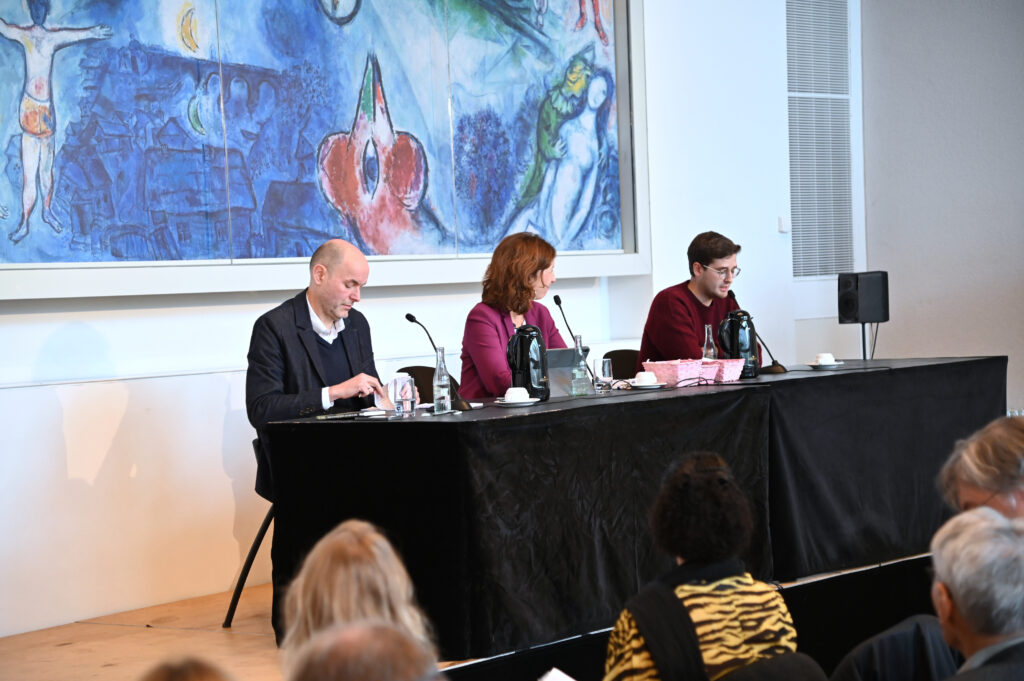
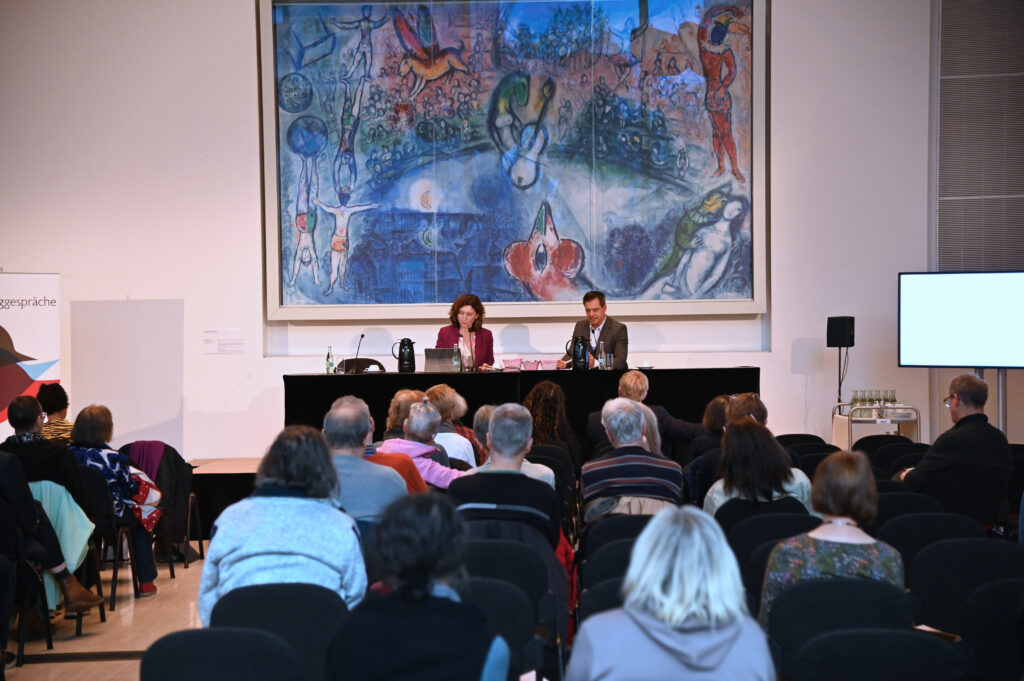
The topic of compulsory military service and the question of what a democratic state is allowed to demand of its citizens was the focus of the 58th “Römerberggespräche” “Conditionally ready for action? Military service and the duty to serve the state”, which took place on November 15 in cooperation with the Research Centre Normative Orders in the Chagallsaal at Schauspiel Frankfurt.
The opening question posed by moderators Cécile Schortmann and Hadija Haruna-Oelker – “How willing are you to engage with the state and in what form?” – made it clear just how topical the issue is.
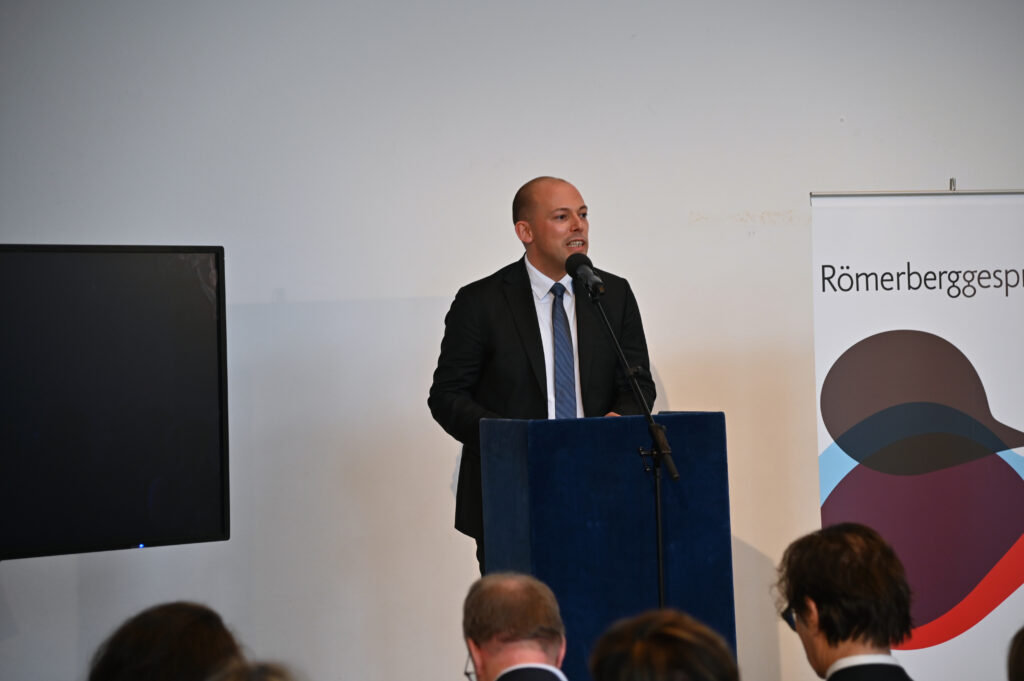
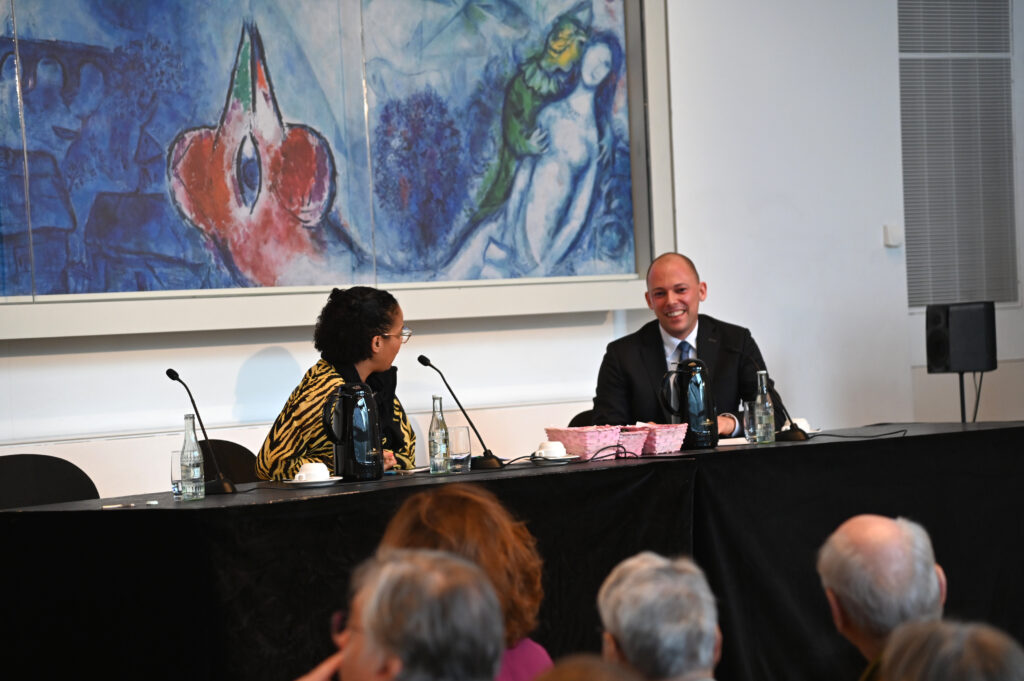
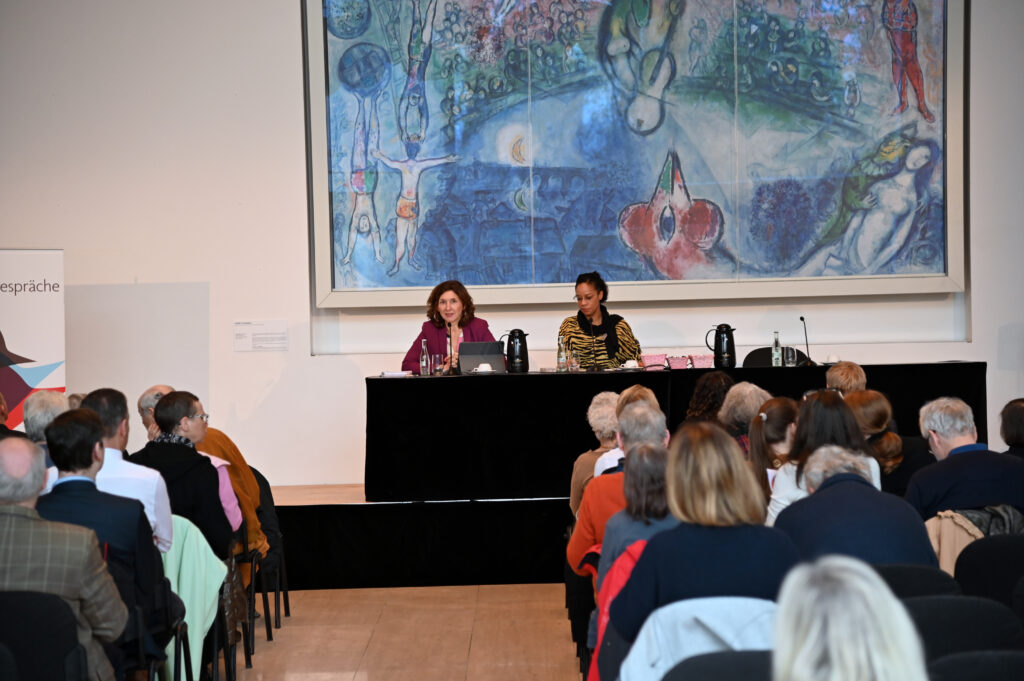
In the opening lecture, Ferdinand Weber (University of Bremen), who stood in for Udo di Fabio who was ill, first analyzed the constitutional foundations of a “defensible” democracy. He emphasized that the Basic Law provides for the possibility of compulsory military service, but that its reintroduction would pose legal and social hurdles. The state’s duty to protect must always be weighed up against individual civil liberties, and the current debate shows how flexibly a democracy can react to threats while at the same time being bound by the rule of law.
How the question of compulsory military service can polarize was particularly evident in the subsequent discussion between military historian Heiko Biehl, who defended compulsory military service as a legitimate state option, and author Ole Nymoen, who criticized it as an expression of generational injustice.
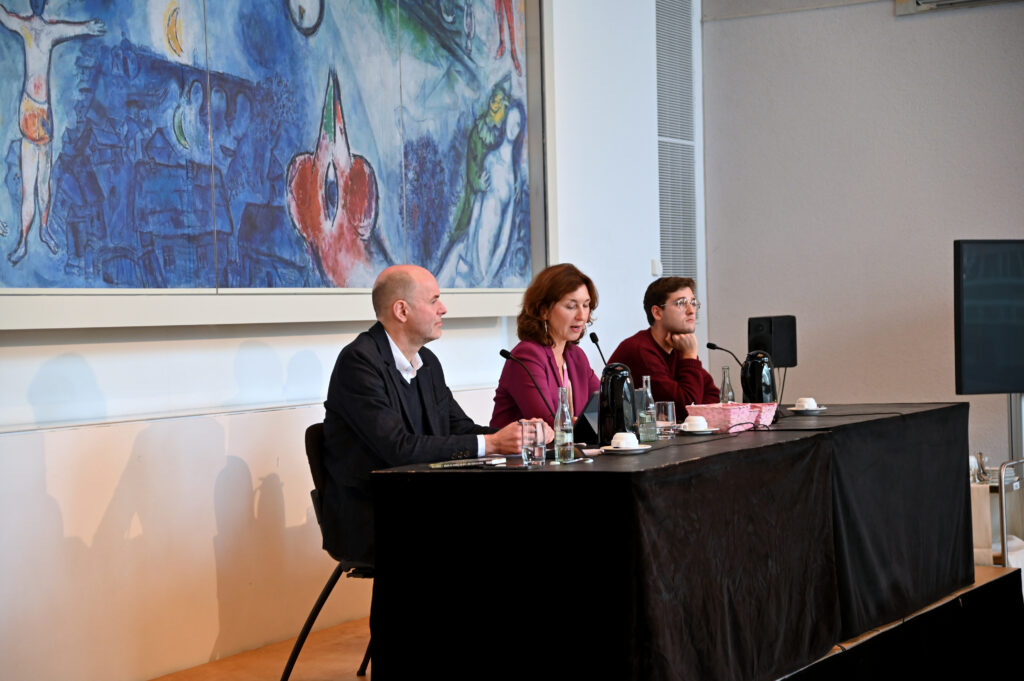
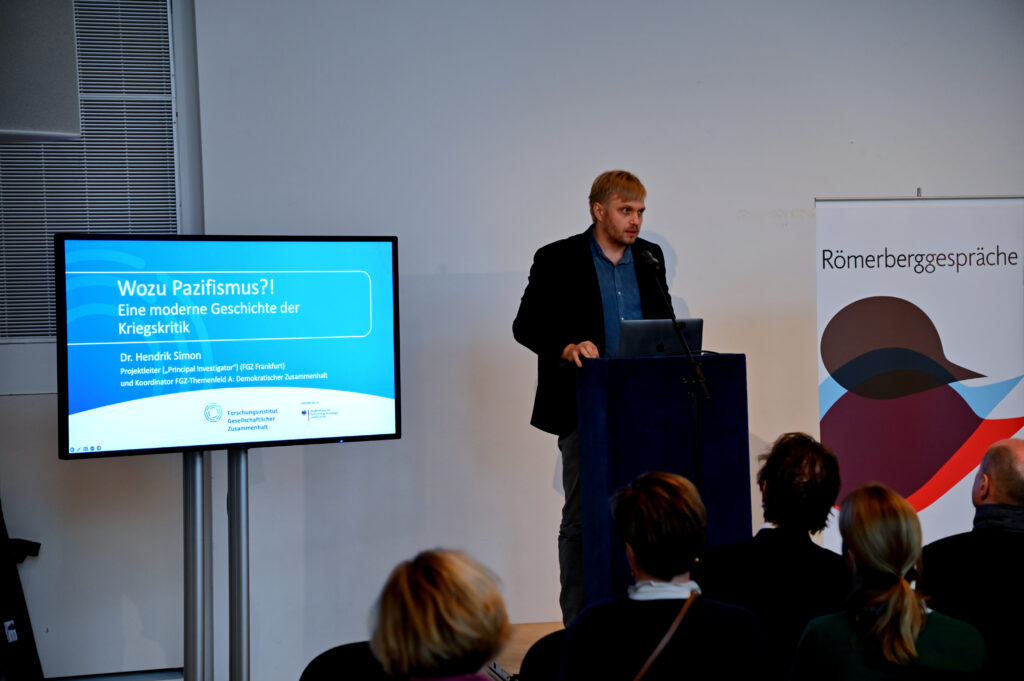
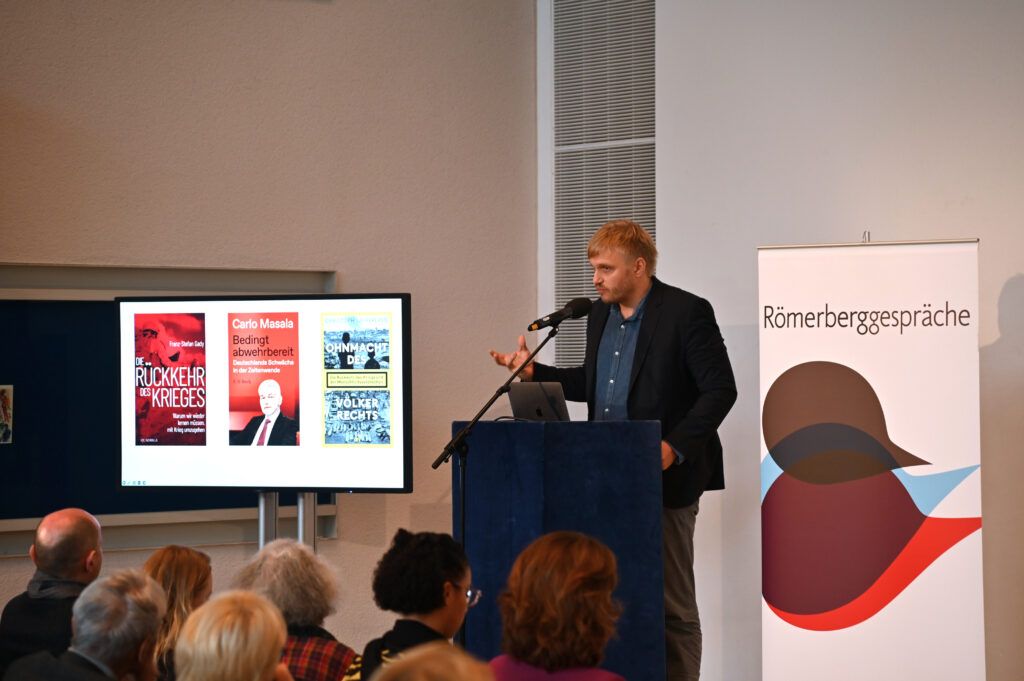
Hendrik Simon (RISC Frankfurt, Normative Orders), on the other hand, provided a historical and normative perspective. He argued that the concept of peace should be reclaimed from the interpretative sovereignty of populist parties and anchored once again in the democratic center. In a journey through the history of ideas of pacifism – from Kant’s On Perpetual Peace to Bertha von Suttner’s criticism of war and the peace movements of the 1980s – Simon showed that peace policy has always been a central element of democratic self-understanding. At the same time, he emphasized that military service can only be voluntary in order not to violate democratic principles of self-determination.
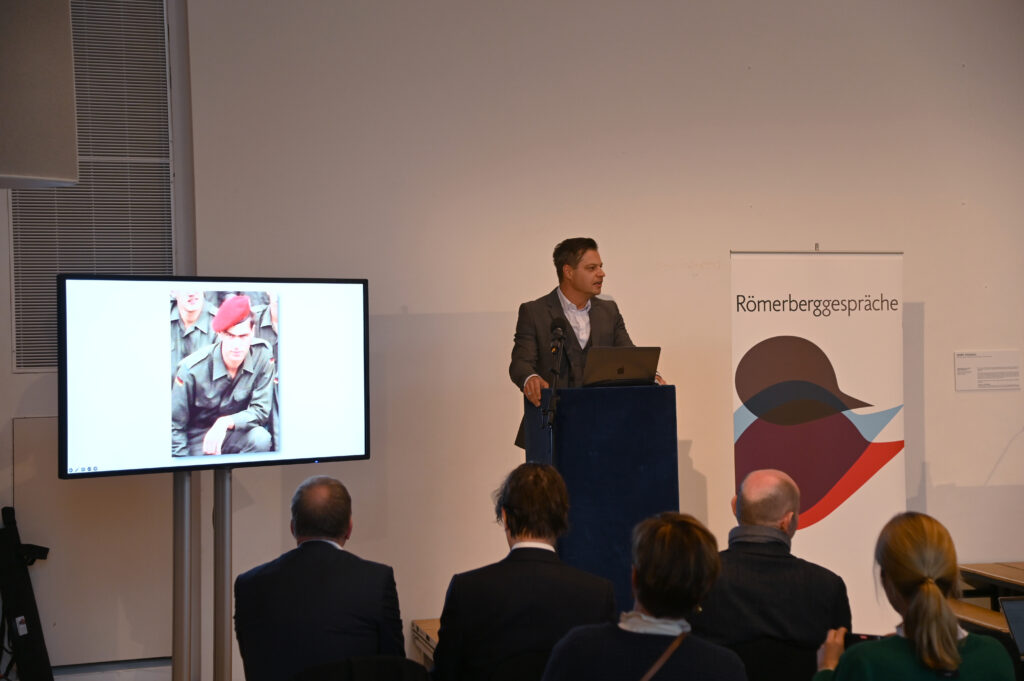
Cultural scientist Daniel Hornuff (University of Kassel) then analyzed how the Bundeswehr tries to control its public perception through image strategies. Posters, advertising films, image formats and campaigns at gaming fairs are intended to present the military as a modern, diverse employer – which arouses interest, but at the same time can trivialize the military nature of the profession. Hornuff made it clear that security policy debates must therefore take greater account of the power of visual communication.
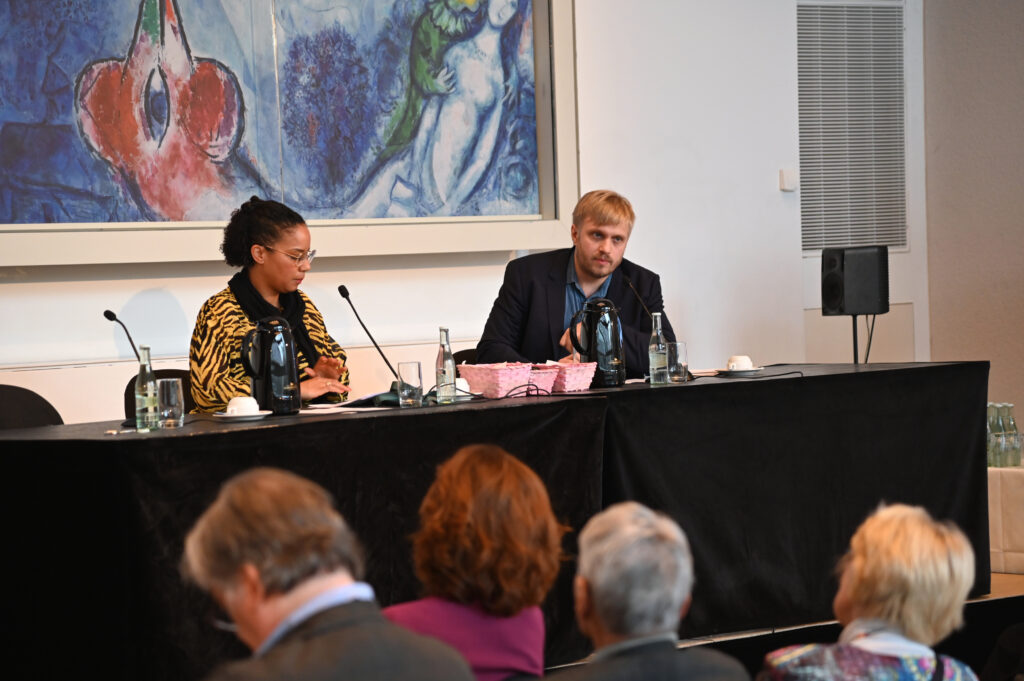
Barbara Mittelhammer, a political analyst, provided a counterpoint to the more power politics-oriented presentations. She argued for a feminist security policy that focuses on the causes of violence and social vulnerabilities and defines security more broadly – for example as protection against gender-specific violence or as strengthening social stability. In doing so, she also opened up perspectives beyond compulsory military service, which was the thematic focus of the day.
In conclusion, historian Till van Rahden added a new historical classification to the debate: conscription is historically more closely associated with authoritarian regimes than with democratic traditions. In a modern democracy, however, people should be persuaded to do military service by argument and conviction, not by state coercion, he concluded.