

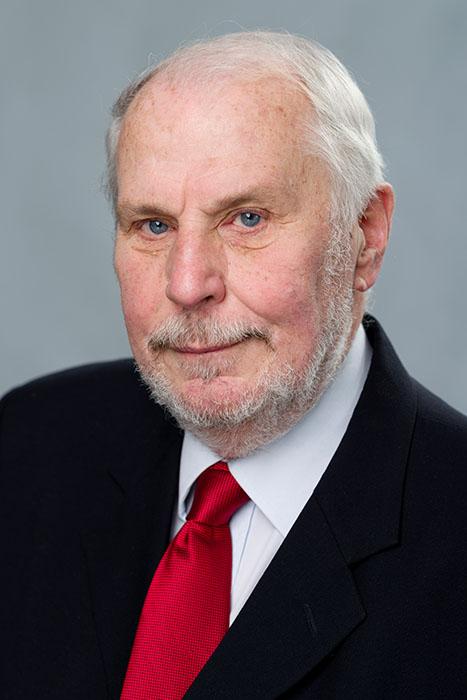
Professor emeritus of International Relations
Research project:
Praxis: on Acting and Knowing
Research project:
“This book pursues two objectives: one, to provide an inventory of the ongoing practices in in contemporary politics and two, to offer a more critical engagement with social action instead of approaching it via an “ideal theory”. In other words, it seemed imperative to examine praxis more explicitly as it was first outlined by Aristotle, only to resurface later in Hume’s philosophy of common life and in his historical work, or in the “pragmatist” critique of the last century.”
These two topics are taken up in the chapters 1-6, and in the “second” part of this book (chaps. 8-10) respectively. The latter attempts to develop a more systematic approach to action through a close reading of Hume and some of the pragmatist literature. These two parts of the book, -the first focusing mostly but not exclusively on the existing repertoires of for action in contemporary international relations (and sometimes involving also their genealogy) – and the second, consisting mainly in a critical reflections of what would be entailed for an analysis if we took “action seriously”, are held together by chapter 7. It deals with the problem of historical reflection, which is occasioned by the vagaries of having to act in irreversible time and under conditions of contingency and necessarily incomplete knowledge that define praxis.
Although the implications of this move to link the two areas via “history” and its different modes of “remembering” (and forgetting) rather than via the construction of an “ideal theory” – be that a model of action familiar from rational choice theory or from the Rawlsian “choice behind the veil of ignorance” or the early Habermasian “ideal speech situation” – will become obvious only in the last few chapters It is therefore, not accidental that I take in chapt. 7 Hedley Bull as my guide, even though I am quite critical of some of his arguments about a “classical approach.” I try to re-formulate his position and link it more systematically to both to the Aristotelian tradition of prudence, and to the pragmatist interest in “ordinary language” and conceptual analysis. Only in this way an adequate understanding of praxis seems to be possible, as it provides the reasons for both being critical of the efforts of ideal theory a la Rawls or the early Habermas, and for not falling back on uncritically examined “lessons of history” (as some forms of realism), for limiting the praxis to the unreflective habits, or for discovering in practices the “gluon” for a future social science.
These ideas are followed up in chapter 8 and 9 and 10 which develop the argument further by a close second reading of Hume and his philosophy of “common life” which was intended as an anti-Cartesian manifesto in which the nature of conventions and historical experience provided elements instead of incontrovertible foundations or where in following a certain method true knowledge could be gained. Hume is not only critical of absolute foundations, but also sees the task of “true philosophy” not in claiming a position outside the practical/historical realm but in criticism based on practical experience rather than epistemological or methodological arguments. The result is a plea for a “non-ideal theory” which no longer subjects praxis to inappropriate theoretical standards.” (Friedrich Kratochwil)
Events:
October 24 and 25, 2016
Frankfurt Lecture of the Cluster of Excellence “The Formation of Normative Orders”
Research project:
Praxis: on Acting and Knowing
Research project:
“In this project I attempt to answer some of the questions which were raised in two previous books: Rules, Norms and Decisions (CUP 1989) and The Status of Law in World Society (CUP 2014), and in the subsequent discussions they have engendered. Both works used ‘law’ as a prism for understanding social and political action since the prevalent approaches in the field, as varied as they might be in regard to the research agenda or the methods, all seemed to share the epistemological conviction that a ‘theory of action’ has to satisfy the criteria of ‘theory’. It was however my suspicion that such a view – particularly well-articulated in positivist approaches to social analysis – was not only distorting but that it left important features of praxis unexplored. The new project, entitled Praxis: On Acting and Knowing, takes off from the earlier two books by arguing that a serious engagement with ‘praxis’ has to deconstruct the underlying metaphysical assumptions that privilege ‘theory’ and do justice to the peculiarities of action. Action is taking place in real (irreversible) time and is characterized by contingency instead of necessity and universality, as the ‘theoretical’ take presupposes. To that extent my analysis harks back to Aristotle but is actually more occasioned by the wonder why the idea of the ‘primacy’ of theory for generating useful knowledge and understanding the social world persisted even after the old ontology of the
‘chain of being’ was dislodged from its privileged position by the skeptics’ attack on the Cartesian quest for certainty. Thus, although the old ontological speculation was replaced by an epistemology that privileged the subject (rather than the object or the ideas), reason was again conceptualized as universal and a-historical (non-contingent), leaving the old privilege of a ‘timeless’ theory in place. In this project, I use Hume as my pivot to look back on the classical attempts of prudential reasoning and try to understand from his vantage point the conventional and historical character of social orders.” (Friedrich Kratochwil)
Events:
June 12, 2015
Doctoral workshop at the Cluster of Excellence “The Formation of Normative Orders”
July 3, 2015
Lecture at Goethe University in Frankfurt am Main
After theory, before empiricism – or, how to think about praxis
-
Biografische Angaben
Friedrich Kratochwil studied philosophy, politics , and classics at Munich and went as a Fulbright grantee to the US where received a MA from Georgetown University in international relations and Ph.D. in political science from Princeton University. He taught at the universities of Maryland, Columbia, Denver and Penn, before returning to Europe in 1995 and becoming chair of international relations at the LMU in Munich and later at the European University Institute in Florence (2003- 2011). He was visiting professor at Kyung Hee University in Seoul , the Central European University in Budapest, and more recently PUC- Minas Gerais (Papal University) at Belo Horizonte, Brazil (2014). He published widely on international relations, social theory, international organization and international law and is the author of Rules Norms and Decisions (Cambridge, 1989) and (with Yosef Lapid) coeditor of The Return of Culture and Identity in IR Theory (1996 ) His latest books, entitled The Puzzles of Politics, and The Status of Law in World Society, were published by Routledge in 2011, and by Cambridge University Press in 2014. He was the editor of the European Journal of International Relations (2000-2004) and has served on editorial boards of political science, law and sociology journals in the US, Europe, and Asia. -
Publikationen
The Status of Law in World Society: Meditations On The Role And Rule Of Law, Cambridge University Press, New York 2014. The Puzzles of Politics: Inquiries Into the Genesis and Transformation of International Relation Religions, Taylor & Francis, New York 2010. Rules, Norms, and Decisions: On the Conditions of Practical and Legal Reasoning in International Relations and Domestic Affairs, Cambridge University Press, New York 1991.