
Former Fellow

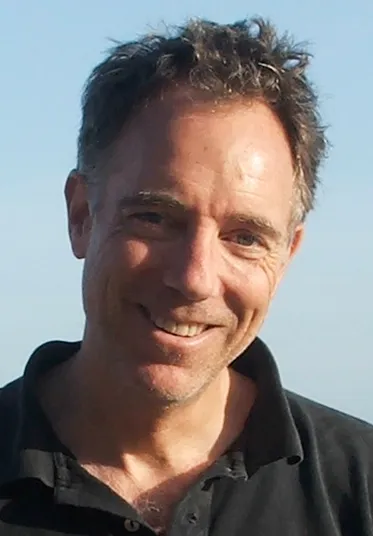
Andrew Norris

Associate Professor of Political Science and Affiliated Professor of Philosophy, University of California, Santa Barbara

Research project:
Ordinary Language and Second Nature: Returning to Ourselves in Hegel and Cavell

At the Cluster of Excellence, Andrew Norris is pursuing a research project that examines the social mode of being of normative orders in relation to Hegel and Cavell. Hegel and Cavell share the idea that normative orders do not exist primarily in the form of ought, i.e. not in the form of demands or regulations, but as rules that constitute social practices. At the same time, according to Hegel and Cavell, social practices essentially include a moment of the unconscious, the pre-reflective, the inert. Against this background, the question arises as to how subjects can simultaneously relate to the practices of which they are a part in such a way that they can assert their normative content against its merely lived-in, customary and seemingly self-evident social form.
Norris’ thesis is that Hegel clearly posed this problem, but did not solve it convincingly. And in Cavell’s repeated attempts to think a free relationship to the ordinary, he seeks potentials for a convincing theorization of successful processes of subjectivation, on which the transformation of normative content from its merely habitual everydayness into a free, reflexive and thus also critical form depends.

Events:

October 23 to 25, 2014
International Conference of the Cluster of Excellence The Receptivity of Judgement
Receiving Autonomy: On Cavell’s Perfectionism
Location: Goethe University Frankfurt am Main, “Normative Orders” building

November 5, 2014, 6 p.m.
Lecture
Skepticism as Practical Philosophy in the Work of Stanley Cavell
Location: Goethe University Frankfurt am Main, “Normative Orders” building

December 2, 2014, 2:30 p.m.
Paper Presentation
Location: Forschungskolleg Humanwissenschaften of the Goethe University Frankfurt am Main

  • Biografische Angaben

    Andrew Norris teaches political science and philosophy at the University of California, Santa Barbara. He is the editor of The Claim to Community (Stanford University Press 2006), Politics, Metaphysics, and Death: Essays on Giorgio Agamben's "Homo Sacer" (Duke University Press 2005), and co-editor of Truth and Democracy (University of Pennsylvania Press 2012). He is currently working on a monograph on Stanley Cavell's contributions to practical philosophy.
  • Publikationen

    Andrew Norris, „On Public Action: Rhetoric, Opinion, and Glory in Hannah Arendt’s The Human Condition“, Critical Horizons 14:2 (2013), S. 200-224. Andrew Norris, „‚How Can It Not Know What It Is?‘ Self and Other in Ridley Scott’s Blade Runner“, Film-Philosophy 17:1 (2013), S. 19-50. Andrew Norris, „The Disappearance of the French Revolution in Hegel’s Phenomenology of Spirit“, The Owl of Minerva 44:1/2 (2013), S. 37-66. Andrew Norris/Jeremy Elkins (Hg.), Truth and Democracy, University of Pennsylvania Press 2012. Andrew Norris, „Das Politische als das Metaphysische und das Alltägliche“, in: G. Gebauer/F. Goppelsröder/J. Volbers (Hg.), Wittgenstein: Philosophie als ‚Arbeit an Einem selbst’, München: Wilhelm Fink Verlag 2009. Andrew Norris, „Sovereignty, Exception, and Norm“, Journal of Law and Society 34:1 (2007), S. 31-45. Andrew Norris (Hg.), The Claim to Community: Essays on Stanley Cavell and Political Philosophy, Stanford University Press 2006.

News from the research center

Event
18.04.2026 | Frankfurt am Main

Das Prinzip Donald Trump und die Verrohung der Welt

Panel Discussion, Lecture

Ein neuer Politikstil macht international Karriere. Er ist gekennzeichnet von Vulgarität, Verrohung und erklärter Rechtsfeindschaft. Machtinteressen werden nicht mehr juristisch bemäntelt. Stattdessen wird das angebliche Recht des Stärkeren zur Staatsdoktrin gemacht – innenpolitisch wie außenpolitisch. Treibende Kraft hinter dieser Verrohung der politischen Sitten ist ein US-Präsident, der nicht nur die amerikanische Gesellschaft und Kultur, sondern auch die globale Ordnung nach seinen Vorstellungen und Interessen umgestaltet. Die Römerberggespräche wollen diesen Politikstil verstehen.

more information ›
Event
29.04.2026 | Frankfurt am Main

Kulturindustrie heute?

Panel Discussion

Das Gespräch „Kulturindustrie heute?“ widmet sich der Aktualität und Tragfähigkeit eines zentralen Begriffs der Kritischen Theorie. Die Filmwissenschaftlerin Gertrud Koch diskutiert im Rahmen der Gesprächsreihe "Frankfurter Schule" mit dem Filmkritiker Bert Rebhandl die gegenwärtigen Formen kultureller Produktion und Verbreitung vor dem Hintergrund von Digitalisierung, Plattformen und globalen Medienmärkten.

more information ›
Event
20.03.2026 | Frankfurt am Main

40 Jahre Schengen-Raum

Colloquium

Der 1984 geschlossene Schengen-Vertrag schuf einen heute 29 Staaten umfassenden Raum ohne Binnengrenzen, doch Migration über die Außengrenzen führte zuletzt zur Wiedereinführung von Kontrollen, auch durch die Bundesregierung ab 8. Mai 2025. Das Walter Hallstein-Kolloquium diskutiert die rechtliche Zulässigkeit, wirtschaftliche Folgen insbesondere für Arbeitsmigration und Arbeitsmarkt sowie die Zukunft des Schengen-Raums.

more information ›
News
12.02.2026

Satanist politics and the decline of reason in liberal democracies

For the last time in the winter semester 2025/26, the Research Center hosted the lecture series "Am Scheidepunkt. On the crisis of democracy". At the end, philosopher Michael Rosen from Harvard University presented his concept of "satanic politics" as a variant of the political interpretation of the world.

more information ›
News
09.02.2026

On the topicality of the concept of violence based on Camus and Derrida

Prof. Dr. Christine Abbt from the University of St. Gallen gave a lecture on democracies and the concept of violence as part of the lecture series "At the crossroads? On the crisis of democracy", she gave a lecture on democracies and the concept of violence. Under the title "Defending democracies. On the topicality of the concept of violence in Camus and Derrida", the philosopher discussed forms of violence and revolt and categorized them with regard to a democratic setting.

more information ›
Publication
04.02.2026 | Journal article

New Perspectives on Trust in International Conflicts

Wille, Tobias; Simon, Hendrik; Daase, Christopher; Deitelhoff, Nicole; Wheeler, Nicholas J.; Holmes, Marcus; Rathbun, Brian C.; Acharya, Amitav; Mitzen, Jennifer (2026): „New Perspectives on Trust in International Conflicts“. In: International Studies Review 28 (1), viaf027.

more information ›
News
02.02.2026

States competing for people - David Owen on civil geopolitics

As part of the lecture series "At the Crossroads - The Future of Democracy", David Owen from the University of Southampton presented his concept of civil geopolitics.

more information ›
News
20.01.2026

Christine Hentschel on reorientation in catastrophic times

As part of the lecture series "At the crossroads? On the crisis of democracy", the sociologist spoke about living in and dealing with catastrophic times. Against the backdrop of the destruction of living conditions, wars, permanent crises and threats to democracy, Hentschel addressed the infiltration of the catastrophic into everyday social life and a changing activist and literary approach to the future.

more information ›
Publication
08.01.2026 | Journal article

Gender Differences in Financial Advice

Bucher-Koenen, Tabea; Hackethal, Andreas; Koenen, Johannes; Laudenbach, Christine (2025): „Gender Differences in Financial Advice“. In: American Economic Review, 115 (12), pp. 4218–4252.

more information ›