
Former Fellow

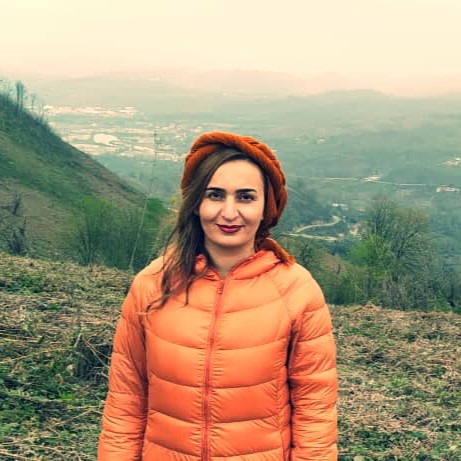
Azadeh Shabani

Ph.D. candidate of political science (political thought) at Tarbiat Modares University, Tehran Iran

Project title:
Recognition as Human Being

Project description:
There have been the diffrent experiences of misrecognition, malrecognition, exclusion and ignoring others and many people have been rejected and eliminated, throughout history. The people who their sin was being different from the majority of the people. These people include women, slaves, blacks, homosexuals and etc. Concepts such as citizenship, nationalism, nation-state have many restrictions and these restrictions lead to other eliminating. Misunderstanding has always had various formations throughout history, for this reason several problem analyzed here:

– Market economics educates selfish and self-interested people, the other is ignored and misrecognized in this educational structure. It seems we have reached from invisible hand to invisible man.
– Is the economic restructuring, essential for human recognition?
– What is the relation between neoliberalism and misrecognition?
– Citizenship, both in ancient Greece and in modern times, recognizes some people and ignores others.
– There are people who are not recognized in their own country or abroad; how is the status of these people in society?
– There are people today who live in camps instead of cities, How are these people recognized?

  • Biografische Angaben

    Azadeh Shabani has a Bachelor of Arts in Political Science at Isfahan University and a Master of Arts at Tarbiat Modares University of Tehran. She is a Ph.D. candidate of political science (political thought) at Tarbiat Modares University, Tehran-Iran. The title of her thesis is: "Analyzing the relationship between recognition and justice in the thought of "Axel Honneth" and "Ali Shariati". Following her studies at Goethe University, she wrote two chapters entitled: Deconstructing Justice from the Perspective of Recognition Theory. She also criticized Honneth's theory of Recognition based on the ideas of Rancière, Nancy Fraser, and Althusser, as well as postcolonial ideas. She will analyze this problem that non-Western other has been ignored in Honneth's thought.
  • Publikationen

    •    “Interaction of Intellectuals with People at the Beginning of the Iranian Revolution”, International Conference on the Constitutional Movement to the Islamic Revolution of Iran, August 2014. •    „the relationship between alienation and citizenship in the thought of Herbert Marcuse“ the Journal of Research in Theoretical Politics, spring & summer 2016 •    „The Impact of Globalization on Civil Society in Iran“ in the Journal of Research in Theoretical Politics, winter 2017 •    “Critical Political Economy and Amartya Sen”, Analytical -Theoretical magazine of “Iran of tomorrow”, February 2016 •    The translation of part of the book „A Companion to Contemporary Political Philosophy“ to Persian, Edited by Robert E. Goodin, Philip Pettit and Thomas Pogge, Which is publishing Articles title in Magazines •    “job or housekeeping? problem is this!”, magazine “realm of welfare”,October 2016 •    “defective circle of poverty, illiteracy and Child labor”, magazine “realm of welfare”, September 2016 •    “The tragedy of child marriage”, magazine “realm of welfare”, August 2016 •    Social equity and economic development in India, magazine “Iran of tomorrow, November 2015 •    Half of the world’s wealth for one percent of the world’s population, site Social Security Organization of Iran (All of these articles are available on the Iranian Social Security website and the magazine sites)

News from the research center

Event
08.07.2026 | Frankfurt am Main

Krisenhafter Wandel der Gegenwart. Einige soziologische Beobachtungen

Lecture

Der Vortrag von Prof. Dr. Steffen Mau beschäftigt sich mit den Krisensymptomen des liberalen Gesellschaftmodells. Krisenhafter sozialer Wandel ist dadurch zu charakterisieren, dass er nicht allmählich, sondern abrupt vor sich geht und zur Destabilisierung bestehender Institutionen, Ordnungen und Normen führt. Zugleich sollte er von den Menschen auch als krisenhaft erlebt werden und mit Orientierungslosigkeit, Vertrauensverlust und erhöhten Spannungen einhergehen. Der Vortrag findet im Rahmen der Kantorowicz Lectures in Political Language statt.

more information ›
Event
18.04.2026 | Frankfurt am Main

Das Prinzip Donald Trump und die Verrohung der Welt

Panel Discussion, Lecture

Ein neuer Politikstil macht international Karriere. Er ist gekennzeichnet von Vulgarität, Verrohung und erklärter Rechtsfeindschaft. Machtinteressen werden nicht mehr juristisch bemäntelt. Stattdessen wird das angebliche Recht des Stärkeren zur Staatsdoktrin gemacht – innenpolitisch wie außenpolitisch. Treibende Kraft hinter dieser Verrohung der politischen Sitten ist ein US-Präsident, der nicht nur die amerikanische Gesellschaft und Kultur, sondern auch die globale Ordnung nach seinen Vorstellungen und Interessen umgestaltet. Die Römerberggespräche wollen diesen Politikstil verstehen.

more information ›
Event
29.04.2026 | Frankfurt am Main

Kulturindustrie heute?

Panel Discussion

Das Gespräch „Kulturindustrie heute?“ widmet sich der Aktualität und Tragfähigkeit eines zentralen Begriffs der Kritischen Theorie. Die Filmwissenschaftlerin Gertrud Koch diskutiert im Rahmen der Gesprächsreihe "Frankfurter Schule" mit dem Filmkritiker Bert Rebhandl die gegenwärtigen Formen kultureller Produktion und Verbreitung vor dem Hintergrund von Digitalisierung, Plattformen und globalen Medienmärkten.

more information ›
Event
20.03.2026 | Frankfurt am Main

40 Jahre Schengen-Raum

Colloquium

Der 1984 geschlossene Schengen-Vertrag schuf einen heute 29 Staaten umfassenden Raum ohne Binnengrenzen, doch Migration über die Außengrenzen führte zuletzt zur Wiedereinführung von Kontrollen, auch durch die Bundesregierung ab 8. Mai 2025. Das Walter Hallstein-Kolloquium diskutiert die rechtliche Zulässigkeit, wirtschaftliche Folgen insbesondere für Arbeitsmigration und Arbeitsmarkt sowie die Zukunft des Schengen-Raums.

more information ›
News
12.02.2026

Satanist politics and the decline of reason in liberal democracies

For the last time in the winter semester 2025/26, the Research Center hosted the lecture series "Am Scheidepunkt. On the crisis of democracy". At the end, philosopher Michael Rosen from Harvard University presented his concept of "satanic politics" as a variant of the political interpretation of the world.

more information ›
News
09.02.2026

On the topicality of the concept of violence based on Camus and Derrida

Prof. Dr. Christine Abbt from the University of St. Gallen gave a lecture on democracies and the concept of violence as part of the lecture series "At the crossroads? On the crisis of democracy", she gave a lecture on democracies and the concept of violence. Under the title "Defending democracies. On the topicality of the concept of violence in Camus and Derrida", the philosopher discussed forms of violence and revolt and categorized them with regard to a democratic setting.

more information ›
Publication
04.02.2026 | Journal article

New Perspectives on Trust in International Conflicts

Wille, Tobias; Simon, Hendrik; Daase, Christopher; Deitelhoff, Nicole; Wheeler, Nicholas J.; Holmes, Marcus; Rathbun, Brian C.; Acharya, Amitav; Mitzen, Jennifer (2026): „New Perspectives on Trust in International Conflicts“. In: International Studies Review 28 (1), viaf027.

more information ›
News
02.02.2026

States competing for people - David Owen on civil geopolitics

As part of the lecture series "At the Crossroads - The Future of Democracy", David Owen from the University of Southampton presented his concept of civil geopolitics.

more information ›
News
20.01.2026

Christine Hentschel on reorientation in catastrophic times

As part of the lecture series "At the crossroads? On the crisis of democracy", the sociologist spoke about living in and dealing with catastrophic times. Against the backdrop of the destruction of living conditions, wars, permanent crises and threats to democracy, Hentschel addressed the infiltration of the catastrophic into everyday social life and a changing activist and literary approach to the future.

more information ›