

11.06.2019
Chapter

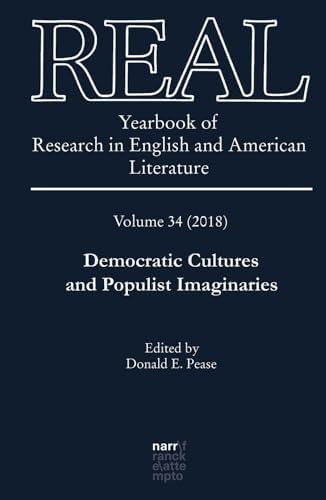
Toward an Aesthetics of Populism, Part I: The Populist Space of Appearance

The orator in question is not Donald Trump but George Wallace, the long time Alabama Governor, who, between 1964 and 1976, ran for President four consecutive times. While the Kennedy-Nixon TV debates had led to the widely held conviction that election campaigns in the age of television were a matter of carefully scripted, image-savvy self-presentation, Wallace rallies, particularly during the time span between his presidential campaigns of 1964 and 1972, opted for the opposite strategy. Wallace found techniques to raise the level of the affective energies circulating in the venues at which he spoke. He knew how to stoke rage and anger among his audience members, but he also knew how to make them laugh. He routinely railed against the federal government and Washington and East Coast elites, engaged in overt race-baiting (particularly up to 1972, after which point he began publically asking for forgiveness), and denigrated Vietnam protestors and the counter culture at large. His aim was not the projection of suave self-control but the collective loss of order and control. Protests by hecklers, followed by derisive
comebacks on the part of Wallace, were a standard element of his mass meetings – as was the violence that broke out between his supporters and the protestors (particularly during the campaign of 1968).
In many – though, significantly, not all – respects, what we have been witnessing at Donald Trump’s rallies since 2015 follows Wallace’s playbook. This article presents the first of two installments of a serial essay in which I will reflect on and theorize Trump’s rallies, drawing on examples from 2015 to shortly before the midterm elections of 2018, and in which I will furthermore compare and contrast Trump’s events with Wallace’s. (Part II will appear in the 2019 issue of REAL.) The reason for turning my attention to the format of the rally is my contention that American right wing populism – a tradition that was largely invented by Wallace, though it draws on earlier populist practices – crucially depends on rally performances. […]
News from the research center

Publication
14.08.2026 | Chapter

Vom rechtshistorischen Erkenntniswert antiker Tragödiendichtung: Überlegungen anhand Euripides’ Medeia

Pfeifer, Guido (2026): "Vom rechtshistorischen Erkenntniswert antiker Tragödiendichtung: Überlegungen anhand Euripides’ Medeia". In: Gsell, Beate; Rüfner, Thomas; Babusiaux, Ulrike (Hrsg.): Die unverzichtbare Wissenschaft – The Indispensable Science, Mohr Siebeck, S. 663-671.

more information ›
Publication
01.08.2026 | Chapter

"Das Andere in uns selbst" (Marcel Gauchet). Das Ideal gesellschaftlicher Autonomie und die Denkfigur der Alterität

Langner-Pitschmann, Annette (2026): „Das Andere in uns selbst“ (Marcel Gauchet). Das Ideal gesellschaftlicher Autonomie und die Denkfigur der Alterität. In: Schlette, Magnus et. al. (Hrsg.): Ordnung im Übergang Zur Funktion von Transzendenzbezügen in der Konstitution und Transformation politischer Gemeinschaft, Tübingen: Mohr Siebeck, S. 185-205.

more information ›
Event
24.09.2026 | Frankfurt am Main

Die neuen Warlords. Gewaltdynamiken einhegen / Friedensgutachten 2026

Book Presentation

Die imperialistische Großmachtpolitik ändert die Vorzeichen von Krieg, Frieden und Sicherheit. Staaten agieren zunehmend wie Warlords und setzen Krieg als Mittel der Politik ein. Übergänge von Gewaltkonflikten zu Frieden werden als „Deals“ behandelt, Mittelmächte treten mit neuem Selbstbewusstsein, aber ambivalentem Kurs auf, und technologische Innovation verändert Kriege und erschwert die Regulierung. Zugleich befindet sich die internationale Kooperation in der Friedenssicherung in ihrer schwersten Krise. Das Friedensgutachten 2026 analysiert Optionen, dennoch Frieden zu fördern.

more information ›
Publication
23.07.2026 | Journal article

Governing the Subject of Populism

Biebricher, Thomas: "Governing the Subject of Populism". In: European Journal of Social Theory, OnlineFirst.

more information ›
Publication
15.07.2026 | Monograph

Das Recht der Gewalt. Warum Waffen allein keinen Frieden schaffen

Simon, Hendrik (2026): Das Recht der Gewalt. Warum Waffen allein keinen Frieden schaffen. Ditzingen: Reclam.

more information ›
Publication
10.07.2026 | Anthology

Schnittstellen im Gesundheitsrecht

Kießling, Andrea (Hrsg.) (2026): „Schnittstellen im Gesundheitsrecht“. Nomos.

more information ›
News
19.06.2026

International symposium honours the lifework of Jürgen Habermas

On Friday 19 June 2026, the Research Centre Normative Orders, in collaboration with Suhrkamp Verlag, paid tribute to the late Jürgen Habermas with an international symposium at Goethe University Frankfurt.

more information ›
Publication
13.06.2026 | Monograph

Identitätsbasierte Führung: Vom ICH zum WIR. Als Führungskraft gesunde und leistungsstarke Gruppen, Teams und Organisationen fördern

van Dick, Rolf; Kratzer, Benedik E., Steffens, Niklas K., Kerschreiter, Rudolf (2026): „Identitätsbasierte Führung: Vom ICH zum WIR. Als Führungskraft gesunde und leistungsstarke Gruppen, Teams und Organisationen fördern“. Springer Berlin.

more information ›
Publication
08.06.2026 | Report

Friedensgutachten 2026: Die neuen Warlords. Gewaltdynamiken einhegen

Nicole Deitelhoff, Christopher Daase (2026)

more information ›