
13.04.2023

The dilemma of technological postmodernism – Bruce Ackerman speaks at the Frankfurt Lectures

At the beginning of the 20th century, physics was in turmoil. Heisenberg’s uncertainty principle and Einstein’s theory of relativity ushered in a new era – among other things by calling into question Newton’s “laws”, which had been the basis of Enlightenment thinking. A large number of thinkers and artists have grappled with the far-reaching consequences of this scientific redefinition of reality – including the French and German existentialists. What do they teach us about our time, a time of profound uncertainty?
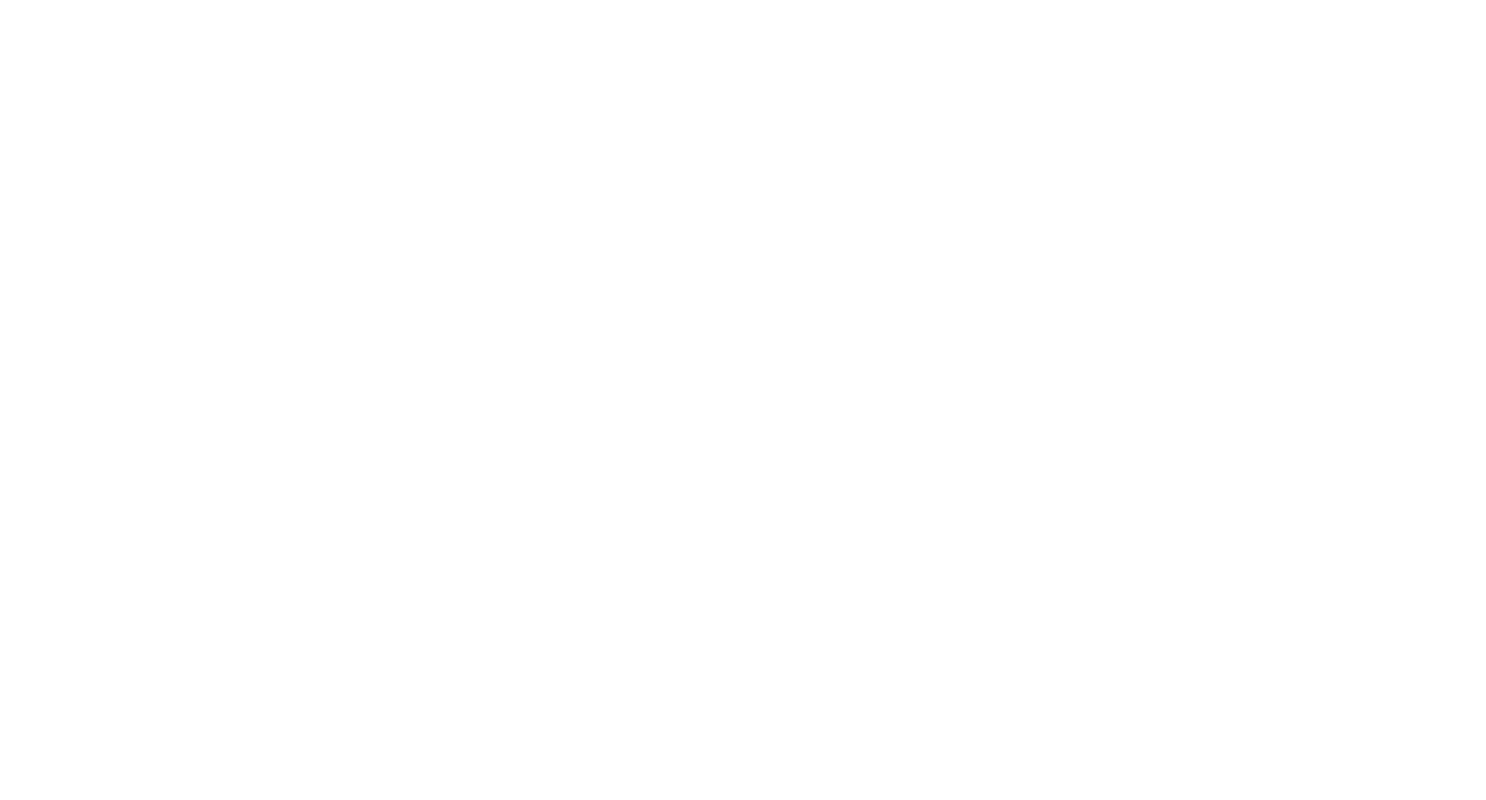
This year’s Frankfurt Lectures by the renowned American philosopher and constitutional lawyer Bruce Ackerman will focus on a critical diagnosis of the present in the lectures “Postmodern Predicaments” on May 8 and 9, both at 6:15 pm in the Hörsaalzentrum, HZ5, on the Westend campus of Goethe University.

In two individual lectures, “How Real is Virtual Reality?” (on May 8) and “The Genetic Lottery” (on May 9), Sterling Professor of Law and Political Science at Yale University Ackerman discusses the ideas of the existentialists as a crucial resource in dealing with current challenges: How can a meaningful life be shaped in a social world transformed by the high-tech revolution?
The lectures are based on Ackerman’s forthcoming book “The Post-Modern Predicament” (Yale University Press). The book is about how people can take control of their lives in the so-called “brave new world” of the twenty-first century. Ackerman assumes that Simone de Beauvoir, Jean-Paul Sartre and other thinkers of the 20th century can contribute to understanding the challenges to the foundations of a liberal-democratic society.

Bruce Ackerman is Sterling Professor of Law and Political Science at Yale University and the author of numerous books in the fields of political philosophy, constitutional law and public law. His most important works include “Social Justice in the Liberal State” and the multi-volume constitutional history “We the People” as well as “The Stakeholder Society”. Ackerman is also a “Commandeur of the Ordre national du Mérite” of the French Republic and a Fellow of the American Academy of Arts and Sciences. The American Philosophical Society has honored him with the Henry Phillips Prize for Lifetime Achievement in Jurisprudence.
News from the research center

Publication
19.08.2026 | Anthology

Sokrates revised and revisited

Bohl, Judith K.; Brandis, Veronika; Pfeifer, Guido (Hrsg.) (2026): „Sokrates revised and revisited. Überlieferung, Diskurs, Inszenierung“. Heidelberg: Propylaeum. 

more information ›
Publication
14.08.2026 | Chapter

Vom rechtshistorischen Erkenntniswert antiker Tragödiendichtung: Überlegungen anhand Euripides’ Medeia

Pfeifer, Guido (2026): "Vom rechtshistorischen Erkenntniswert antiker Tragödiendichtung: Überlegungen anhand Euripides’ Medeia". In: Gsell, Beate; Rüfner, Thomas; Babusiaux, Ulrike (Hrsg.): Die unverzichtbare Wissenschaft – The Indispensable Science, Mohr Siebeck, S. 663-671.

more information ›
Publication
01.08.2026 | Chapter

"Das Andere in uns selbst" (Marcel Gauchet). Das Ideal gesellschaftlicher Autonomie und die Denkfigur der Alterität

Langner-Pitschmann, Annette (2026): „Das Andere in uns selbst“ (Marcel Gauchet). Das Ideal gesellschaftlicher Autonomie und die Denkfigur der Alterität. In: Schlette, Magnus et. al. (Hrsg.): Ordnung im Übergang Zur Funktion von Transzendenzbezügen in der Konstitution und Transformation politischer Gemeinschaft, Tübingen: Mohr Siebeck, S. 185-205.

more information ›
Event
24.09.2026 | Frankfurt am Main

Die neuen Warlords. Gewaltdynamiken einhegen / Friedensgutachten 2026

Book Presentation

Die imperialistische Großmachtpolitik ändert die Vorzeichen von Krieg, Frieden und Sicherheit. Staaten agieren zunehmend wie Warlords und setzen Krieg als Mittel der Politik ein. Übergänge von Gewaltkonflikten zu Frieden werden als „Deals“ behandelt, Mittelmächte treten mit neuem Selbstbewusstsein, aber ambivalentem Kurs auf, und technologische Innovation verändert Kriege und erschwert die Regulierung. Zugleich befindet sich die internationale Kooperation in der Friedenssicherung in ihrer schwersten Krise. Das Friedensgutachten 2026 analysiert Optionen, dennoch Frieden zu fördern.

more information ›
Publication
23.07.2026 | Journal article

Governing the Subject of Populism

Biebricher, Thomas: "Governing the Subject of Populism". In: European Journal of Social Theory, OnlineFirst.

more information ›
Publication
15.07.2026 | Monograph

Das Recht der Gewalt. Warum Waffen allein keinen Frieden schaffen

Simon, Hendrik (2026): Das Recht der Gewalt. Warum Waffen allein keinen Frieden schaffen. Ditzingen: Reclam.

more information ›
Publication
10.07.2026 | Anthology

Schnittstellen im Gesundheitsrecht

Kießling, Andrea (Hrsg.) (2026): „Schnittstellen im Gesundheitsrecht“. Nomos.

more information ›
News
19.06.2026

International symposium honours the lifework of Jürgen Habermas

On Friday 19 June 2026, the Research Centre Normative Orders, in collaboration with Suhrkamp Verlag, paid tribute to the late Jürgen Habermas with an international symposium at Goethe University Frankfurt.

more information ›
Publication
13.06.2026 | Monograph

Identitätsbasierte Führung: Vom ICH zum WIR. Als Führungskraft gesunde und leistungsstarke Gruppen, Teams und Organisationen fördern

van Dick, Rolf; Kratzer, Benedik E., Steffens, Niklas K., Kerschreiter, Rudolf (2026): „Identitätsbasierte Führung: Vom ICH zum WIR. Als Führungskraft gesunde und leistungsstarke Gruppen, Teams und Organisationen fördern“. Springer Berlin.

more information ›