11.12.2025

Jonathan White on future thinking in democracies

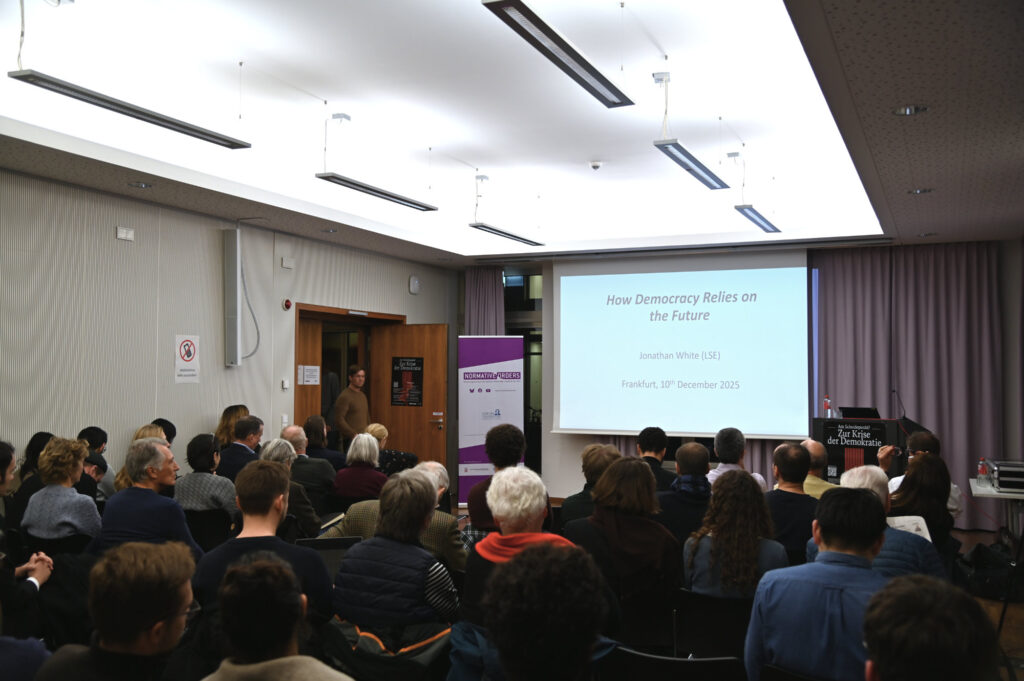
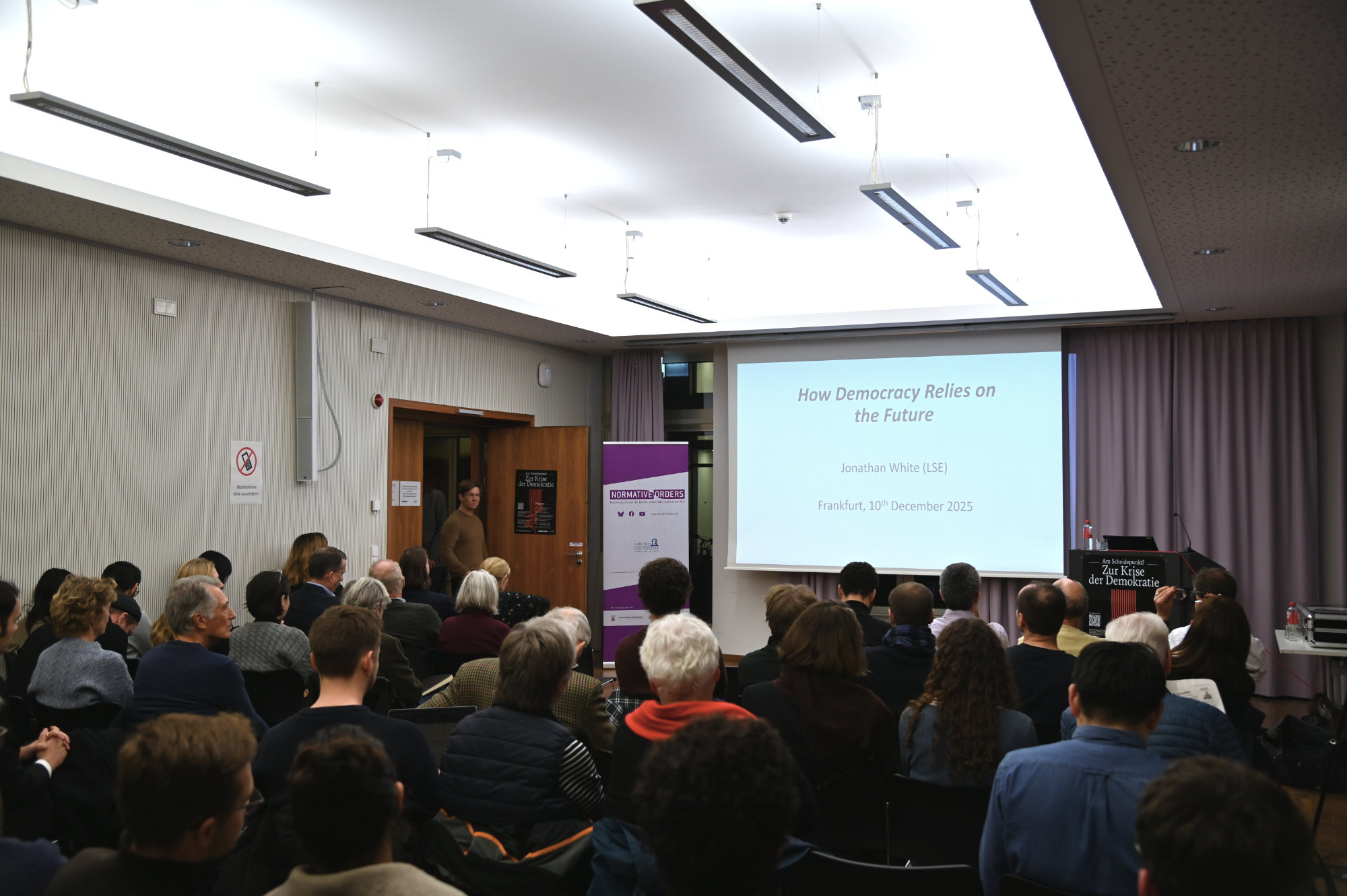
On the second date of the lecture series “At the Crossroads? On the crisis of democracy”, political scientist Jonathan White discussed perspectives on the future within democracies and the need for a future-oriented approach in democracies. White began by citing various public discourses in which the future influences current politics. Contrary to what is sometimes described, the future has not been lost since the end of the juxtaposition of different political and economic systems in the 20th century. But there has been a qualitative change in which the future – although still very present – is understood as something to be reacted to rather than something that can be actively shaped in the present.
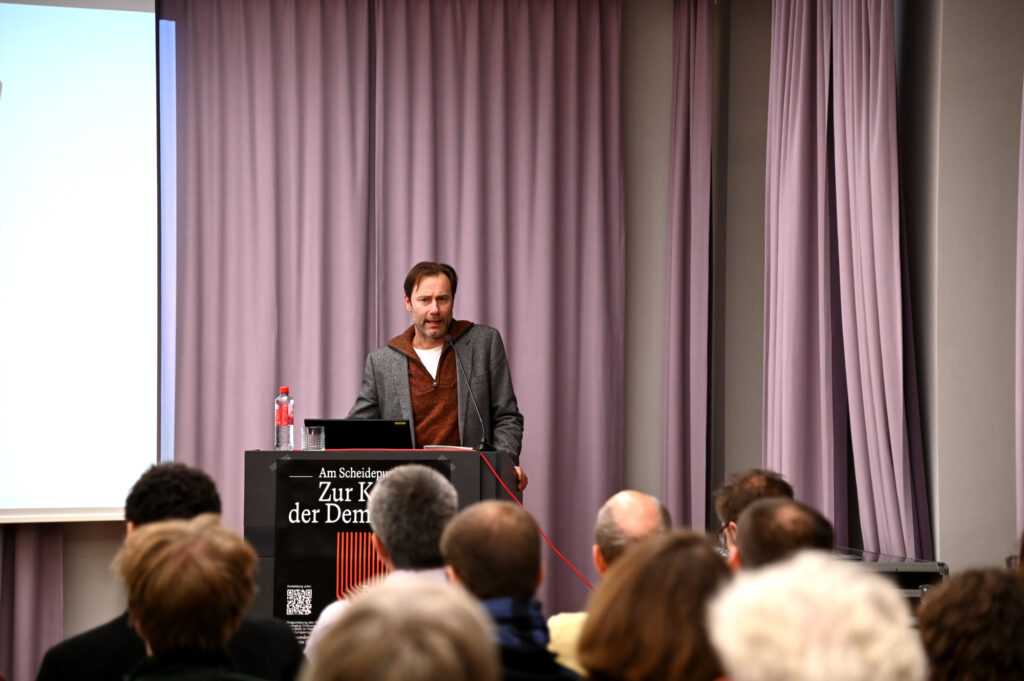
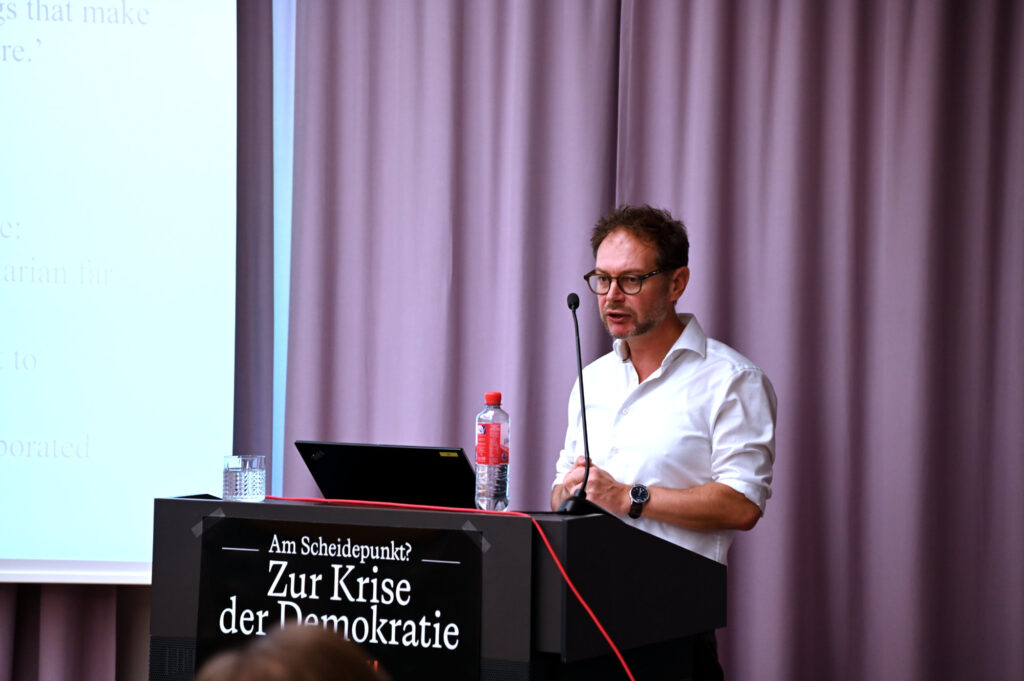
In democracies, the future is an important source of different emancipatory currents: In the form of utopias, for example, it enables a critical perspective on the present and can shape collective identities as a shared idea of what is to be achieved. However, with limitations. White also points out the dangers of absolutizing ideas of the future: If a version of the future is understood as a final, conclusive slogan, the potential for undemocratic means of achieving the future is opened up and obvious. However, a democratic future must always include the possibility of correction, for example of a different choice in the future.

At present, White sees a growing opportunism as a prominent development. For him, opportunism is characterized by the regular adaptation of different positions and a closely related indifference to political principles. This has become a kind of substitute for real future-oriented politics.
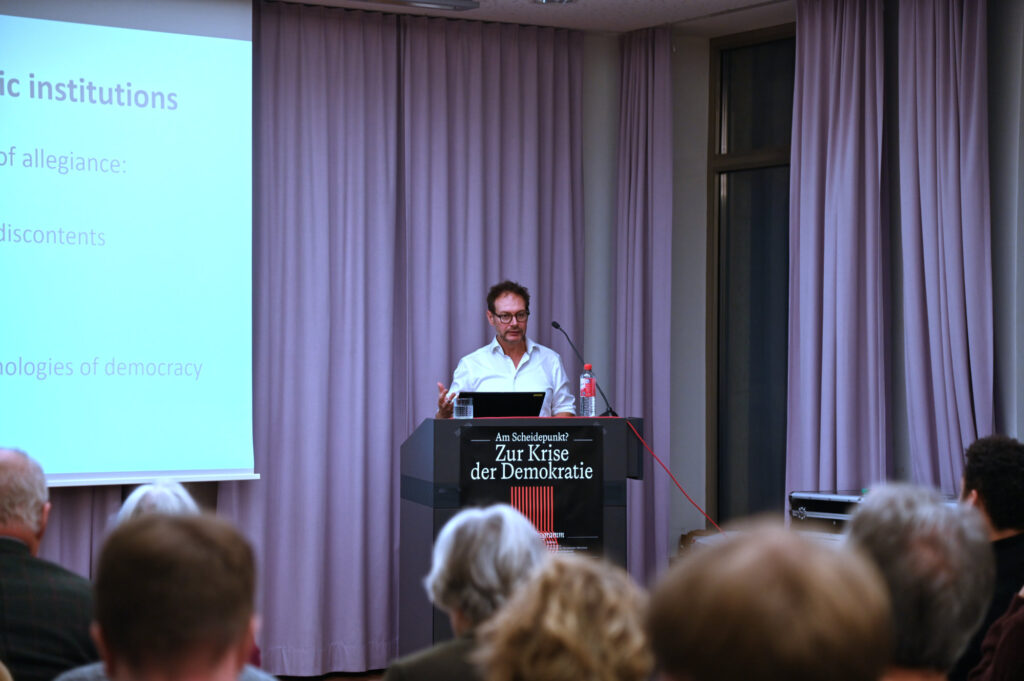
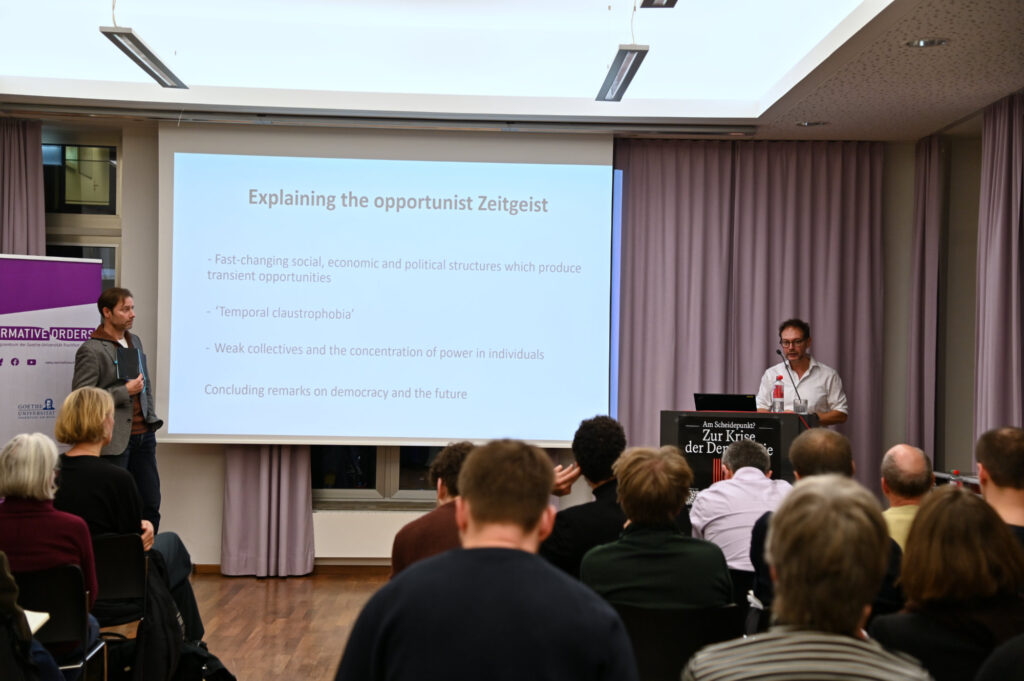
Such opportunism is particularly easy in a rapidly changing world that is confronted with catastrophes and catastrophizing thinking. There is therefore no end to the future, but the ideas of a future to which we are powerless must be countered. Because democracy needs a future.

Jonathan White is Deputy Director of the European Institute and has been Professor of Politics at the London School of Economics since 2008. He has worked at Harvard, Stanford, the Wissenschaftskolleg zu Berlin and Sciences Po, among others. His most recent book is ” In the Long Run. The Future as a Political Idea

News from the research center

Publication
15.07.2026 | Monograph

Das Recht der Gewalt. Warum Waffen allein keinen Frieden schaffen

Simon, Hendrik (2026): Das Recht der Gewalt. Warum Waffen allein keinen Frieden schaffen. Ditzingen: Reclam.

more information ›
Publication
10.07.2026 | Anthology

Schnittstellen im Gesundheitsrecht

Kießling, Andrea (Hrsg.) (2026): „Schnittstellen im Gesundheitsrecht“. Nomos.

more information ›
News
19.06.2026

International symposium honours the lifework of Jürgen Habermas

On Friday 19 June 2026, the Research Centre Normative Orders, in collaboration with Suhrkamp Verlag, paid tribute to the late Jürgen Habermas with an international symposium at Goethe University Frankfurt.

more information ›
Publication
13.06.2026 | Monograph

Identitätsbasierte Führung: Vom ICH zum WIR. Als Führungskraft gesunde und leistungsstarke Gruppen, Teams und Organisationen fördern

van Dick, Rolf; Kratzer, Benedik E., Steffens, Niklas K., Kerschreiter, Rudolf (2026): „Identitätsbasierte Führung: Vom ICH zum WIR. Als Führungskraft gesunde und leistungsstarke Gruppen, Teams und Organisationen fördern“. Springer Berlin.

more information ›
Publication
28.05.2026 | Monograph

Rethinking World Order: Political Ordering as Global Ecology

Hellmann, Gunther; Jacobi, Daniel (Hrsg.) (2026): „Rethinking World Order: Political Ordering as Global Ecology”. Bristol University Press

more information ›
Publication
21.05.2026 | Working Paper

EU Law’s Future in a Fraying International Legal Order

Armin von Bogdandy (2026)

more information ›
Publication
19.05.2026 | Journal article

Inclusive messaging from leadership reduces discriminatory attitudes and norms: A mixed-methods social identity analysis of a fitness facility

Cruwys, Tegan; Rathbone, Joanne. A.; Quayle, Anika; Butalia, Radhika; Hardacre, Stephanie. L.; van Dick, Rolf (2026): „Inclusive messaging from leadership reduces discriminatory attitudes and norms: A mixed-methods social identity analysis of a fitness facility”. In: British Journal of Social Psychology, 65.

more information ›
News
18.05.2026

Videopodcast-Reihe „Our Planet, Our Health“ gestartet

Mit „Our Planet, Our Health“ startet eine neue Videopodcast-Reihe zu Fragen globaler Gesundheitsgerechtigkeit. Die Reihe, gehostet von Dr. Romina Rekers, ist eine Initiative des Global Health Justice Postdoctoral Programme (GHJ), gefördert von der Höppschen Stiftung.

more information ›
Publication
12.05.2026 | Online article

Disinhibited Informalization: Talk Radio, Bro Podcasts and the Aesthetics of Populism

Völz, Johannes (2026): "Disinhibited Informalization: Talk Radio, Bro Podcasts and the Aesthetics of Populism". In: b2o - boundary 2 online.

more information ›