

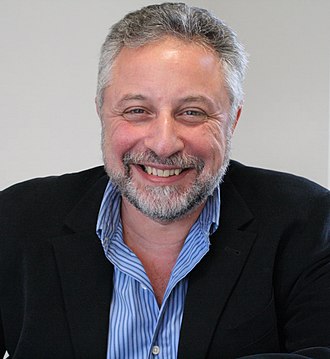
Professor at the Cohn Institute for Philosophy and History of Science and at the Buchmann Faculty of Law at Tel Aviv University.
Research project:
Brunner is currently completing work on a monograph, which will be published by Wallstein Verlag under the title Geschichte als Kriminalroman (History as a Crime Novel ) and which deals with debates on the ethics and methodology of Holocaust historiography as well as the necessities, possibilities and problems of a dialog between historians and psychologists in an attempt to understand the Holocaust.
Research project:
Walter Benjamin postulates a historiography that brushes history against the grain by creating not only a true picture of the past, but also one that illuminates the present in a critical light. How can this dual, epistemic and ethical, postulate for historiography be realized in relation to the Holocaust, which is often understood as an absolute against which conventional ethical and epistemic perspectives are tested and often found wanting? In no other area of historiography are ethical arguments used so strongly against epistemic positions, and moral outrage so often serves to reject narrative approaches. So are there moral norms in Holocaust historiography that oblige historians to use certain forms of research narratives and explanations and deny them others?
Brunner examines this question in relation to the difficult dialog between historians and psychologists about how to explain and portray why certain people became mass murderers and others their victims, what the motive for the crime was, what witnesses knew, why they helped victims or became accomplices to the perpetrators, and whether and what can be learned from the history of this crime.
In an attempt to explore the possibilities of an enriching dialog between history and psychology in Holocaust historiography, Brunner examines the ethical and epistemic obligations, problems and barriers that have characterized it to date. He also formulates his own point of view, which he uses to evaluate various forms of explanation and narration of the Holocaust, as well as a proposal for a fruitful exchange between historians and psychologists.
Events:
Paper Presentation
History as a crime novel: Are there norms of Holocaust historiography and what do psychologists have to do with them?
Research project:
A Narrative Turn in Human Rights Discourse? Victims and Perpetrators between Truth Commissions and the Right to the Truth
Research project:
“The ‘right to the truth’ emerged in international humanitarian law at the same time as truth commissions gained popularity as part of transitional justice. Like truth commissions, the ‘right to the truth’ constituted a response to gross human rights violations in Latin America, especially to the enforced disappearance of political opponents in Chile and Argentina. Like truth commissions, the right to truth was to serve regime the transition to democracy, but unlike truth commissions, it was designed to fight the impunity of perpetrators involved in mass atrocities. This project analyzes these two developments – the establishment of truth commissions and the articulation of a right to the truth in international humanitarian law – in order to show that they add up to a narrative turn in the legal and quasi-legal discourse on gross human rights violations that characterized the last third of the 20th century.” (José Brunner)
Events:
Paper Presentation, July 1, 2015, 4 p.m.
The Right to Truth: History and Psychology of a New Human Right
-
Biografische Angaben
José Brunner is a professor at the Institute for the Philosophy and History of Science and at the Faculty of Law at Tel Aviv University. His research interests include the relationship between law, memory and identity, the politics and history of psychoanalysis, the politics of trauma discourse and practices of reparation using the example of Holocaust survivors. He has been a visiting researcher and visiting professor at numerous universities, including Harvard and Montreal. From 2005 to 2013, he was Director of the Minerva Institute for German History. He currently heads the interdisciplinary research program for law and humanities and the Eva & Marc Besen Institute for the Study of Historical Consciousness. José Brunner is co-founder of the first "legal clinic" for the rights of Holocaust survivors in Israel. -
Publikationen
Recht auf Wahrheit. Genese eines neuen Menschenrechts (hrsg. mit Daniel Stahl), Wallstein, Göttingen 2016. Die Politik des Traumas. Gewalterfahrungen und psychisches Leid in den USA, in Deutschland und im Israel/Palästina-Konflikt, Suhrkamp, Berlin 2014. Die Globalisierung der Wiedergutmachung. Politik, Moral, Moralpolitik (hrsg. mit Constantin Goschler und Norbert Frei), Wallstein, Göttingen 2013. Die Praxis der Wiedergutmachung: Geschichte, Erfahrung und Wirkung in Deutschland und Israel (hrsg. mit Norbert Frei und Constantin Goschler), Wallstein, Göttingen 2009. Psyche und Macht: Freud politisch lesen, Klett-Cotta, Stuttgart 2001.