

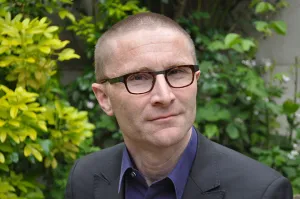
Former Fellow

Stefan Rummens

Prof. Stefan Rummens is Full Professor of Political Philosophy at the Institute of Philosophy of KU Leuven (Belgium)

Research project title:
Populism and technocracy: opposite threats to our democratic society?

Research abstract:
The hypothesis that populism and technocracy are opposite and mutually reinforcing threats to our democratic society is investigated through three more specific resesarch questions:
1/ What is technocracy? The starting point here is Jürgen Habermas’s analysis of technocracy in the context of the Keynesian welfare state. The goal is to make an update of this analysis by investigating how the rise of the neoliberal regime and the transition from government to governance have changed the nature of technocracy.
2/ Are populism and technocracy opposite threats to democracy? In previous work I have argued that populism should be seen as an attempted closure of the empty place of power (Lefort). Now, the aim is to investigate to what extent technocracy should be analysed as an attempted dissolution of the empty place of power.
3/ Is there a mutually reinforcing dynamic between populism and technocracy? The idea under investigation here is that the rise of (neoliberal) technocracy has created the social and political preconditions for the rise of populism and that, the other way around, the threat of populism only reinforces the depoliticizing tendencies of the current technocratic regime.

Events:
November 9, 2021
Lecture at the Colloquium Political Theory

  • Biografische Angaben

    Prof. Stefan Rummens obtained his PhD in philosophy at KU Leuven (Belgium) in 2004 with a dissertation on Jürgen Habermas' deliberative model of democracy. He was a visiting scholar at the New School for Social Research in New York (2006) and at the Goethe University in Frankfurt am Main (2008). He was an assistant professor of political theory at Radboud University (Nijmegen, The Netherlands) before returning to KU Leuven in 2011. Apart from a side interest in the problem of free will, his work mainly concerns democratic theory with a specific focus on deliberative democracy, representation, populism and militant democracy.
  • Publikationen

    Stefan Rummens (2021), ‘The counterfactual structure of the consequence argument’, Erkenntnis 86 (3), 523-542. Stefan Rummens (2019), ‘Resolving the paradox of tolerance’, in Anthoula Malkopoulou and Alexander S. Kirshner (eds.), Militant Democracy and Its Critics. Populism, Parties, Extremism, Edinburgh, Edinburgh University Press, pp. 112-132. Stefan Rummens (2018), ‘Deliberation and justice’, in Andrea Bächtiger, John Dryzek, Jane Mansbridge and Mark Warren (eds.), The Oxford Handbook of Deliberative Democracy, Oxford, Oxford University Press, pp. 132-143. Stefan Rummens (2017), ‘Populism as a threat to liberal democracy’, in Cristóbal Rovira Kaltwasser, Paul Taggart, Paulina Ochoa Espejo and Pierre Ostiguy (eds.), The Oxford Handbook of Populism, Oxford, Oxford University Press, pp. 554-570.

News from the research center

Publication
14.08.2026 | Chapter

Vom rechtshistorischen Erkenntniswert antiker Tragödiendichtung: Überlegungen anhand Euripides’ Medeia

Pfeifer, Guido (2026): "Vom rechtshistorischen Erkenntniswert antiker Tragödiendichtung: Überlegungen anhand Euripides’ Medeia". In: Gsell, Beate; Rüfner, Thomas; Babusiaux, Ulrike (Hrsg.): Die unverzichtbare Wissenschaft – The Indispensable Science, Mohr Siebeck, S. 663-671.

more information ›
Publication
01.08.2026 | Chapter

"Das Andere in uns selbst" (Marcel Gauchet). Das Ideal gesellschaftlicher Autonomie und die Denkfigur der Alterität

Langner-Pitschmann, Annette (2026): „Das Andere in uns selbst“ (Marcel Gauchet). Das Ideal gesellschaftlicher Autonomie und die Denkfigur der Alterität. In: Schlette, Magnus et. al. (Hrsg.): Ordnung im Übergang Zur Funktion von Transzendenzbezügen in der Konstitution und Transformation politischer Gemeinschaft, Tübingen: Mohr Siebeck, S. 185-205.

more information ›
Event
24.09.2026 | Frankfurt am Main

Die neuen Warlords. Gewaltdynamiken einhegen / Friedensgutachten 2026

Book Presentation

Die imperialistische Großmachtpolitik ändert die Vorzeichen von Krieg, Frieden und Sicherheit. Staaten agieren zunehmend wie Warlords und setzen Krieg als Mittel der Politik ein. Übergänge von Gewaltkonflikten zu Frieden werden als „Deals“ behandelt, Mittelmächte treten mit neuem Selbstbewusstsein, aber ambivalentem Kurs auf, und technologische Innovation verändert Kriege und erschwert die Regulierung. Zugleich befindet sich die internationale Kooperation in der Friedenssicherung in ihrer schwersten Krise. Das Friedensgutachten 2026 analysiert Optionen, dennoch Frieden zu fördern.

more information ›
Publication
23.07.2026 | Journal article

Governing the Subject of Populism

Biebricher, Thomas: "Governing the Subject of Populism". In: European Journal of Social Theory, OnlineFirst.

more information ›
Publication
15.07.2026 | Monograph

Das Recht der Gewalt. Warum Waffen allein keinen Frieden schaffen

Simon, Hendrik (2026): Das Recht der Gewalt. Warum Waffen allein keinen Frieden schaffen. Ditzingen: Reclam.

more information ›
Publication
10.07.2026 | Anthology

Schnittstellen im Gesundheitsrecht

Kießling, Andrea (Hrsg.) (2026): „Schnittstellen im Gesundheitsrecht“. Nomos.

more information ›
News
19.06.2026

International symposium honours the lifework of Jürgen Habermas

On Friday 19 June 2026, the Research Centre Normative Orders, in collaboration with Suhrkamp Verlag, paid tribute to the late Jürgen Habermas with an international symposium at Goethe University Frankfurt.

more information ›
Publication
13.06.2026 | Monograph

Identitätsbasierte Führung: Vom ICH zum WIR. Als Führungskraft gesunde und leistungsstarke Gruppen, Teams und Organisationen fördern

van Dick, Rolf; Kratzer, Benedik E., Steffens, Niklas K., Kerschreiter, Rudolf (2026): „Identitätsbasierte Führung: Vom ICH zum WIR. Als Führungskraft gesunde und leistungsstarke Gruppen, Teams und Organisationen fördern“. Springer Berlin.

more information ›
Publication
08.06.2026 | Report

Friedensgutachten 2026: Die neuen Warlords. Gewaltdynamiken einhegen

Nicole Deitelhoff, Christopher Daase (2026)

more information ›