20.01.2026

Christine Hentschel on reorientation in catastrophic times

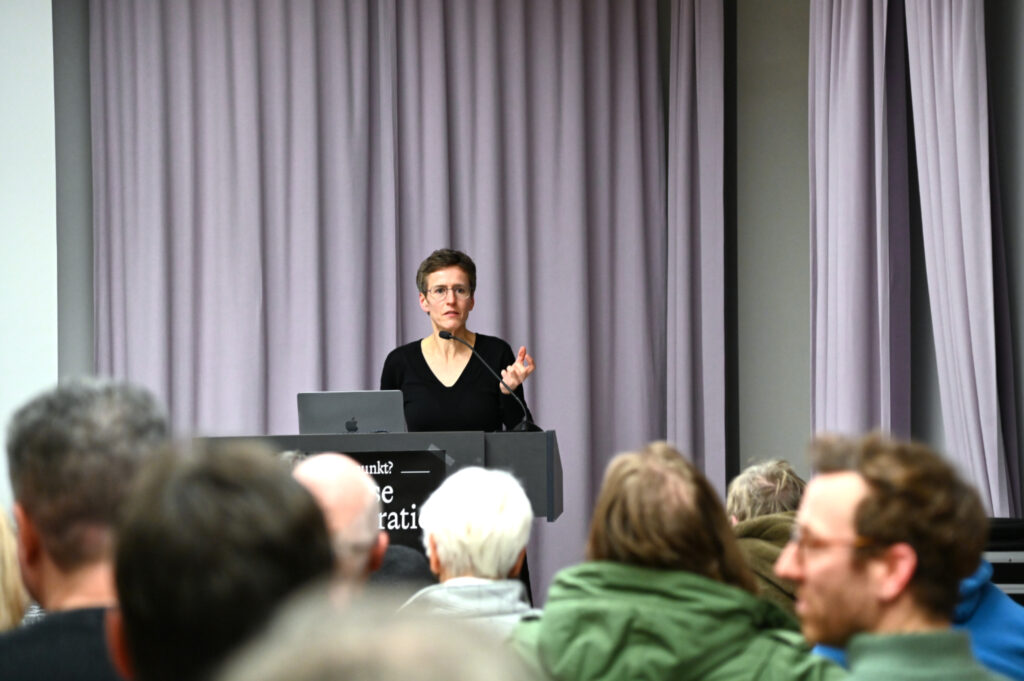
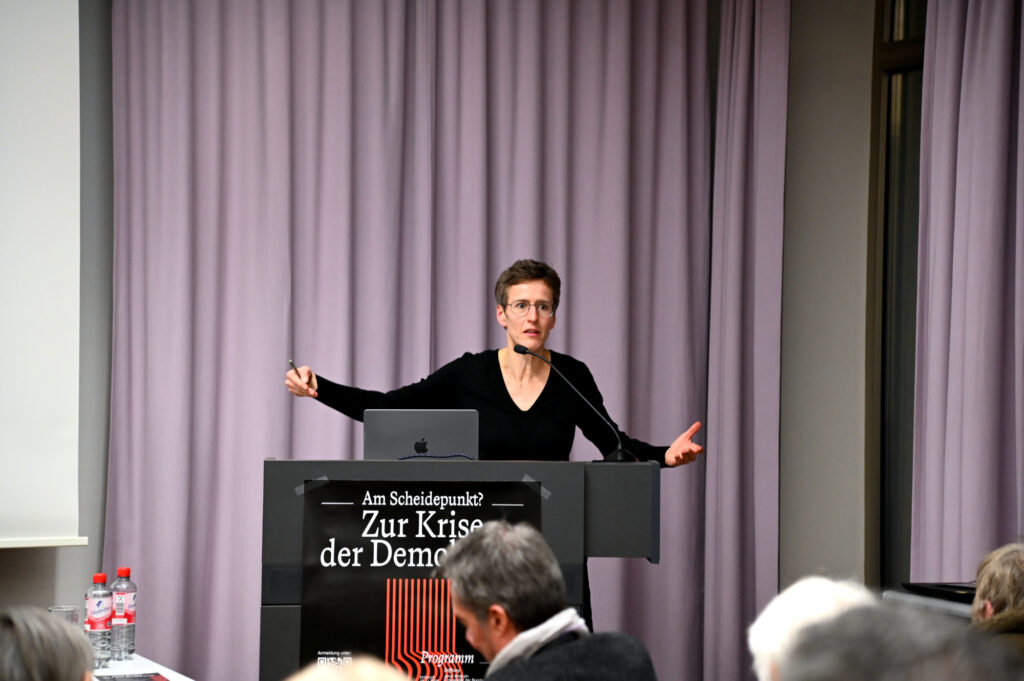
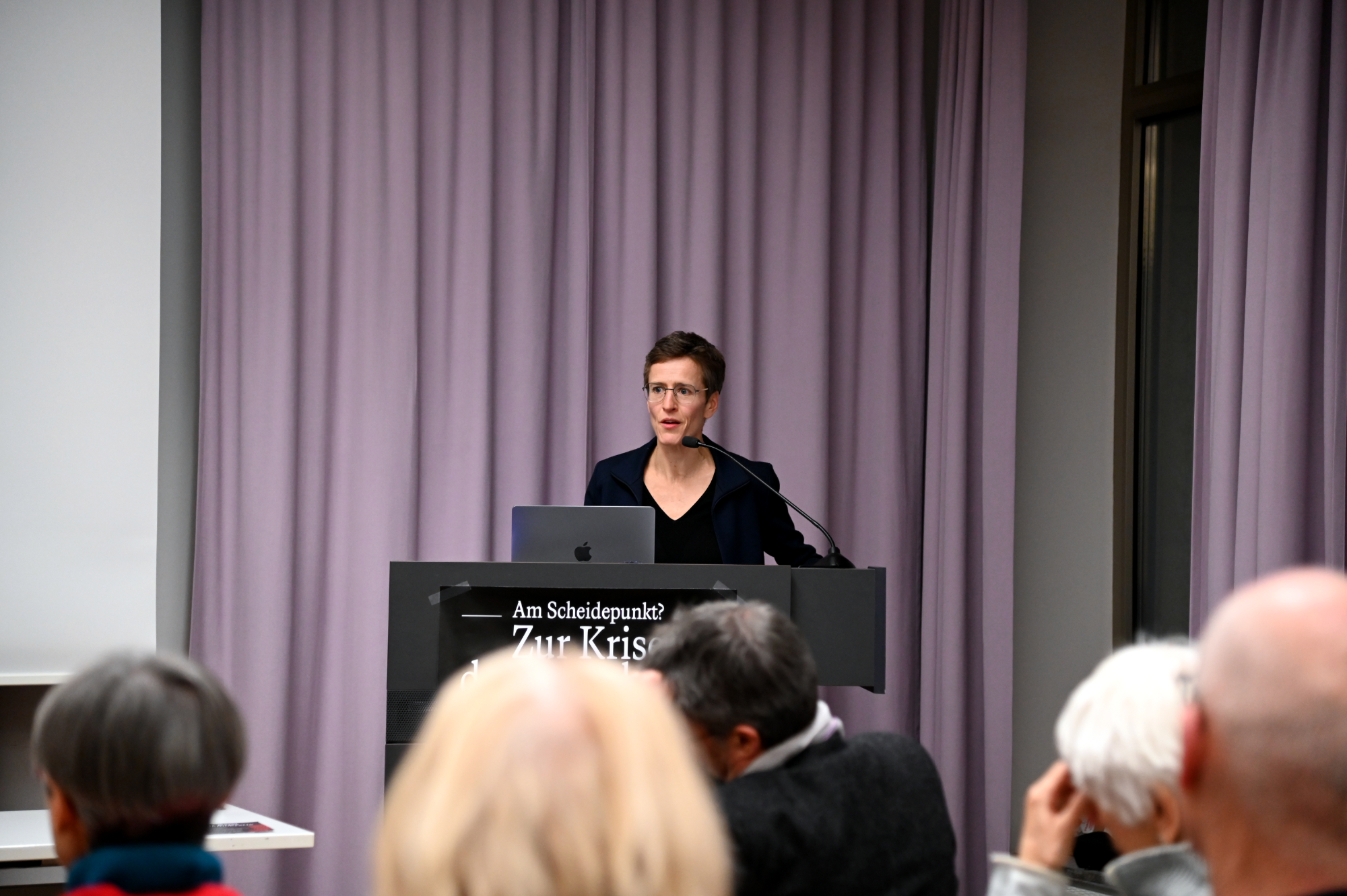
As part of the lecture series “At the crossroads? On the crisis of democracy”, the sociologist spoke about living in and dealing with catastrophic times. Against the backdrop of the destruction of living conditions, wars, permanent crises and threats to democracy, Hentschel addressed the infiltration of the catastrophic into everyday social life and a changing activist and literary approach to the future.
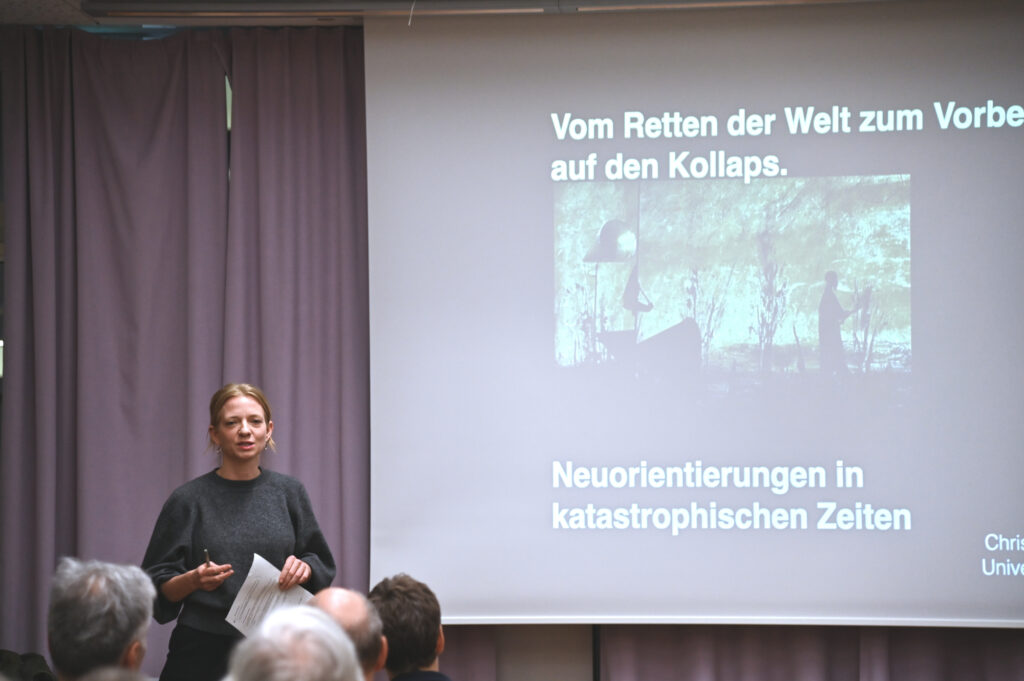
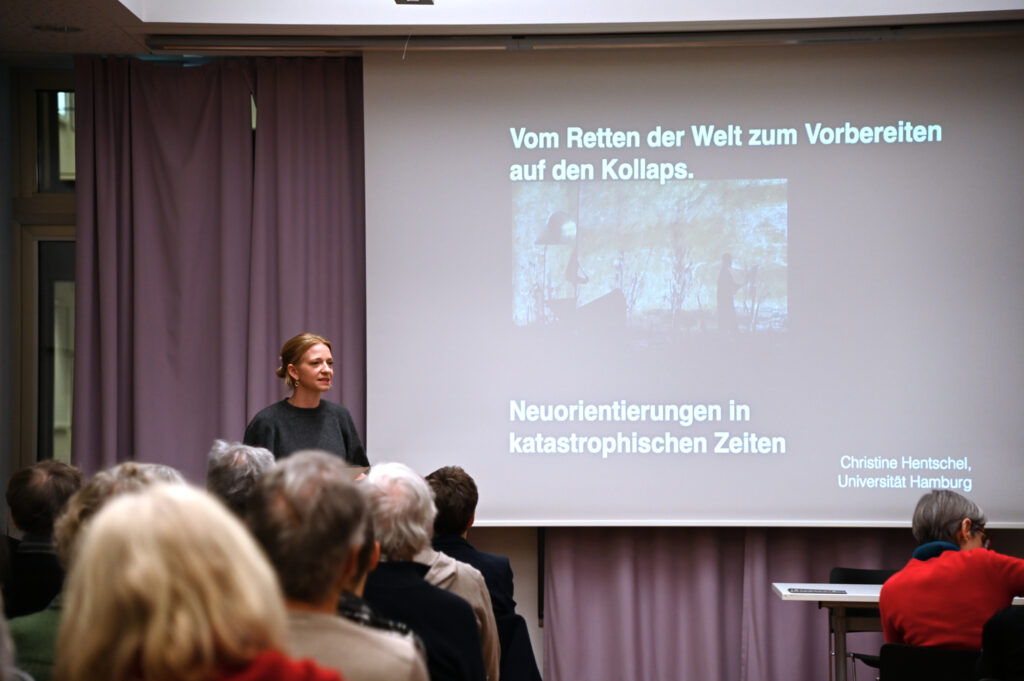
With the help of sociological theories, affect studies, psychoanalysis and philosophy, the sociologist from the University of Hamburg analyzed different modes of reaction to the catastrophic: pushing away and denying the crises as well as reorientation and the search for an open future horizon. These are each extremes, but they fulfill important functions.

“On the one hand, it’s about reopening the future, taking ownership of it, understanding it as a long-term project that is worth fighting for. On the other hand, there is the appeal to really look into the abyss and think ahead from there. And I think we need both extremes.”

Following on from these two modes, Hentschel looked at activism and literature as two genres that affectively and imaginatively sketch out a different temporal orientation. Activism, especially “end-time activism” with its apocalyptic language and the attempt to achieve mobilization via the detour of the imminent catastrophic end, has lost its (frightening) power. According to Hentschel, the focus is now on more practical issues, a “hands-on approach to the catastrophe”. In the literary field, the scientist referred above all to the debut novel “On Saturday the girls go into the woods and blow things up” by Fiona Sironic, in which experiences of loss and destruction are omnipresent. However, in addition to survival in a broken future, it was the functional, solidary relationships within this scenario that Hentschel focused on in her lecture.

These activist and literary approaches focused on a practical hands-on approach and less on an emotional – including mourning and spiritual – approach to the disaster. According to Hentschel, a field of disaster management is emerging from below. Hentschel concluded her presentation by explaining that a sociology in catastrophic times examines modes of dealing with current and future emergencies, communities, emotional structures and imaginations. She argued for a preparative democracy that builds structures in the now that focus on protecting people in the future: A preparation for bad times and taking the challenges for democracy in a catastrophic future seriously.
News from the research center

Publication
19.08.2026 | Anthology

Sokrates revised and revisited

Bohl, Judith K.; Brandis, Veronika; Pfeifer, Guido (Hrsg.) (2026): „Sokrates revised and revisited. Überlieferung, Diskurs, Inszenierung“. Heidelberg: Propylaeum. 

more information ›
Publication
14.08.2026 | Chapter

Vom rechtshistorischen Erkenntniswert antiker Tragödiendichtung: Überlegungen anhand Euripides’ Medeia

Pfeifer, Guido (2026): "Vom rechtshistorischen Erkenntniswert antiker Tragödiendichtung: Überlegungen anhand Euripides’ Medeia". In: Gsell, Beate; Rüfner, Thomas; Babusiaux, Ulrike (Hrsg.): Die unverzichtbare Wissenschaft – The Indispensable Science, Mohr Siebeck, S. 663-671.

more information ›
Publication
01.08.2026 | Chapter

"Das Andere in uns selbst" (Marcel Gauchet). Das Ideal gesellschaftlicher Autonomie und die Denkfigur der Alterität

Langner-Pitschmann, Annette (2026): „Das Andere in uns selbst“ (Marcel Gauchet). Das Ideal gesellschaftlicher Autonomie und die Denkfigur der Alterität. In: Schlette, Magnus et. al. (Hrsg.): Ordnung im Übergang Zur Funktion von Transzendenzbezügen in der Konstitution und Transformation politischer Gemeinschaft, Tübingen: Mohr Siebeck, S. 185-205.

more information ›
Event
24.09.2026 | Frankfurt am Main

Die neuen Warlords. Gewaltdynamiken einhegen / Friedensgutachten 2026

Book Presentation

Die imperialistische Großmachtpolitik ändert die Vorzeichen von Krieg, Frieden und Sicherheit. Staaten agieren zunehmend wie Warlords und setzen Krieg als Mittel der Politik ein. Übergänge von Gewaltkonflikten zu Frieden werden als „Deals“ behandelt, Mittelmächte treten mit neuem Selbstbewusstsein, aber ambivalentem Kurs auf, und technologische Innovation verändert Kriege und erschwert die Regulierung. Zugleich befindet sich die internationale Kooperation in der Friedenssicherung in ihrer schwersten Krise. Das Friedensgutachten 2026 analysiert Optionen, dennoch Frieden zu fördern.

more information ›
Publication
23.07.2026 | Journal article

Governing the Subject of Populism

Biebricher, Thomas: "Governing the Subject of Populism". In: European Journal of Social Theory, OnlineFirst.

more information ›
Publication
15.07.2026 | Monograph

Das Recht der Gewalt. Warum Waffen allein keinen Frieden schaffen

Simon, Hendrik (2026): Das Recht der Gewalt. Warum Waffen allein keinen Frieden schaffen. Ditzingen: Reclam.

more information ›
Publication
10.07.2026 | Anthology

Schnittstellen im Gesundheitsrecht

Kießling, Andrea (Hrsg.) (2026): „Schnittstellen im Gesundheitsrecht“. Nomos.

more information ›
News
19.06.2026

International symposium honours the lifework of Jürgen Habermas

On Friday 19 June 2026, the Research Centre Normative Orders, in collaboration with Suhrkamp Verlag, paid tribute to the late Jürgen Habermas with an international symposium at Goethe University Frankfurt.

more information ›
Publication
13.06.2026 | Monograph

Identitätsbasierte Führung: Vom ICH zum WIR. Als Führungskraft gesunde und leistungsstarke Gruppen, Teams und Organisationen fördern

van Dick, Rolf; Kratzer, Benedik E., Steffens, Niklas K., Kerschreiter, Rudolf (2026): „Identitätsbasierte Führung: Vom ICH zum WIR. Als Führungskraft gesunde und leistungsstarke Gruppen, Teams und Organisationen fördern“. Springer Berlin.

more information ›